
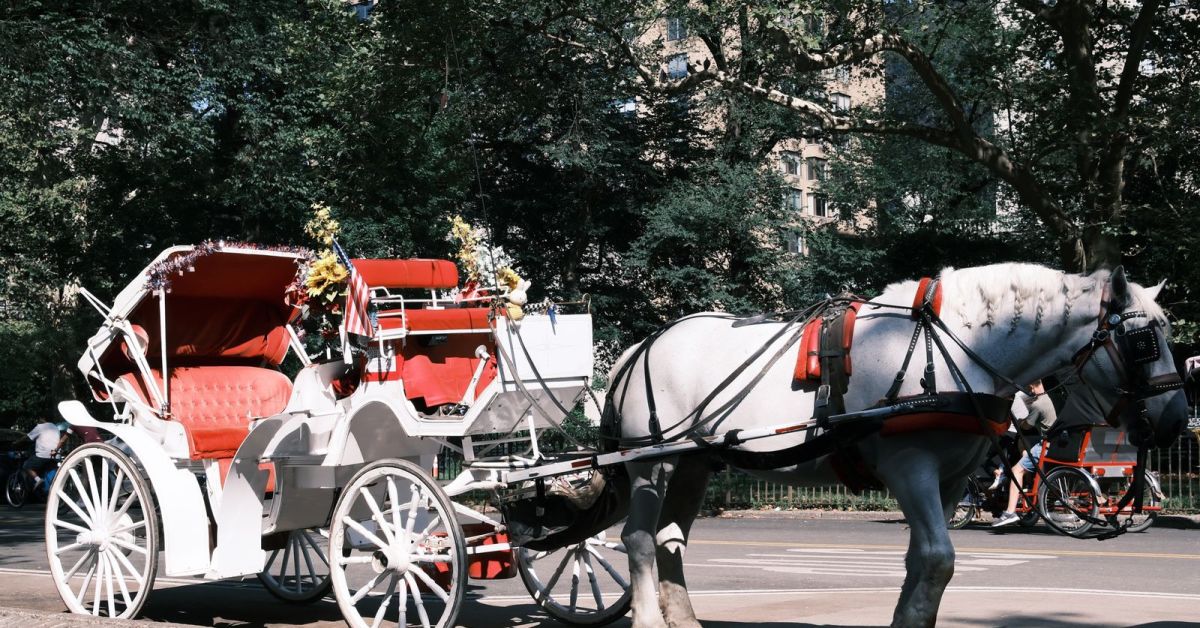
New York City is officially out of the horse carriage business, and the drivers are already taking Mayor Zohran Mamdani to federal court.
Mamdani signed a bill banning horse-drawn carriages across the five boroughs, ending a Central Park tradition that dates to 1858, the New York Post reported. He also pledged to use taxpayer money to buy out the drivers who will soon be out of work.
The signing in City Hall's Blue Room was only his third public bill signing since taking office. He was flanked by Council Speaker Julie Menin (D-Manhattan) and former Mayor Bill de Blasio, who pushed for a ban for years.
The measure, dubbed Romanch's Law, is named for Romanch Mahajan, the 18-year-old tourist killed after being thrown from a carriage in Central Park. It shuts down the industry in 2028.
"Our city has changed, and now it is time for our laws to change too," Mamdani said of what he called "legislation that will phase horse carriages out of New York City once and for all by June 1st, 2028." He said he signed it "with a deep sense of both gratitude and obligation toward the more than 200 New Yorkers who make up the horse carriage industry."
The law directs City Hall to work with the City Council on a plan to help those roughly 200 workers find new jobs. The administration now says it will offer "buy-backs" for medallions and other stipends, though it had released only a "framework" with no details on cash payments for drivers.
Lawmakers set an April deadline to produce a full blueprint with the Transport Workers Union. Mamdani laid out what he expects it to contain.
"That plan will include medallion buybacks for owners, a stipend for drivers and staple hands to attend workforce training and career development classes, as well as career counseling and entrepreneurship support," Mamdani said. "And as we hammer out the plan's details, we will work directly with horse carriage workers to incorporate their feedback at every step of this process."
The mayor took no questions on where the horses will go or what the law will cost. According to Bloomberg Law, the measure requires "humane disposition" of the animals, barring their sale for slaughter or to other carriage companies, and about 68 carriages currently operate in Central Park with up to 160 horses.
Menin, who steered the bill through the council, said it was needed so that Mahajan's death was "not in vain." "We will never forget it," she said. "And that's why we name this bill after him."
The union did not wait long to strike back. Minutes after the signing, the Transport Workers Union of America and TWU Local 100 filed a class-action lawsuit in Manhattan federal court seeking to have the ban declared unconstitutional.
"This bill is an unconstitutional abomination," TWU International President John Samuelsen said. "It strips horse-carriage owners of the city-issued medallions that they purchased for hundreds of thousands of dollars without mandating or guaranteeing compensation."
The complaint argues the city cannot wipe out an entire industry when regulation and enforcement against individual violators are available. It also notes that Mahajan's family, in notices of claim, has blamed the horse's bolting on stray voltage from city infrastructure, a hazard the new law does not address.
The union is asking for a temporary restraining order and a preliminary injunction to block enforcement while the case proceeds. The city's law department said it is reviewing the suit.
Login