
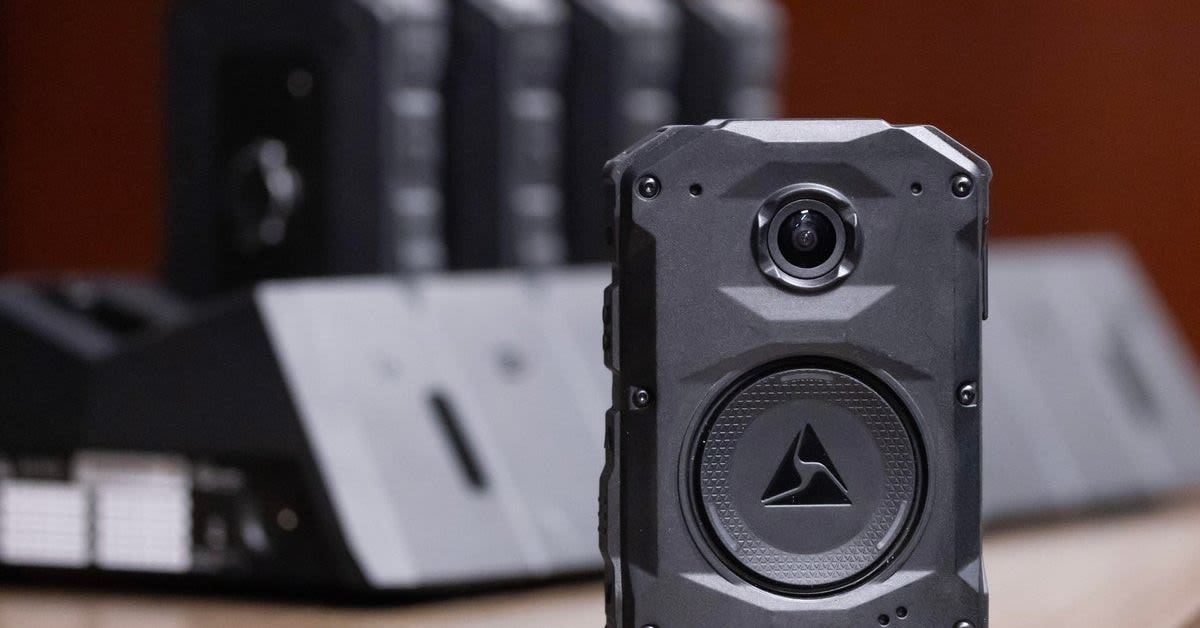
Immigration agents in the field are quietly operating under a new rule, and it marks a notable turnaround for the agency.
Immigration and Customs Enforcement (ICE) has updated its body camera technology in a move aimed at increasing accountability amid hostile encounters with the public, according to The Daily Wire. Under the change, which took effect recently, when one agent's body camera is turned on, all body cameras in the vicinity also activate, three agency sources said.
The nearby cameras worn by agents will also automatically turn on when an agent uses a taser. The sources, who were granted anonymity because they were not authorized to speak publicly, applauded the update as a move toward necessary "accountability."
"I don't mind it. It shouldn't be an issue if the officers are doing their jobs correctly," said one source.
"It's accountability and making sure we are doing what we are supposed to be doing when encountering people and levels of force needed to be used and when it should not be used," another source said. Neither the Department of Homeland Security (DHS) nor ICE responded to requests for comment on the update.
The agency began a mass distribution of body cameras after the separate fatal shootings of Alex Pretti by a Border Patrol agent and Renee Good by an ICE agent in Minneapolis. Then-Homeland Security Secretary Kristi Noem announced the plan in early February following a conversation with border czar Tom Homan, then-acting ICE Director Todd Lyons and Customs and Border Protection (CBP) Commissioner Rodney Scott.
"Effective immediately, we are deploying body cameras to every officer in the field in Minneapolis," Noem said at the time, adding that the program "will be expanded nationwide" "as funding is available." Agency sources said agents now all have body cameras and are required to wear them when making arrests and taking "any enforcement action."
A September Government Accountability Office (GAO) report found that ICE's body-worn camera program lacked necessary controls that could leave incidents unrecorded. The report recommended that ICE implement "additional controls," including "mechanisms that automatically activate the camera when a related action occurs," saying it "would provide better assurance that ICE personnel capture footage in accordance with policy."
The update stands out because DHS initially pushed back on that very idea. According to Axios, DHS accepted the GAO's six other recommendations but rejected automatic activation, arguing that it "presents significant operational risks, including inadvertent or false activations during routine movement."
DHS also warned at the time that accidental activation could expose sensitive interactions with informants and victims or record people engaged in protected First Amendment activities. The GAO noted that CBP already uses technology that automatically activates cameras when officers draw firearms or turn on emergency lights.
The GAO also found that ICE issued no written reprimands for failing to comply with camera policies from the program's launch through September 2025, while CBP issued just one. The auditors said the vendor's current cameras can activate automatically when a weapon is drawn, emergency vehicle equipment is engaged or another activated camera is nearby.
Meanwhile, President Donald Trump's mass deportation campaign appears to be moving full steam ahead. Recently released federal data showed that during the last fiscal year, which ran from October 2025 through September 2026, ICE recorded the most arrests and deportations in its history, with roughly 491,000 arrests and 483,000 deportations.
Login