
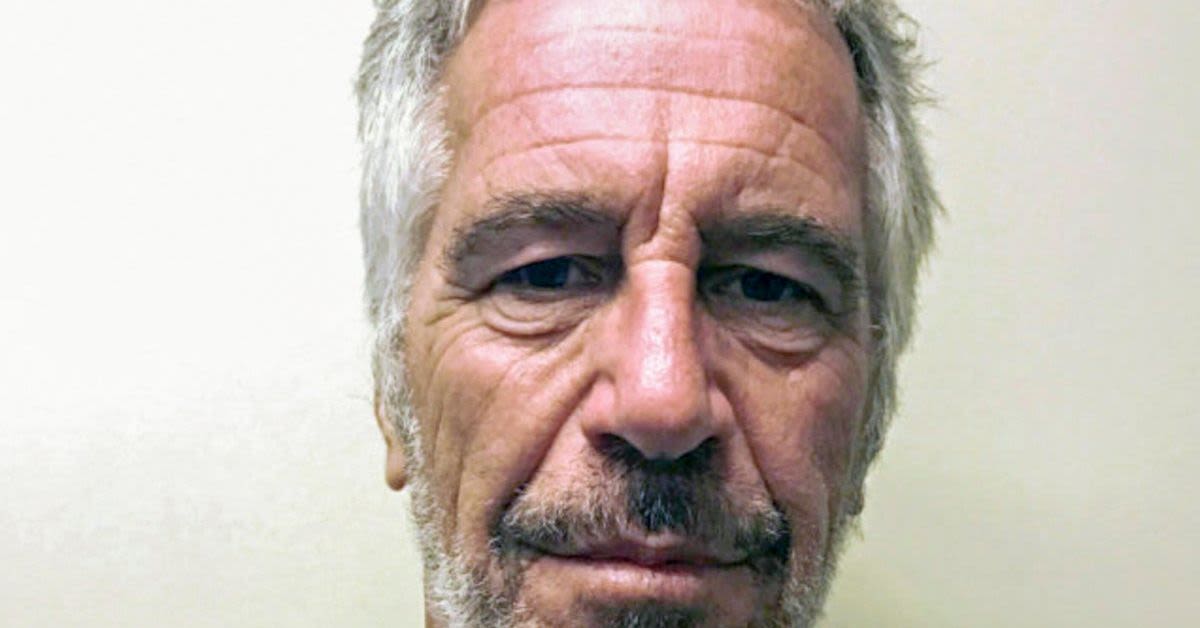
Seven years after Jeffrey Epstein was found dead in his cell, a veteran forensic expert says the official account leaves too much unexplained.
Across the political spectrum, a large share of Americans believe, despite a lack of evidence, that Epstein did not die by suicide. Now one forensics expert, working with photos and files provided by Epstein's brother, contends that the suspicion might be right, according to CBS News.
Dr. Michael Freeman, editor-in-chief of the Journal of Forensic and Legal Medicine, spent months reviewing never-before-published autopsy records provided to him and the network by Epstein's brother. The New York City Office of Chief Medical Examiner ruled in 2019 that Epstein died by suicide, but Freeman has concluded that his death was more likely a homicide.
Freeman worked with Anders Eriksson, a professor of forensic medicine at Umea University in Sweden, and Itiel Dror, a researcher who specializes in identifying bias in forensic decision making. The team presented its findings in London, where Freeman said he believes the world's most notorious sex abuser was likely attacked and killed by another person in August 2019.
"The injuries that were documented by the medical examiner were not consistent with the suicidal hanging. And the injuries that were attributed to something other than potentially a physical struggle or assault were just overlooked," Freeman said, based on his review of the autopsy records, photos and a reconstruction he produced.
The medical examiner's office is not backing down. It declined an interview request and did not reply directly to Freeman's findings, but a spokesperson said, "Our office stands by its determination." The medical examiner who performed the autopsy previously told the Justice Department's inspector general that Epstein's injuries were more consistent with suicide by hanging than homicide by strangulation, with no evidence of defensive wounds, according to the BBC.
There has been support for that finding. In June, The New York Times conducted an investigation that it said relied on tens of thousands of pages of newly released documents, as well as Epstein's own handwritten notes from jail, and reported indications that Epstein was intent on ending his life.
The newspaper also reported that, of the forensics experts it interviewed, "almost none of them believed that his manner of death suicide or homicide could be conclusively settled based on the medical evidence alone." Forensic pathology is not an exact science, credible experts often interpret the same evidence very differently, and neck injuries from hanging or strangulation can be especially ambiguous.
Freeman's report is the second by an outside forensic expert to question the official ruling. In 2020, Epstein's brother hired forensic pathologist Dr. Michael Baden, who told "60 Minutes" that injuries to Epstein's neck pointed more to murder than suicide.
Freeman acknowledged that his report was rejected for publication by an academic journal, whose reviewers felt it was not appropriate to criticize a medical examiner's findings in a peer-reviewed publication. He said he plans to resubmit it.
Freeman has testified as a forensic expert in high-profile court cases and was a member of the Maryland Attorney General's audit team that reviewed dozens of in-custody deaths last year. He said he was struck by the very first image he examined, which showed ligature wounds on the right side of Epstein's neck. "When I saw this photograph, my first reaction was that that is a very unusual looking injury for a hanging on the neck," Freeman said.
"The injury pattern was described as a sloped or as a peaked injury that was a perfect description for a hanging. But that's not what we saw when we saw the photos," he explained. While one mark fit that description, he noticed a second mark beneath it, angled differently.
"There is no mechanism to produce a second mark that would be lower. Even if the ligature was tied with two loops, both loops would go up to the point where it was tied because that's the anchor point," Freeman said.
Asked whether the marks could reflect a first, failed attempt, Freeman said research on suicidal hanging makes that unlikely. Epstein would have had to make "a false start that was strong enough to break his hyoid bone and thyroid cartilage and give him a deep abrasion and then maintain consciousness," he said.
"That's not what suicidal hangings do," Freeman said. "The body becomes unconscious and then it is the weight of the body that produces the abrasion, not any kind of running jump at it."
Freeman built a biomechanical analysis, a series of three-dimensional models based on the account of corrections officer Michael Thomas, who said he found Epstein hanging from a bedpost. The model indicated that some of the injuries were consistent with suicidal hanging, but others, including a deep injury to his left shoulder, were not.
"We have too many other injuries that are not explained by any suicidal hanging. Because I don't care how this guy is found, where did these other injuries come from?" Freeman asked.
He pointed to a knotted strip of orange bedding fabric found in a corner of the cell. "And if you put it all together, it is most consistent with a homicidal strangulation from behind using a narrow knotted fabric ligature," Freeman said, adding that he saw what "appeared to be consistent with fingernail marks above the ligature."
That fabric was never collected for the medical examiner. The investigation into Epstein's death was marked by a cascade of blunders, from a body moved within minutes of discovery to a cell that was never sealed off for forensic investigation.
None of the guards on duty when Epstein died spoke to medical examiner investigators, according to Justice Department records, and some falsified records about their activities that night. Most of the closed-circuit cameras in Epstein's wing were not working, and investigators did not follow up on an unexplained orange blur seen ascending a staircase toward his block.
It took two years for federal investigators to interview Thomas, who had been charged with lying and falsifying prison records, and another year to speak with the medical examiner. There is no indication that the medical examiner's office revisited its determination after Thomas shared his account.
For Freeman, the question is no longer how Epstein died but who was responsible, which he called a mystery. "Was this a suicide? Not a mystery," he said.
Login