
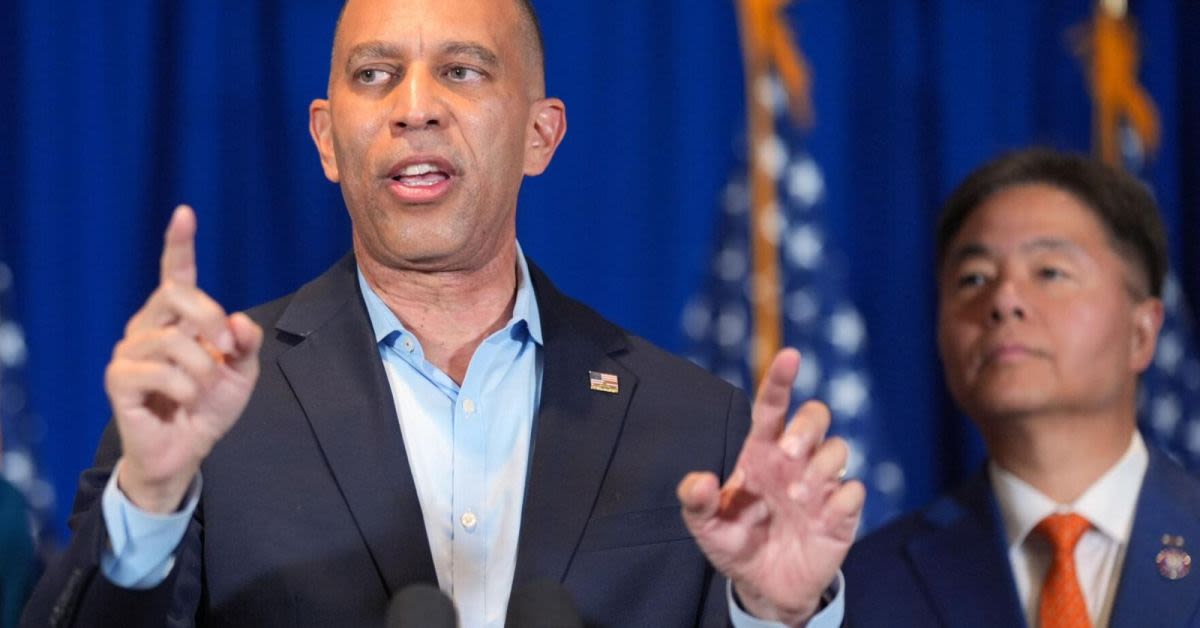
Newly elected far-left House Democrats, styling themselves as the Bloc, reportedly arrived in Washington armed with a political ransom note for Minority Leader Hakeem Jeffries, demanding sweeping concessions in exchange for their votes.
According to RedState, the Blocs wish list reads like a greatest-hits compilation of the progressive movements most radical slogans: Medicare-for-All, defunding Immigration and Customs Enforcement, and cutting off U.S. aid to Israel. Check, check, and check.
Yet, as reported by RedState, Axios now claims that Democrats unexpectedly large 250-plus-seat majority has, at least for the moment, blunted the leverage these extremists hoped to wield, giving party leadership a wider cushion and slightly less dependence on the far-left flank. Of course, the supposed divide between moderate Democrats and their openly radical colleagues is largely cosmetic.
Some on the left quietly embrace the same hardline agenda, while others blast it through a bullhorn, but the ideological destination is the same. As we examine the Axios account and the Democrats internal maneuvering, it is necessary to recognize that the framing of centrists versus progressives often obscures how far the entire party has drifted left.
Last night was a rebuke of the status quo, Democrat Rep. Delia Ramirez (IL-3) declared, hailing the results for the far-left bloc as an affirmation and a validation that we are on the right track. Ramirez further insisted there is absolutely no excuse for House Democrats not to do the most over the next two years, and as quickly as possible.
Her comments underscore the Blocs belief that the election results amount to a mandate for aggressive, transformational policies that would expand government power and weaken traditional institutions. Axios suggests that Jeffries and his allies will not need the Blocs backing as desperately, given the size of the Democratic majority.
On paper, that might appear to give leadership room to sideline the most extreme demands, but in practice, progressives have been steering the partys agenda for years and have repeatedly shown their ability to intimidate leadership into compliance. The notion that Jeffries, who has already operated under their shadow, will suddenly defy them after this election strains credulity.
Recognizing this, the Bloc is already moving to a backup strategy: consolidating power inside the Congressional Progressive Caucus (CPC). One incoming member predicted the caucus could add roughly 25 new allies, significantly expanding its influence within the Democratic conference.
That should definitely be part of the game plan, an incoming Bloc member told the outlet, signaling a clear intent to turn the CPC into an even more powerful ideological enforcement arm on Capitol Hill. Ramirez, who has introduced an open-borders-style bill to dismantle the Department of Homeland Security and abolish ICE, Customs and Border Protection, and the Border Patrol, framed the midterm results in sweeping moral terms.
Across the country, Americans have chosen pro-immigrant, pro-worker, pro-peace, pro-humanity fighters centered on the shared struggles of everyday working people. That rhetoric glosses over the real-world consequences of erasing border enforcement and expanding the welfare state, policies that would burden taxpayers, undermine the rule of law, and erode national sovereignty.
Democrat Rep. Pramila Jayapal (WA-7), former chair of the CPC, made clear that the left has no intention of retreating. We have certainly used our power many times ... and we will do that again, she said, a reminder that the CPC has repeatedly leveraged its numbers to drag legislation leftward and block more moderate compromises. The group is also recruiting so-called Bernie Dogs from red or swing districtspopulist candidates from working-class backgrounds who managed to win with support from both progressives and self-styled centrists, further blurring the line between the partys factions.
Jayapal expressed confidence that the expanded Bloc will be driving an agenda that truly is big and bold. Democrat Rep. Jared Huffman (CA-2) echoed that sentiment, noting that while it might take time, Were mostly on the same team here.
Those remarks confirm what many conservatives have long argued: the internal disagreements among Democrats are tactical, not philosophical, and the party as a whole is moving in lockstep toward a more expansive, interventionist government. Beyond their domestic policy ambitions, Democrats are also signaling that they will use their new power to pursue President Donald Trump and his family.
They are vowing to investigate Trumps administration and personal affairs, a continuation of the years-long campaign to delegitimize and punish a political opponent rather than focus on governing. The self-styled Resistance has been consumed with animosity toward Trump for more than a decade, and with control of the House, they now possess the institutional machinery to turn that obsession into official investigations, ensuring that partisan score-settling will remain a central feature of their agenda.
Login