
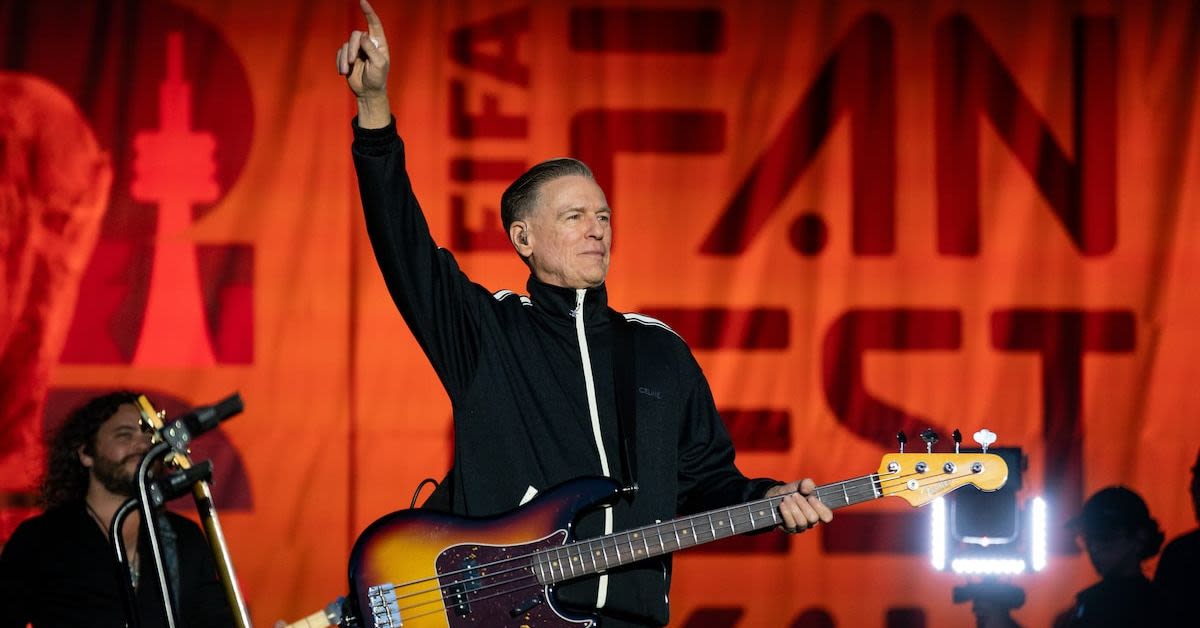
Canadian rocker Bryan Adams has ignited a political firestorm with a new protest song, Lake Ontario, that targets President Donald Trumps controversial decision to symbolically rename the cross-border waterway Lake America."
The 66-year-old singer-songwriter released the track, timing it as a direct response to Trumps August executive order that rechristened the Great Lake in line with the administrations nationalist branding. According to the Daily Mail, the songs lyrics never mention Trump by name, but instead skewer one dude who renames the lake, launches a war in Iran, and hovers over the still-unresolved Epstein files, weaving together a portrait of political distraction and overreach.
Adamss verses lean heavily on imagery that casts the president as petulant and reckless, using language more often heard in British nurseries than in North American politics. One pointed stanza reads: But things werent going his way in Iran. So like a baby tossing the toys from the pram. He may have thought it best to throw a low blow.
The same passage continues with a jab at what Adams portrays as a manufactured spectacle designed to divert public attention from more serious matters. And create a real dog and pony show. But it feels like another distraction. While the Epstein files were getting traction, he sings, before concluding, One day theyll come out, and well say there you go. And then well all dive into Lake Ontario.
Beyond foreign policy and scandal, the song laments what Adams sees as an assault on the cultural and historical identity of the communities that ring the lakes perimeter. He criticizes Trump for disturbing the peace of those who settled around the banks and shores of Lake Ontario, a body of water that straddles New York State and the Canadian province of Ontario and has long been a shared symbol rather than a partisan football.
A lyric video released Wednesday shows Adams performing near the lakes edge, intercut with on-screen text of the songs words and a teaser that the track will appear on an album due out next month. The visual framing underscores the cross-border nature of the issue, even as the song itself narrows its focus to the American presidents actions and alleged motives.
Once the lyrics began circulating widely on social media, backlash was swift, particularly from listeners who objected to yet another entertainer using their platform to attack a Republican president. Adams was quickly accused of abandoning his musical roots in favor of partisan commentary tied to Trumps August order to rename the lake.
Critics on X, the platform formerly known as Twitter, accused Adams of alienating his audience and trading on his fame to score political points. One user snapped, Adam's just lost fans. Just sing and stop talking politics, encapsulating a sentiment common among conservatives who are weary of celebrity activism that almost invariably tilts left.
Others mocked Adamss relevance and questioned his authority to weigh in on American policy from abroad. This guy hasn't been relevant since the Summer of 69, one commenter wrote, riffing on his signature hit, while another scoffed, Dude has lived in Europe for 3 decades. He should stick to writing love songs. No one cares what this European has to say about Canada.
Some reactions were even more blunt, reflecting a broader frustration with entertainers who use their platforms to lecture audiences rather than entertain them. Well there goes another artist I'll never listen to again. They should just play music and shut the f*** up, one user posted, echoing a familiar refrain from fans who feel that Hollywood and the music industry have become echo chambers for progressive politics.
Trumps focus on Lake Ontario emerged earlier this year amid a simmering trade dispute with Canada, part of a broader effort to reassert American leverage in cross-border economic relations. In a TikTok video posted on August 26, the president announced his intention to give the lake a distinctly American identity, casting the move as both symbolic and straightforward.
We're gonna make a little change, we're gonna call it something different than Lake Ontario, he declared in the clip, before unveiling the new moniker. We're gonna call it Lake America. And all it takes is a good pen and some intelligence.
He then dramatized the proposal by taking a Sharpie to a map, striking out Lake Ontario and scrawling LAKE AMERICA above it. While the gesture was largely symbolic, it fit neatly within his America First rhetoric and his penchant for bold, attention-grabbing moves that rile critics and energize supporters.
North of the border, Canadians have simply ignored the rebranding and continued to refer to the waterway by its historic name, while many Americanson both the left and the righthave treated the renaming as more theater than substantive policy. Even so, the episode has become another flashpoint in the culture war, with liberals mocking the move as jingoistic and some conservatives questioning whether such symbolic fights distract from more pressing issues.
Interestingly, despite the criticism now directed at Adams from the right, a number of self-described conservatives have also accused Trump of using the Lake America stunt to divert attention from his unpopular war in Iran. The ongoing conflict, they warn, threatens to cost the Republican Party seats in long-standing GOP strongholds in the upcoming midterm elections, if current polling proves accurate.
The Lake Ontario order is only one in a series of high-profile renaming efforts that have marked Trumps second term, each framed as an assertion of American pride and sovereignty. One of his earliest major moves was to instruct federal agencies to adopt the term Gulf of America instead of Gulf of Mexico, a sweeping change that quickly became a shorthand for his America First agenda.
We're going to be changing the name of the Gulf of Mexico to the Gulf of America, Trump told reporters at the time, presenting the shift as both poetic and patriotic. Which has a beautiful ring. That covers a lot of territory. The Gulf of America, what a beautiful name. And it's appropriate. It's appropriate.
That decision drew international scrutiny, given that the vast body of water borders not only the United States but also Mexico and Cuba, nations that have no obligation to adopt Washingtons preferred terminology. While the U.S. government can dictate the language used by its own agencies and maps, it cannot force foreign governmentsor private citizens, for that matterto follow suit, leaving many of these renaming efforts as largely symbolic gestures that nonetheless fuel intense political and cultural debate.
Login