
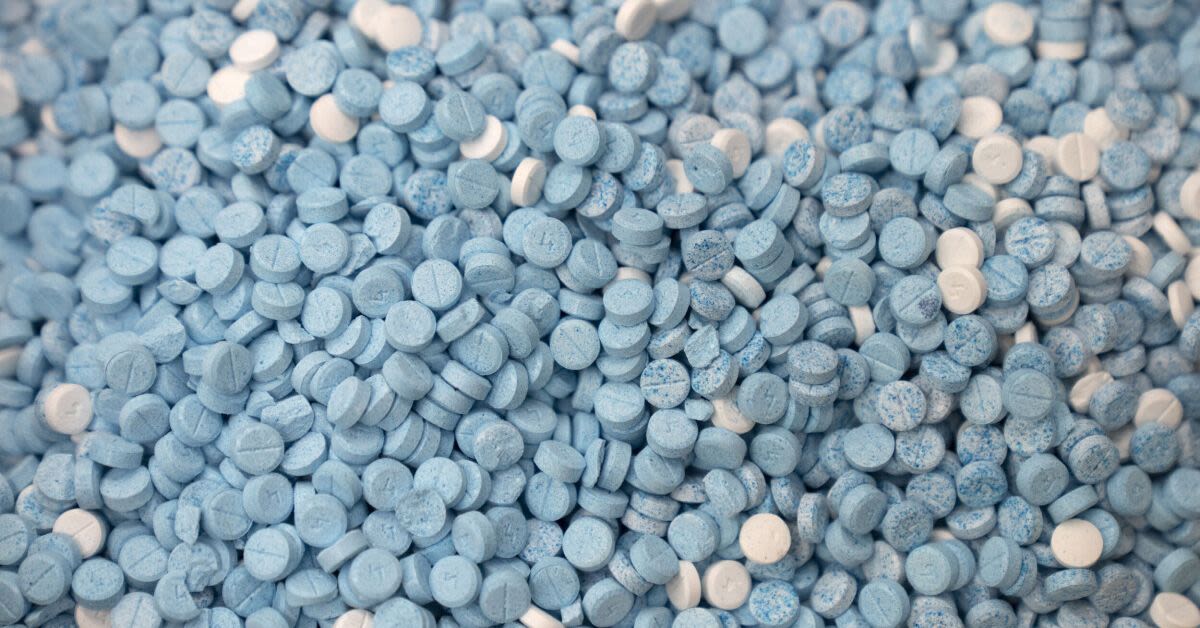
As New Mexico confronts a spiraling fentanyl epidemic, a veteran Drug Enforcement Administration agent is accusing his own agency of fueling the crisis by allowing vast quantities of the deadly synthetic opioid to flow onto the streets.
In a stark on-camera rebuke of his superiors, DEA Special Agent David Howell told CBS News, "For three years, I've told my DEA managers that we're allowing dangerous amounts of fentanyl to hit the street, and we're doing nothing to stop it, and they didn't listen to me." According to CBS News, Howell, who remains an active agent, contends that the very agency charged with enforcing federal drug laws has permitted millions of fentanyl pills to "walk" a controversial tactic in which traffickers are allowed to move their product so investigators can follow the chain and attempt to build larger conspiracy cases.
Howell argues that what might once have been tolerated with less lethal narcotics becomes reckless when applied to a substance as deadly as fentanyl. Because of its potency and the staggering death toll associated with it, he said the strategy has crossed a moral and operational line, doing far more harm than good in communities already overwhelmed by addiction and crime.
"We at the DEA have let drugs hit the street, yes. The difference was we were told not to with fentanyl," he said, underscoring his claim that internal directives were ignored or reversed in practice. His account suggests a federal bureaucracy more focused on abstract case-building than on the immediate safety of families and children living in neighborhoods awash in illicit pills.
In 2023, Howell was part of an aerial surveillance team tracking a suspect in Albuquerque, a city now emblematic of the nations fentanyl scourge. From the air, agents watched as a person driving a white SUV picked up a child, a moment that, in Howells telling, forced a choice between bureaucratic protocol and basic duty of care.
"We knew we weren't going to let the drugs hit the streets or go to the house when we knew the kid was in the car," Howell said. Agents in a black truck intercepted the SUV, secured the child, and detained the suspect before the vehicle could reach its destination.
"We took his drugs. We took his gun. It was in a little compartment underneath the seat that the child was sitting on," Howell said, describing a scene that highlights the intersection of drug trafficking, firearms, and child endangerment. Howell said agents recovered between 6,000 and 7,000 fentanyl pills from the vehicle, a quantity that could translate into thousands of potentially lethal doses.
Yet instead of praise, Howell says the team encountered hostility from federal prosecutors for removing the fentanyl from circulation. "We thought the U.S. Attorney's Office [for the District of New Mexico] would be pleased," Howell said. "Instead, they brought us into their office and chastised us. They were perfectly willing to allow that fentanyl to go to the house with the kid."
Howells whistleblower complaint, first reported last June by the Associated Press and the Albuquerque Journal, has now become a flashpoint in a broader debate over federal drug policy and prosecutorial priorities. New Mexico Attorney General Ral Torrez has taken the extraordinary step of suing the federal government over the practice of letting fentanyl walk, arguing that Washingtons approach is worsening the states already dire public health and safety crisis.
"There's no escaping the conclusion that New Mexico moving in the wrong direction seems to be directly connected to this practice of walking fentanyl in this community," Torrez said. Officials in the greater Albuquerque area have gone so far as to declare a state of emergency, citing a surge in fentanyl overdose calls that local authorities are increasingly ill-equipped to handle.
The DEA and the Department of Justice declined CBS News request for on-camera interviews, but DOJ issued a written statement attempting to reassure the public that the allegations are being taken seriously. "When this whistleblower came forward, DEA Administrator Cole immediately requested an independent investigation by DOJ IG. That investigation remains ongoing, and we cannot comment on the status of ongoing investigations."
The DEA has also said, "If improvements are identified, DEA will implement them." For residents watching their neighborhoods deteriorate and for conservatives who have long warned about the dangers of unaccountable federal power, those conditional promises may sound thin against the backdrop of rising overdose deaths and a justice system that appears more interested in theory than in protecting children from poison.
"Our city is being destroyed by this drug," Howell said. "That's why we're sitting here, and that's what I'm here to tell the people." His allegations raise a fundamental question for a nation awash in fentanyl: whether federal law enforcement will prioritize immediate public safety and parental rights over risky investigative gambits that, in practice, leave lethal narcotics in the hands of traffickers and within reach of Americas most vulnerable.
Login