
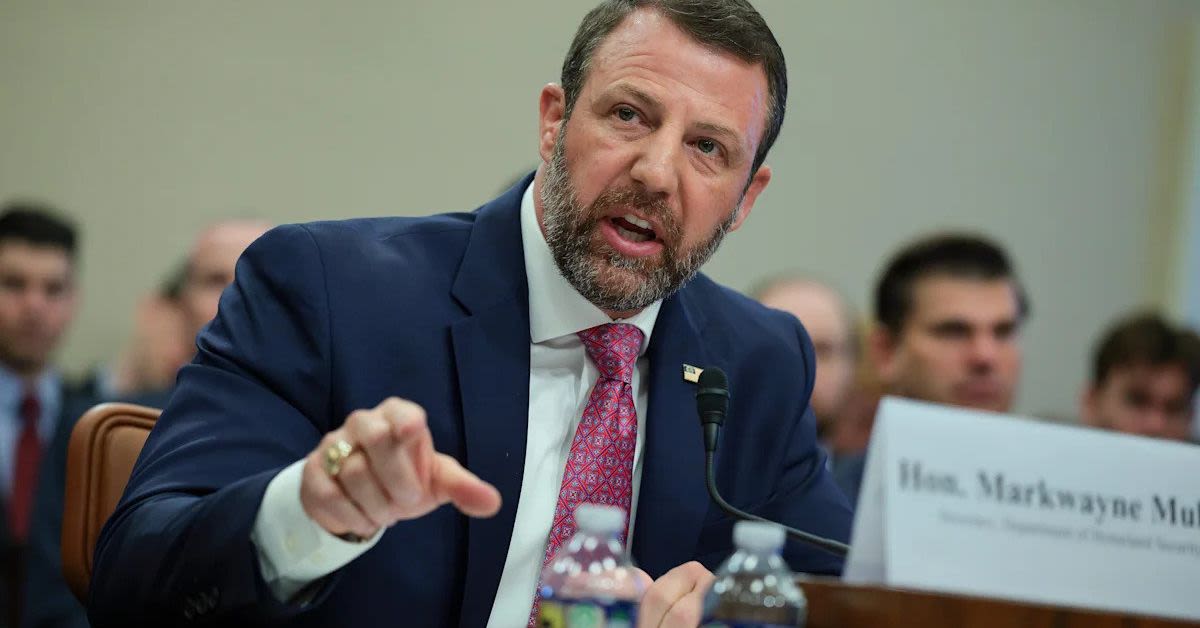
Homeland Security Secretary Markwayne Mullin has moved to suspend a Biden-era visa waiver program that had granted Chinese nationals streamlined access to the U.S. territory of the Northern Mariana Islands.
According to Breitbart, the Department of Homeland Security (DHS) filed a federal notice on Monday announcing that the CNMI Economic Vitality and Security Travel Authorization Program will be halted effective 2 p.m. Eastern time on October 30, three days after its scheduled publication in the Federal Register. The program had allowed prescreened Chinese travelers to enter the western Pacific territory for business or tourism, typically for up to 14 days, without first obtaining a visa.
Once the suspension takes effect, Chinese nationals seeking to visit the islands for business or pleasure will need a nonimmigrant visa unless another lawful exception applies, the notice states. The new requirement will apply not only to fresh applicants but also to travelers who already hold an active authorization under the now-paused program.
Chinese visitors who are already in the Northern Mariana Islands under the existing authorization at the time the suspension begins will be allowed to remain for the duration of their approved stay. However, they will need a visa for future visits, unless another exception applies, effectively ending the automatic, visa-free pipeline from Communist China to the U.S. territory.
DHS indicated it will conduct a broader review of the program in coordination with the State and Interior Departments, reflecting heightened scrutiny of security and sovereignty concerns under President Trumps second administration. The notice, however, offers no deadline for completing that review, leaving the suspension in place indefinitely while the agency reassesses the risks.
Mullins action comes after sustained pressure from Senate conservatives, following an April 22 letter from Sens. Mike Lee (R-UT), Rick Scott (R-FL), John Cornyn (R-TX), and Bill Cassidy (R-LA) to him and Interior Secretary Doug Burgum. The senators warned that the policy was ripe for abuse and urged its termination, particularly given Beijings adversarial posture toward the United States.
The lawmakers argued that the program had become a magnet for so-called birth tourism, in which foreign nationals travel to U.S. soil to give birth so their children can obtain American citizenship. We strongly urge the U.S. Department of Homeland Security to end the CNMI Economic Vitality and Security Travel Authorization Program a benefit that should not be afforded to a recalcitrant country like Communist China, they wrote, adding, We further encourage, in alignment with previous Congressional requests, the termination of Hong Kongs participation in the broader G-CNMI visa waiver program.
DHS appeared to accept much of that reasoning, acknowledging in its notice that the availability of visa-free travel may make it easier for Chinese nationals to travel to the islands to give birth. The department further warned that such birth tourism could strain the Northern Mariana Islands limited medical resources, shifting costs onto American taxpayers and local institutions.
National security concerns also loomed large in the departments justification, with DHS citing the risk that Chinese nationals could exploit the program to gather intelligence near U.S. military facilities in the region. The notice reported that more than 3,000 Chinese nationals entered the Northern Mariana Islands through the program in fiscal year 2025, all vetted only by Customs and Border Protection (CBP) rather than by a State Department consular officer.
To underscore the potential dangers, DHS referenced two criminal cases involving Chinese nationals who were sentenced for smuggling other Chinese citizens from the Northern Mariana Islands to Guam, a key U.S. military hub. DHS said most of the people involved in the second case were later found in or near sensitive military installations, even though the incidents occurred before the travel authorization program was implemented, highlighting longstanding vulnerabilities that the Trump administration is now moving to close.
Login