
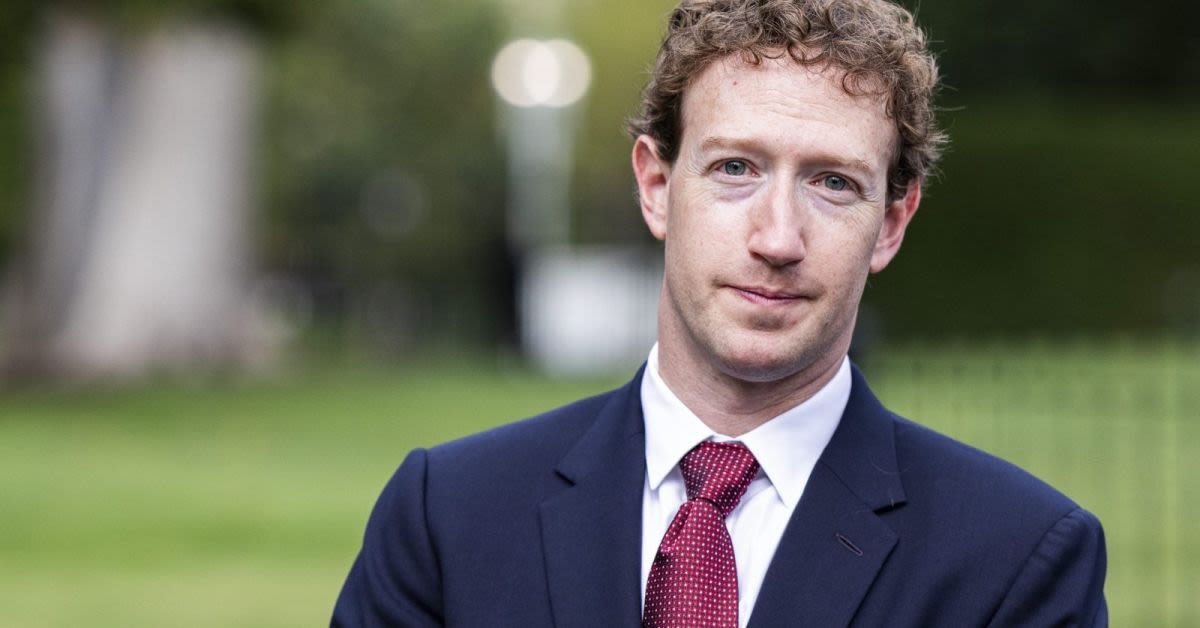
Meta CEO Mark Zuckerberg has warned that he may leave California if voters approve a first-of-its-kind wealth tax targeting billionaires on November 3, prompting his company to take extraordinary steps to keep him and his influence anchored in the state.
According to CBS News, Zuckerbergs threat was disclosed in a new regulatory filing that lays bare the stakes of Californias latest experiment in punitive taxation of high earners. Because of his concerns over the wealth tax, Zuckerberg told Meta that he was "evaluating relocating his primary residence outside California and that steps toward any such relocation, including any listing of his residential real estate in California on the market, would be public and inevitably noted and commented upon by company employees and, accordingly, raise questions for management of the company going forward," the filing states.
That blunt warning underscores how far Californias political class is prepared to go in targeting private wealth and how far even its most prominent business leaders may go in response. Meta, whose headquarters sit in Menlo Park, responded by effectively restructuring part of its capital base to keep its founder in place.
The company said that because Zuckerberg's presence near its California headquarters is "critically important" to its success, the board approved a new class of nonvoting common stock that he can sell to raise cash to pay the wealth tax, if voters approve it. In other words, rather than accept a further erosion of property rights through aggressive taxation, Meta is bending its corporate structure to shield Zuckerbergs control while complying with the states demands.
Without this maneuver, Zuckerberg would have been forced to sell voting shares to cover a potential multibillion-dollar tax bill, weakening his grip on the company he built. That prospect would have pleased activists who distrust concentrated corporate leadership, but it also risked undermining Metas long-term strategy at a time of intense global competition in technology and artificial intelligence.
In exchange for the new stock class, Zuckerberg has agreed to stay put at least for now. As a result of that decision to issue new stock, Zuckerberg has told Meta he will commit to remaining a California resident for eight years.
If Meta moves its headquarters to another state, Zuckerberg will move to that jurisdiction, according to the regulatory filing, a reminder that businesses and their leaders can and will vote with their feet when government overreach becomes too costly. The filing throws a spotlight on the broader political fight over Proposition 40, the proposed billionaire wealth tax that will appear on Californias November 3 ballot.
Under the proposal, the tax would impose a one-time 5% state tax on billionaire wealth about $12.4 billion of Zuckerberg's estimated $247 billion net worth, according to the Bloomberg Billionaires Index. For progressives, this is framed as fair share policy; for conservatives, it is a textbook example of confiscatory taxation that punishes success and jeopardizes economic dynamism.
Metas leadership made clear it views Zuckerbergs continued presence in California as central to the companys fortunes. The company believes "it is critically important to keep Mr. Zuckerberg in a leadership position with our company and that he continue to reside in and manage the company from our headquarters in California to ensure his continued ability to effectively drive our performance during this era of unprecedented challenge and competition in our industry," Meta said in its filing.
That language reflects a reality often ignored by advocates of ever-higher taxes: top innovators are not interchangeable parts, and driving them away has real economic costs. Supporters of Proposition 40 claim the measure will raise $100 billion from the states wealthiest residents, with the funds earmarked to bolster Californias strained healthcare system.
Yet even academics in the state are sounding alarms about the unintended consequences of such a levy. Stanford University economists have questioned whether the tax could backfire, given that several billionaires have already moved out of the state.
The economists said that could result in lower projected wealth taxes and reduced overall income tax collections, validating long-standing conservative warnings that punitive tax policy shrinks the tax base rather than stabilizing it. The creation of a new stock class is not solely about keeping Zuckerberg geographically close to Metas headquarters, the filing indicates.
The publicly listed, nonvoting Class C common stock, which will become effective in January, is also intended in part to boost the company's ability to raise capital for AI infrastructure investments. It will also use the new stock to raise capital, compensate employees, make acquisitions and for other general corporate purposes, a strategy that aligns with free-market principles by leveraging private capital rather than relying on government subsidies.
Outside analysts see the move as a way to preserve strong, centralized leadership while still funding ambitious growth. "Meta plans to issue nonvoting shares to fund AI investments without diluting CEO Mark Zuckerberg's control," said Andrew Rocco, stock strategist at Zacks Investment Research.
For critics of Californias high-tax, high-regulation model, the episode serves as a case study in how aggressive redistributionist policies force even the most powerful companies into defensive contortions and how easily the state could lose its remaining economic crown jewels if voters continue down this path.
Login