
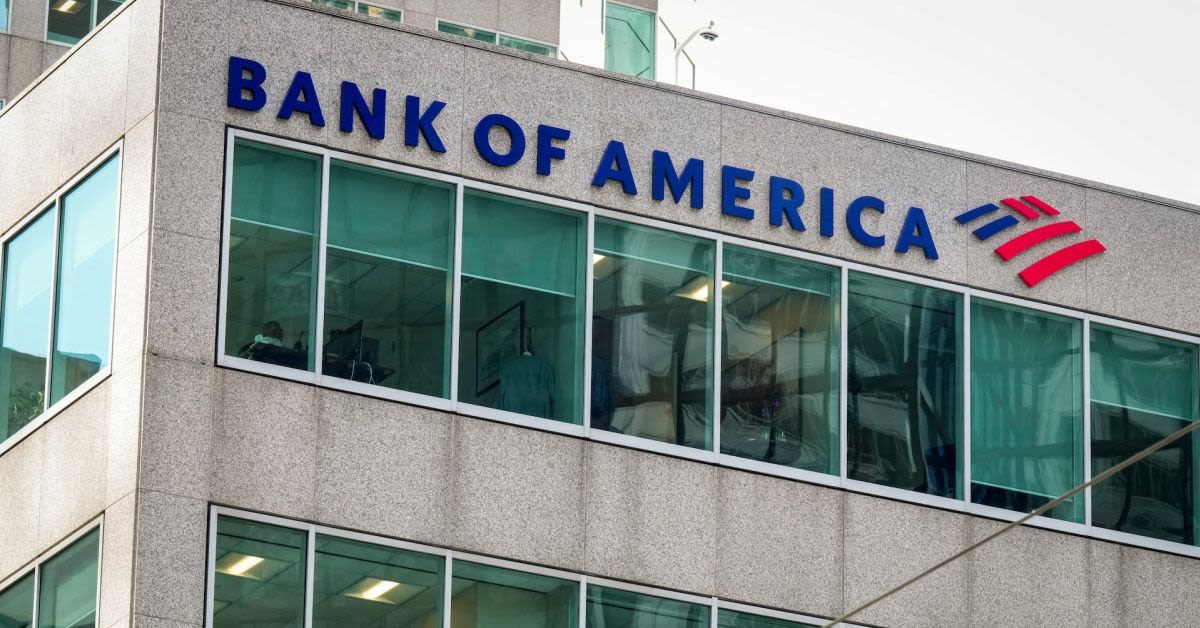
The administrations Treasury Department has slapped Bank of America with a staggering $1.
2 billion in penalties for what officials describe as sweeping failures to comply with anti-money laundering and U.S. sanctions laws, raising fresh questions about accountability at one of the nations largest financial institutions.
According to Western Journal, the unprecedented enforcement action underscores how a bank that has eagerly embraced progressive causes and corporate wokeness appears to have been far less diligent when it came to basic obligations tied to national security and the integrity of the financial system.
Treasury Secretary Scott Bessent did not mince words in announcing the penalties, warning that When a bank of this size fails to meet its anti-money laundering and sanctions obligations, the consequences extend far beyond its own walls, exposing the entire U.S. financial system to significant illicit finance risks.
Todays actions send a clear message that even the biggest financial institutions are not above the law, he added, signaling that regulators are prepared to act aggressively when systemic compliance failures intersect with threats such as terrorism, narcotics trafficking, and hostile foreign regimes.
The $1.2 billion in fines represent the largest penalty ever imposed by the Office of the Comptroller of the Currency and the third-largest ever levied by the Treasury Department, a scale that reflects the seriousness of the violations.
Treasury reported that the sanctions were assessed by the Financial Crimes Enforcement Network as a penalty for the Banks failure to mitigate and report priority national security risks, including Chinese Money Laundering Networks and illicit finance along the southwest border.
In addition to the headline-grabbing fine, Bank of America agreed to an $11.6 million settlement over violations of numerous sanctions programs, including on Iran, Russia, narcotics, and global terrorism.
The Treasury Department further disclosed that Bank of America has admitted to having willfully violated the Bank Secrecy Act, a key statute designed to prevent the U.S. financial system from being weaponized by criminals and adversarial states.
Faced with this record-setting rebuke, the bank issued a carefully worded statement attempting to reassure investors and the public that it understands the gravity of the situation.
Financial crime compliance is serious, and we are responsible for getting it right, Bank of America said in a statement reported by the Associated Press, acknowledging that the failures were not mere technical oversights.
The bank emphasized that it has been cooperating with regulators and attempting to resolve the matter as part of broader remediation efforts.
We worked with regulators to reach these penalty resolutions stemming from violations cited in the previously reported 2024 (Comptroller of the Currency) Consent Order and FinCENs investigation, the statement continued, suggesting that the problems had been on the governments radar for some time.
Investors appeared to react negatively to the news, with Bank of Americas stock trading lower as of Wednesday morning, reflecting concerns over both the immediate financial hit and the longer-term reputational damage.
The penalties arrive at a time when many Americans already distrust large financial institutions that seem quick to police conservative speech and causes, yet slow to police actual criminal activity flowing through their systems.
Speaking at CNNs Global Perspectives panel in Bangkok on Wednesday, top Bank of America executive Bernard Mensah tried to project confidence that the bank is now on the right path.
Financial crimes compliance is very serious and really important, he said, according to CNN. We we take it very, very seriously. We spent a huge amount of resources, trying to get it right, and we think we are getting it right. But these are very high standards, and so were working towards that.
The bank has already been under scrutiny for other controversies, including a $72.5 million settlement last spring over a lawsuit related to Jeffrey Epstein, a case that raised further doubts about how rigorously major institutions vet their clients.
According to the Bank of America, the latest $1.2 billion in fines will directly affect the companys quarterly earnings results, which were scheduled to be released on Wednesday, adding a tangible cost to what had previously been a largely abstract compliance problem.
Our third-quarter results will include a non-tax-deductible charge of $1.2 billion impacting net income by approximately 17 cents per share, the company said in a statement to CNN, underscoring that shareholders will feel the impact immediately.
We have already dedicated substantial personnel and resources to our ongoing remediation efforts, and those costs are in the current expense base, the statement continued, implying that the bank expects elevated compliance spending to remain part of its operating reality.
CNN, citing internal control failures, reported that the root of the problem lay in a flawed sanctions-screening system that failed to properly elevate high-risk transactions.
As the outlet explained, the banks sanctions-screening filter had a design flaw that prevented it from appropriately prioritizing certain potentially prohibited transactions.
The technical failure had serious implications, because it meant that transactions potentially involving sanctioned individuals were not treated with the urgency they deserved.
When a transaction matched an individuals name and date of birth on the US Treasury Departments sanctions list, the banks system did not flag the transaction as high priority, CNN added, describing a breakdown that effectively opened the door to illicit finance slipping through the cracks.
These revelations come on the heels of criticism from a conservative advocacy group in August, which accused Bank of America of being among the corporations still aggressively promoting wokeness in their internal policies and public branding.
While the bank has been willing to take political stances that often align with left-wing cultural priorities, its apparent inability to meet basic legal standards on money laundering and sanctions will likely fuel arguments that corporate activism is distracting from core fiduciary and compliance responsibilities.
For many on the right, the episode reinforces a broader pattern in which powerful financial institutions are quick to close accounts or restrict services for pro-life groups, Christian organizations, and other right-of-center entities, yet somehow manage to miss red flags tied to Chinese money laundering networks or sanctioned regimes.
The sheer scale of the penalties, the admission of willfully violating the Bank Secrecy Act, and the exposure of a sanctions-screening system that failed at a fundamental level all raise a basic question: if Bank of America can devote a huge amount of resources to getting compliance right and still fall this far short, perhaps it is time for less corporate virtue signaling and more serious attention to the rule of law and the national security interests those laws are meant to protect.
Login