
Democrats keep promising moderation, but when pressed to prove it, the faade collapses almost instantly.
In Colorados 4th Congressional District, Democratic candidate Eileen Laubacher is attempting to unseat Republican Rep. Lauren Boebert by casting herself as the reasonable centrist in the race, a sober alternative to what she portrays as Boeberts alleged extremism. According to Western Journal, Laubacher has gone so far as to claim she is prepared to stand up to extremists in both parties, a line clearly crafted to appeal to right-leaning and independent voters in a heavily Republican district who are weary of ideological grandstanding.
Her campaign ad leans heavily into that theme, with a narrator declaring, Like so many of us, Eileen is done with the extremists in both parties, before adding, Maybe the best way to break through the noise is a little less talking and more listening. The message is unmistakable: Laubacher wants voters to believe she is the calm, centrist adult in the room, willing to listen, compromise and rein in the fringes on both sides of the aisle.
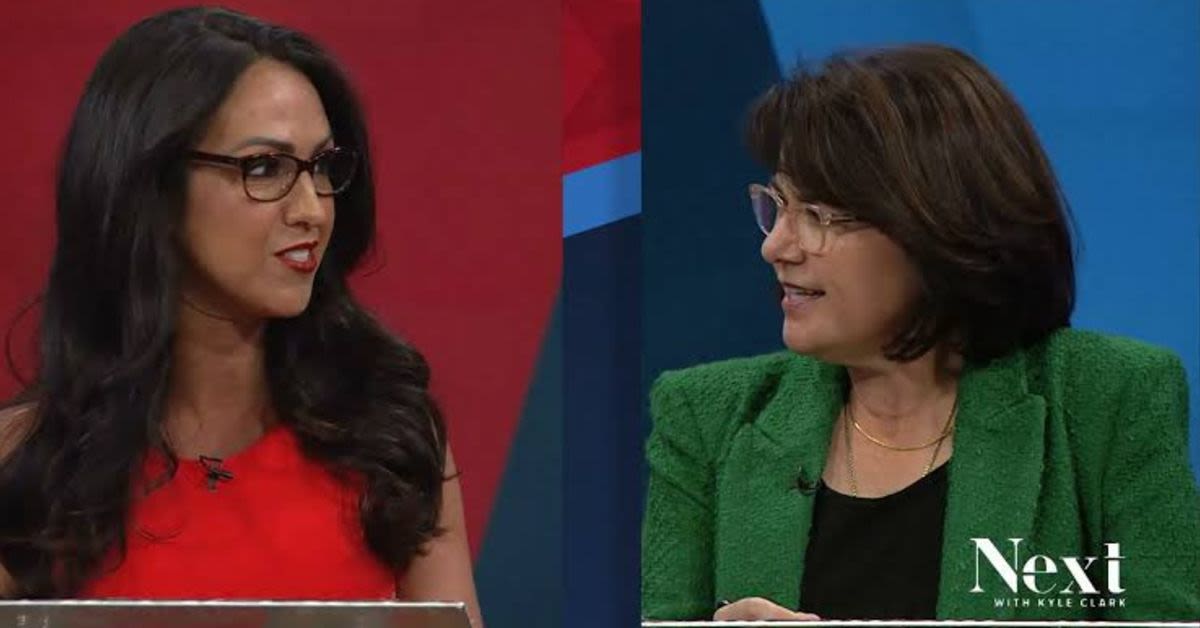
That carefully constructed image, however, ran into serious trouble during her lone debate with Boebert on Monday, when a moderator asked her to do something very simple: identify the supposed extremists in her own party. Ms. Laubacher, you have an ad running right now that says that you are done with the extremists in both parties, said Kyle Clark of KUSA-TV in Denver, directly tying his question to her own campaign messaging. Who are the extremists in your Democratic Party? Please name them and explain how youll stand up to them.
The moment that followed was revealing, not just about Laubacher but about the broader Democratic strategy of talking like moderates while governing like progressives. I think I think whats extreme is you want me to name specific people? Laubacher replied, clearly caught off guard by a question any genuinely independent-minded candidate should have anticipated. When Clark clarified, Yes, specific people, she retreated further, responding, I dont think thats really necessary, Kyle. I think its more important to talk about the things that they want to do and the things that I want to do.
That dodge stands in stark contrast to the posture of courage and independence her ad tries to project, especially in a district where Republicans dominate and any Democrat must persuade skeptical conservatives that they are not just another rubber stamp for the national party. Instead of seizing the opportunity to demonstrate real backbone, Laubacher reverted to vague platitudes about bipartisanship and process. What I want to do is find ways to work in a bipartisan way, to include voting on important bipartisan housing legislation, which I would have absolutely done, she said, pivoting away from the specific question she had just been asked.
She continued with more generic rhetoric about unity and common ground, insisting that she is focused on bridging divides rather than naming names. But I think its also important to find ways to find middle ground with people. I believe that we have way more in common across the aisle than we do that separates us. But I believe that the loudest voices on both sides are the ones that are making the most noise, and people think that that is what we should be listening to, and I do not think so.
Clark, to his credit, did not let the evasion slide, pressing her on the obvious contradiction between her ad and her unwillingness to identify a single Democrat she considers extreme. How are voters to believe that you will stand up to people who you will not even name? he asked, distilling the core credibility problem in one pointed question. Laubachers answer only deepened that problem: Because I think because I think that if I name three and forget two, like, thats not going to help anyone, she said, before adding, Also, I think its important to understand that I think what we need to do is stand up for things that are right.
For a candidate running on the promise of confronting extremism in both parties, the inabilityor unwillingnessto identify even one Democrat who fits that description is telling. It suggests that the bipartisan branding is more marketing than conviction, a calculated attempt to reassure conservative voters without risking any real friction with the partys activist base or its powerful progressive wing. If Laubacher truly believed what her ad claims, she would have been ready with at least one example, especially given the abundance of high-profile Democrats who have embraced radical positions.
The list of potential names is hardly obscure, even for a cautious candidate. She could have pointed to Rep. Ilhan Omar, whose controversies over anti-Israel rhetoric and radical policy stances have made her a lightning rod even within her own party, and who has been under renewed scrutiny after the raid on her Washington, D.C., home. She might have mentioned Rep. Alexandria Ocasio-Cortez, whose Green New Deal and hard-left economic agenda have become synonymous with the Democratic Partys progressive shift, if she truly wanted to signal independence. Beyond the House, she could have cited Sens. Ed Markey, Chris Van Hollen or Elizabeth Warren, all of whom have championed expansive government programs and regulatory schemes far outside traditional American conservatism.
Instead, Laubacher chose to stammer, stall and ultimately sidestep, reinforcing the suspicion that her moderate posture is little more than a campaign costume. The very ad that invited this line of questioningby proclaiming she is done with the extremists in both partiesbecame the trap she could not escape once a journalist simply asked her to back it up. For voters in Colorados 4th District, that disconnect between rhetoric and reality may matter more than any carefully scripted commercial.
This episode also reflects a broader pattern within the Democratic Party, which increasingly markets itself as the party of pragmatism and competence while refusing to confront the radicalism in its own ranks. On issues ranging from crime and immigration to energy and education, the loudest progressive voices have driven policy and messaging, even as moderates insist they are still in control. The same party that helped unleash historic inflation through reckless spending now postures as the defender of working families against rising costs, while carefully avoiding any serious reckoning with how we got here in the first place.
The progressive pronoun police of 2024, as critics have dubbed them, have seamlessly rebranded as cost-of-living crusaders, even though nobody wants to mention who started us down the inflation highway. (Joe Biden, anyone? A Democratic Congress?) That refusal to name nameswhether on economic mismanagement or ideological extremismis precisely what Laubacher displayed on the debate stage. It is a pattern of evasion that allows Democrats to talk like centrists at election time while governing like progressives once in office, confident that the media will rarely press them as directly as Clark did.
If Democrats truly want to be seen as the party of moderation and common sense, they will have to do more than recite focus-grouped lines about bipartisanship and middle ground. They will need to acknowledge, and then marginalize, the elements within their coalition that openly advocate for policies far outside the American mainstream, from defunding police to socialized medicine to radical gender ideology in schools. When a candidate like Eileen Laubacher cannot even bring herself to identify a single Democrat she considers extreme, despite building her campaign message around opposing extremists in both parties, voters are right to question whether that moderation is anything more than a slogan.
Login