
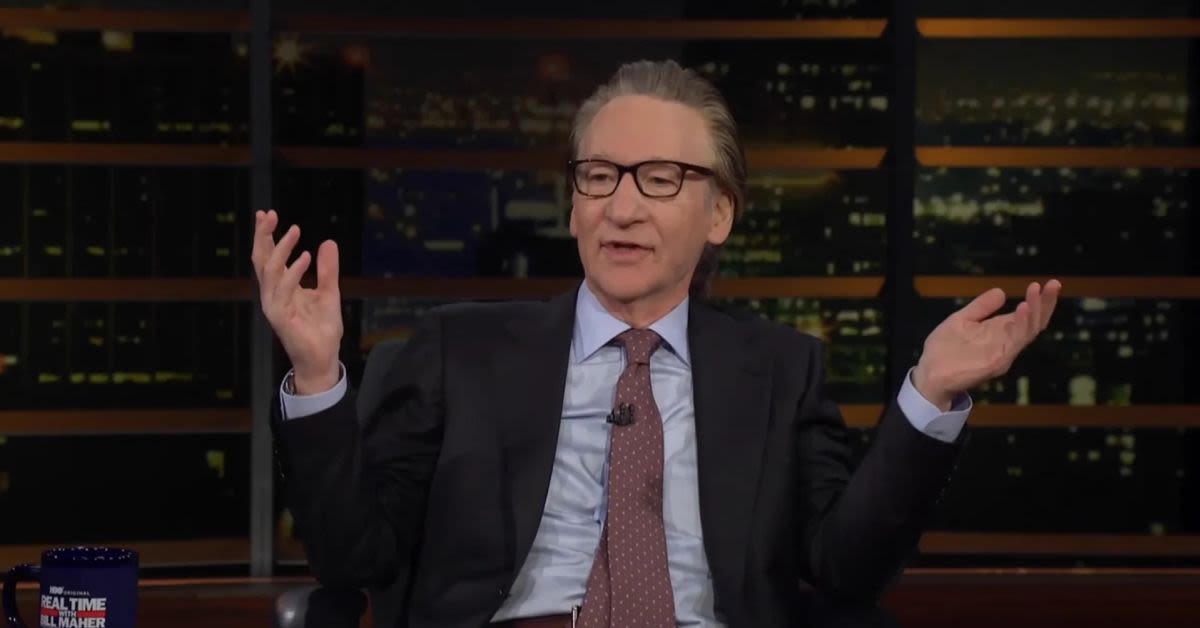
Bill Maher, one of the few prominent liberals still willing to challenge his own sides excesses, is once again rattling the left by openly engaging with President Donald Trump and questioning the Democratic Partys increasingly radical drift.
According to RedState, Maher has spent much of this election season blasting what he sees as the Democrats descent into socialist ideology and cultural extremism, warning that the party is alienating ordinary Americans. Earlier this year, he even floated the possibility of backing a Republican in the next presidential cycle if Democrats stay on their current course, remarking that he could be open to voting for figures such as Vice President JD Vance or Secretary of State Marco Rubio in 2028. My vote is in play, he said, a statement that underscores just how far left the Democratic establishment has veered when a lifelong liberal like Maher is publicly entertaining a GOP alternative.
On his Club Random podcast, Maher disclosed a new development that is almost certain to send progressive activists into another fit of outrage. During a conversation with Hollywood power broker Ari Emanuel, Maher revealed that Trump had invited him back to the White House for a second private dinner, a gesture that signals an ongoing, if unlikely, dialogue between the blunt-spoken comedian and the president.
I'm having dinner with him next week, Maher told Emanuel, explaining that the invitation came unexpectedly and that Trump appeared eager to reconnect. In a clip circulating online, Maher recounted the exchange in detail: [President Trump] just, out of the blue, let's have dinner again. I was like, great. And he was, like, really nice. Like, I promise I won't say bad things about you like I did the last time. And I texted back and I said, you know what? You're the president of the United States. Say whatever the f*ck you want. I'm just glad we're talking.
Maher emphasized that nothing about his own work changed after their first meeting, despite the predictable backlash from the left. "After the first dinner, I went back to doing what I do. But then, like, he just, out of the blue, 'Let's have dinner again.' And I was like, great. And he was really nice. Like, 'I promise I won't say bad things about you like I did the last time.'"
He reiterated his response to Trump, stressing that he values open conversation over partisan outrage. "And I texted back, and I said, 'You know what, you're the president of the United States. Say whatever the f--- you want. I'm just glad we're talking.' It's like being called a 'hockey puck' by Don Rickles. It's just what he does. It's how he talks." For Maher, the willingness to sit down with a president he often criticizes is not a betrayal of principle but a basic exercise in free speech and civic engagement.
Maher admitted it blows my mind that anyone would refuse such an invitation purely out of political animus. To him, a private dinner in the White House with the president, just a few people, say whatever you want is an opportunity to be seized, not shunned, especially for someone who claims to care about the direction of the country. That perspective stands in stark contrast to the lefts increasingly rigid orthodoxy, where merely being in the same room with Trump is treated as a moral crime.
Among those who erupted over Mahers first dinner with Trump was comedian and producer Larry David, who publicly castigated Maher for even speaking with the president. Maher, however, pointed out the glaring double standard when he noted that Davids own agent, Ari Emanuel, had also recently spoken with Trump, yet somehow escaped the same moral condemnation.
Bill Maher exposes Larry Davids hypocrisy by SLAMMING him for the Hitler op-ed over their Trump dinner, while David says nothing when his own agent TALKED to POTUS. Bill Maher: It's so interesting to me that Larry David, I'm like, I'm the devil because I talk to him, but his own agent just talked to him on Monday. Ari Emanuel: Listen, this is your stick with him.
Maher pressed the point, refusing to let Emanuel sidestep the obvious inconsistency. Bill Maher: I know, but you must recognize the hypocrisy there. Somehow when it's his own agent doing the exact same thing, then we don't play the Hitler card. We don't [hate to] play the Hitler card. Just admit that. It's true. The exchange laid bare a familiar pattern on the left: personal relationships and professional interests are quietly exempted from the moral hysteria reserved for public enemies.
"It's so interesting to me that Larry David, like, I'm the devil because I talk to him, but his own agent just talked to him on Monday," Maher laughed as Emanuel tried to avoid taking a position. "You must recognize the hypocrisy there. Somehow, when it's his own agent doing the exact same thing, this is, then we don't play the Hitler card." That kind of selective outrage has become a hallmark of progressive politics, where accusations of Hitler and fascism are deployed as partisan weapons rather than serious moral judgments.
Maher has also contrasted his interactions with Trump to his experiences with Democratic presidents such as Barack Obama and Bill Clinton, and his assessment is hardly flattering to the latter. "I never felt I had to walk on eggshells around him," he told his audience, describing Trump as more approachable and less scripted than the polished Democratic leaders.
He went further, underscoring how this difference reflects poorly on his own party. "And honestly, I voted for Clinton and Obama, but I would never feel comfortable talking to them the way I was able to talk with Donald Trump. That's just how it went down. Make of it what you will. Me? I feel it's emblematic of why the Democrats are so unpopular these days." For many conservatives, that admission simply confirms what they have long argued: whatever his flaws, Trump comes across as authentic, while establishment Democrats project elitism and distance.
That authenticity, combined with Mahers willingness to defy his own tribe, highlights a deeper political realignment that Democrats ignore at their peril. When a high-profile liberal commentator says of Trump, in effect, that hes real, unlike the other two, it underscores why so many voters are turning away from a left increasingly defined by hypocrisy, intolerance, and ideological extremism.
Login