
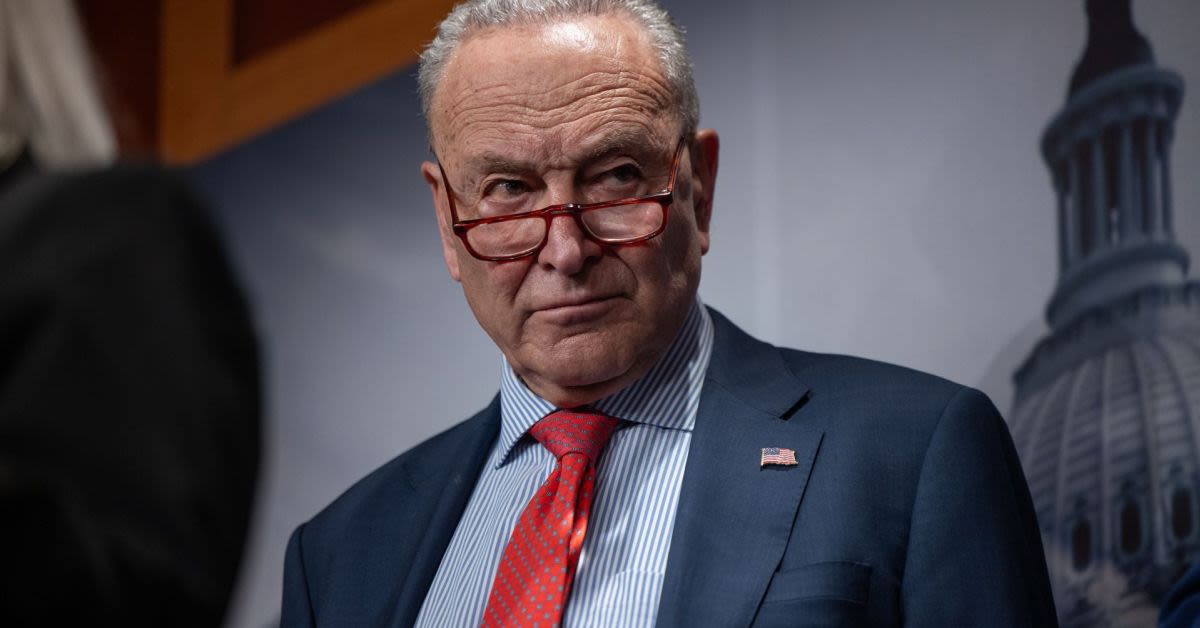
Senate Minority Leader Chuck Schumer, D-N.Y., is projecting confidence that Democrats will reclaim the Senate majority in November even as a growing number of voices within his own party refuse to guarantee they will keep him in charge.
According to Fox News, Schumer, who has helmed the Senate Democratic Caucus since 2017, insists his party has "wind in our sails" heading into a midterm cycle that many Republicans warn could be punishing for the GOP. Yet the New York Democrats grip on leadership appears less secure than his rhetoric suggests, underscoring a broader unease among Democrats about a leadership class that has presided over repeated electoral and legislative disappointments.
Schumer has made clear that, regardless of the outcome in November, he intends to remain the top Democrat in the chamber. "I am running for re-election for leader," Schumer told Politico. "Period."
That declaration is colliding with a restive Democratic base and a slate of candidates who are increasingly willing to distance themselves from Washingtons entrenched leadership. Several contenders in pivotal races that could determine control of the Senate are signaling they are not prepared to rubber-stamp another term for the New York liberal who inherited the mantle from his late mentor, Sen. Harry Reid, D-Nev.
In Kansas, Adam Hamilton has turned what should be a safe Republican seat into a toss-up against incumbent Sen. Roger Marshall, R-Kan., in a state long considered reliably conservative. Hamilton reiterated this week that he will not back Schumer for leader, whether Democrats find themselves in the majority or the minority.
"And no disrespect for him at all, it's just that I think we need new ideas," Hamilton told CBS News. "We need new ideas, we need fresh leadership. I support term limits. I support age limits, and I just think there's a time where we need to have new and fresh leadership coming in, and I think this is one of those times."
Hamiltons stance reflects a broader frustration among voters who are weary of career politicians and the calcified leadership structures that dominate both parties. That sentiment is not confined to red states, as Democrats Abdul El-Sayed in Michigan and Lt. Gov. Peggy Flanagan in Minnesota have both refused to commit to supporting Schumer, even after benefiting from the financial backing of the Senate Majority PAC, the powerful committee closely aligned with his operation.
Both campaigns were contacted by Fox News Digital for comment but have so far avoided clarifying their positions. Their reluctance to endorse Schumer underscores a growing divide between the partys Washington establishment and its activist base, which often pushes for more radical policies while simultaneously demanding generational change at the top.
Since the 2024 election, when Schumer presided over the loss of the Senate, Democrats have been quietly debating whether it is time for a new direction in leadership. Those private conversations reportedly intensified twice last year: first when Schumer refused to allow a government shutdown early in President Donald Trumps term, and later when he failed to prevent Democrats from defecting to end what became the longest full government shutdown in American history.
Many Democratic senators still refuse to publicly engage on the question of replacing Schumer, wary of open intraparty warfare. One exception has been Sen. Elissa Slotkin, D-Mich., who has bluntly acknowledged that Democrats remain unsettled and divided in the wake of their 2024 defeat, saying that "every day, theres a debate within the party about the path forward."
"Thats why I believe we need significant new leadership," Slotkin said. "The old models are no longer working, and that includes the Democratic Party." Her comments echo a broader critique that the partys leadership has grown stale, more focused on preserving its own power than on delivering results for working families or respecting the limits of federal authority.
One name frequently floated as a potential successor is Sen. Chris Van Hollen, D-Md., who has drawn support from progressives, including El-Sayed. Van Hollen has so far declined to say whether he will challenge Schumer, insisting before leaving Washington, D.C., last month that the midterms were "all I am focused on."
Other Democrats are similarly evasive, preferring to postpone a leadership reckoning until after the votes are counted. When asked whether retaking the Senate would strengthen Schumers hand, Sen. Chris Murphy, D-Conn., brushed off the question, saying only, "Im not doing those questions now."
For conservatives, the internal Democratic rift highlights a party struggling to reconcile its radical activist wing with a leadership class that has failed to deliver stability, prosperity, or restraint in government. Whether Democrats cling to Schumer or replace him with another liberal standard-bearer, the underlying problem remains the same: a party increasingly defined by big-government instincts, internal discord, and a leadership vacuum that even its own rising stars are no longer willing to ignore.
Login