
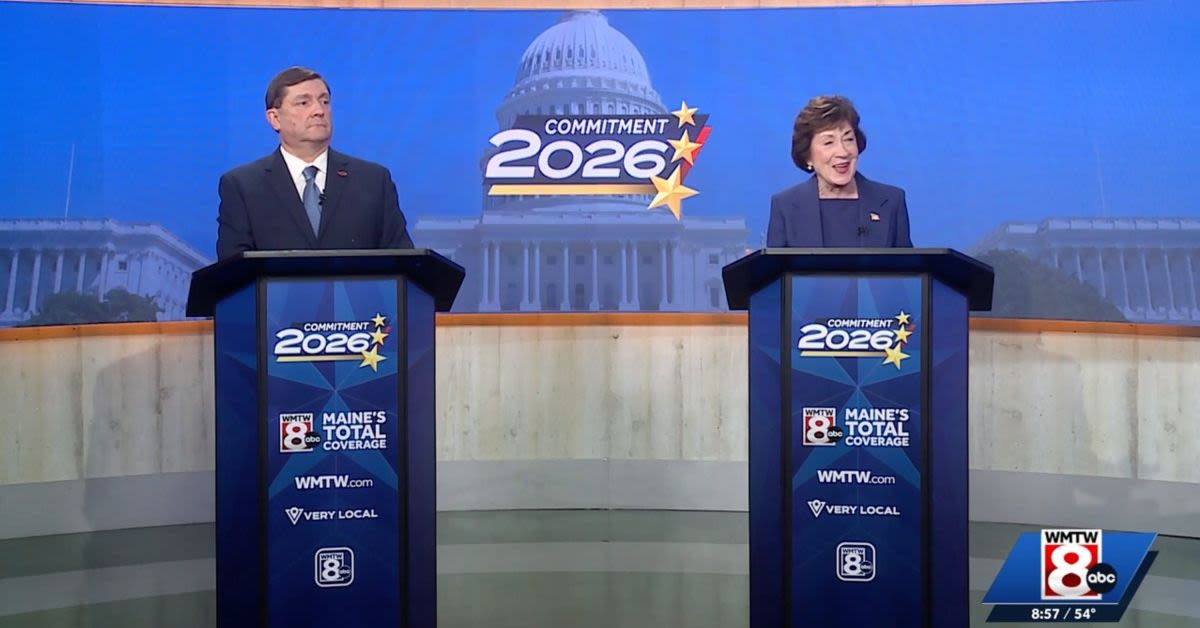
Maine Democrat Troy Jackson, who has built his U.S. Senate campaign on fiery denunciations of greedy corporations, is now struggling to explain why a political committee he led raked in tens of thousands of dollars from the very corporate interests he claims to oppose.
During a debate with Republican incumbent senator Susan Collins, Jackson was pressed on the fundraising record of the Maine Senate Democratic Campaign Committee (SDCC), a political action committee he headed while serving as president of the Maine Senate from 2018 to 2024. According to the Washington Free Beacon, the SDCC accepted nearly $54,000 from corporate PACs during Jacksons leadership, including checks tied to pharmaceutical giant Cigna, financial powerhouse Bank of America, and Avangrid, Maines dominant power utility, even as Jackson now campaigns against corporate influence.
Confronted with this record, Jackson conceded he had a real significant role with the committee but insisted he was powerless to block the influx of corporate cash. I can't help that an organization that I actually worked with and had a real significant role in decided to take checks from people, Jackson said, a defense that immediately drew fire from Collins and raised questions about his credibility with voters who are weary of political doublespeak.
Collins, a veteran lawmaker who has often drawn conservative support for her steadier approach to governance, rejected Jacksons attempt to distance himself from the SDCCs fundraising decisions. Troy was head of this PAC, he set the rules, Collins said, adding, And for him to pretend that he had no idea what the contributions were to his leadership PAC when it was big tobacco, it was pharma, it was many other companies, just defies belief.
The record of Jacksons tenure as the SDCCs principal officer sits uneasily beside his populist rhetoric on the campaign trail, where he has cast himself as a champion of blue-collar Mainers against entrenched interests. Jackson has accused Collins of having sold out to lobbyists and special interests while claiming he fought for working Mainers, and he says he is running because the status quo isn't working due to high-priced lobbyists and corporate greed.
Yet the SDCCs donor rolls under Jackson tell a different story, one that looks far more like standard-issue Democratic machine politics than grassroots reform. In addition to corporate PAC money, the committee collected more than $130,000 from firms registered to lobby the Maine legislature and over $22,000 from individual lobbyists during his leadership, a pattern that undercuts his anti-lobbyist messaging and reinforces conservative concerns about left-wing hypocrisy on money in politics.
Jacksons entanglements with lobbying interests extend into his own family, further complicating his claims of independence from special interests. His son, Chace, worked as a lobbyist for a firm founded by Jacksons former chief of staff while Jackson held the powerful post of Maine Senate president, a relationship that raises obvious ethical red flags for voters who expect clear lines between public service and private influence.
Collins highlighted this conflict during the debate, pointing to Jacksons shifting stance on gun rights as his son lobbied for Maines leading gun control organization, the Maine Gun Safety Coalition. If you look at the number of times that Troy has flip-flopped his position on issues, it usually has to do with issues that his son has been hired to lobby him on, she said, underscoring a pattern that conservatives see as emblematic of a Democratic Party increasingly driven by activist pressure and special-interest money rather than by the working-class voters it claims to represent.
Login