
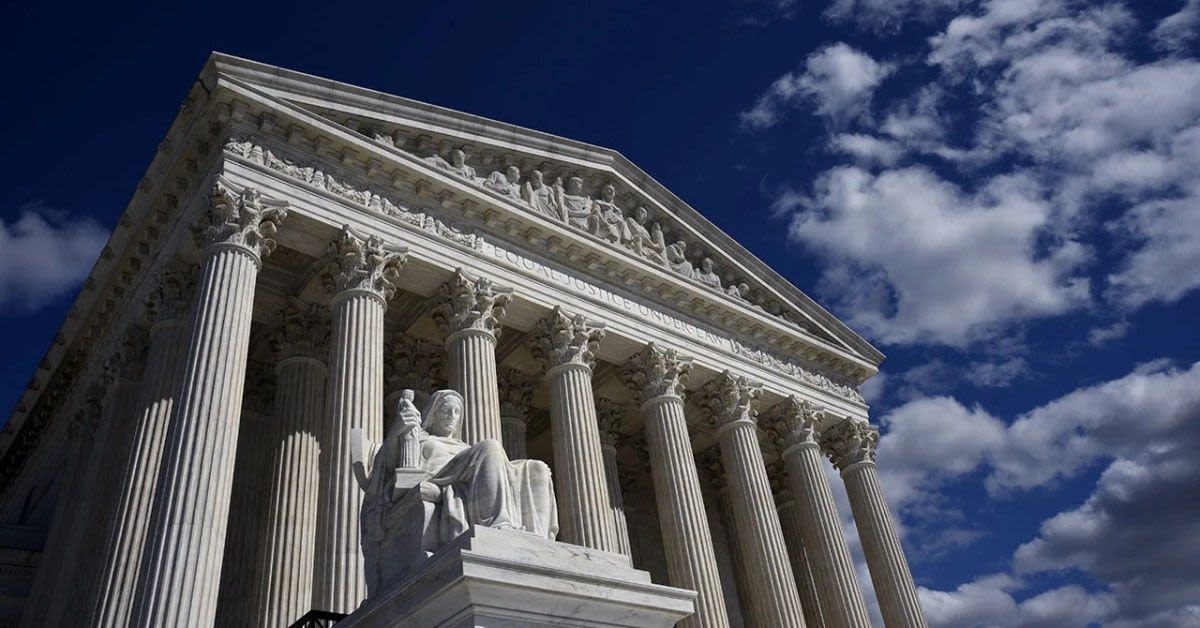
Supreme Court Justice Clarence Thomas used oral arguments this week to expose just how sweeping and dangerous climate litigation against energy producers could become if the high court allows it to proceed.
According to Western Journal, the city of Boulder, Colorado, is attempting to haul major international oil companies into court, claiming their greenhouse gas emissions have damaged the local climate and demanding financial reparations. The case, which has now reached the Supreme Court, is being closely watched by activists and progressive politicians who see the judiciary as a backdoor way to impose Green New Dealstyle energy policy that has repeatedly stalled in Congress.
During Mondays arguments, Thomas pressed Boulders attorney, Kevin Russell, on the logical endpoint of the citys legal theory. If you prevail, is there a limiting principle to whom you can sue? Thomas asked, signaling concern that the lawsuits rationale could be stretched far beyond a handful of multinational corporations.
Russells answer did little to allay those fears and instead underscored how open-ended the plaintiffs approach really is. He replied, The question here is not whether anything in the Constitution prohibits this lawsuit but whether the specific theories that they raised in the Colorado Supreme Court are valid.
Thomas then drilled down further, pointing out that the same reasoning could easily be turned against ordinary businesses that sell fuel to the public. So you could just as easily sue large retailers of these products? Thomas asked, to which Russell said, Nothing in the Constitution would prevent that In terms of when lots of people act together to cause widespread harm, which is not uncommon for multiple different defendants to be potentially liable.
In other words, under Boulders theory, not only oil majors but also local gas stations, big-box retailers, and perhaps even small businesses could find themselves targeted for supposedly contributing to widespread harm through lawful commerce. Thomas is correct to be alarmed, because if the court blesses this approach, every left-leaning city and county in America will have a green light to weaponize the courts against energy producers that do not conform to a radical climate agenda.
This concern was echoed by Kannon Shanmugam, counsel for the oil companies, who warned the justices about the national implications of letting Boulders claims go forward. If Boulders claims are allowed to go forward, some 90,000 municipalities across the country will have the ability to make national and international energy policy by asking juries to impose catastrophic damages on selected fossil fuel producers, he declared.
That is not merely a legal technicality; it is an attempt to shift energy policymaking from elected representatives to trial lawyers and sympathetic juries. The fact that the Supreme Court is even entertaining such a sweeping theory of liability is troubling, because it invites a patchwork of local verdicts that could effectively dictate national energy policy without a single vote in Congress.
For years, liberal lawmakers and activists have been fixated on dismantling the oil and gas industry, not through honest debate and legislation, but through regulation, subsidies for favored technologies, and now litigation. Their hostility to fossil fuels has little to do with realistic energy planning and everything to do with ideological hostility to traditional industry, private enterprise, and American energy independence.
Wind and solar companies, despite decades of subsidies and political cheerleading, remain nowhere near capable of replacing the enormous and reliable output of oil and gas. Even in the most optimistic projections, intermittent renewables cannot shoulder the baseload demands of a modern industrial economy without massive backup from conventional sources.
Yet climate-focused Democrats continue to issue vague predictions and dire proclamations, using apocalyptic rhetoric to justify policies that deliberately undermine Americas energy security. By constraining domestic production and driving up costs, they weaken U.S. sovereignty and make the nation more dependent on international agreements and global bureaucracies that are unaccountable to American voters.
Climate alarmism is not new, but its intensity has escalated dramatically over the past three decades, even as many of its most specific predictions have failed to materialize. The central problem with the movement is that its benchmarks and deadlines are constantly shifting, making it more a vehicle for political power than a serious, falsifiable scientific program.
First, the rallying cry was global warming, with activists insisting that steadily rising temperatures would produce imminent catastrophe. When reality proved more complex, the terminology morphed into climate change, a catch-all phrase that conveniently allowed every kind of weather hotter, colder, wetter, drier to be cited as proof of the same theory.
Hollywood eagerly joined the crusade, producing films like the 2004 disaster movie The Day After Tomorrow, which portrayed melting polar ice caps unleashing chaos of almost biblical proportions. Such cinematic propaganda helped cement a culture of fear, especially among younger generations, even as the real-world data failed to match the most extreme scenarios.
On Capitol Hill, Democratic lawmakers have repeatedly demanded billions of taxpayer dollars to prepare for a supposed day of reckoning that never seems to arrive. Each time their doomsday deadlines pass without the promised cataclysm, they simply move the goalposts, reset the clock, and insist that this time the crisis is even more urgent than before.
Former Vice President Al Gore became the public face of this movement after leaving office, building a lucrative career on climate advocacy and investments. Yet many of his most dramatic predictions never came true, and the last chance year for action has been revised so often that it has become a punchline rather than a serious benchmark.
Environmental activists also have a habit of seizing on any major weather event a hurricane, a heat wave, a cold snap, a wildfire and immediately attributing it to climate change or greenhouse gas emissions. These claims are often made with almost no rigorous evidence, but they serve a political purpose: to keep the public in a constant state of anxiety and to justify ever more intrusive government control.
If lawsuits like Boulders were to cripple the existing energy infrastructure, the result would not be a smooth transition to reliable alternatives, because those alternatives do not yet exist at scale. Instead, it would create a vacuum that climate activists would eagerly fill with demands for more subsidies, more mandates, and more taxpayer-funded experiments in technologies that remain unproven or uneconomical.
Such litigation would also advance a broader progressive wish list: more public money funneled into favored industries, new bureaucracies and green jobs for political allies, fresh talking points for campaigns, and expanded regulatory power over something Americans rely on every hour of every day. It is a classic example of using the courts to achieve what cannot be won in the democratic arena.
No one denies that oil and gas have drawbacks, including environmental impacts that must be managed responsibly. But as a nation, the United States has already built its modern economy, infrastructure, and standard of living on the foundation of affordable, abundant fossil fuels, and there is no realistic way to reverse that overnight without inflicting severe economic and social damage.
Even if the country were to attempt a rapid retreat from so-called fossil fuels, the physical infrastructure to deliver alternative energy where it is needed simply does not exist. Transmission lines, storage capacity, backup generation, and grid resilience are all far behind the utopian visions being sold by climate activists and their political allies.
Moreover, petroleum is not just a fuel; it is a critical feedstock for an astonishing array of everyday products that Americans take for granted. It is embedded in car wheels, lipstick, aspirin, luggage, laptops, toothpaste, sunglasses, glue, cell phones, household appliances, shoes, antihistamines, and almost everything plastic, making weaning off petroleum vastly more complicated than activists admit.
The campaign to dismantle the oil and gas industry rests on ideological fervor and speculative models rather than on solid economic or practical foundations. Built on pillars of sand, this argument cannot withstand serious scrutiny and will collapse under the weight of its own contradictions if courts and policymakers refuse to prop it up.
Instead of pouring resources into lawsuits and theatrical activism, a responsible approach would focus on strengthening and modernizing the energy system that actually works. That means securing reliable supplies of oil and gas, streamlining permitting, investing in infrastructure, and encouraging domestic production rather than driving it overseas to regimes with far lower environmental standards.
By doing so, the United States would not only bolster its economy and protect working families from soaring energy costs, but also enhance national security by reducing dependence on hostile or unstable foreign producers. At the same time, a confident, prosperous nation can continue to research and develop alternative energy sources that may one day provide a genuine, market-driven replacement, rather than a politically imposed mirage.
Login