
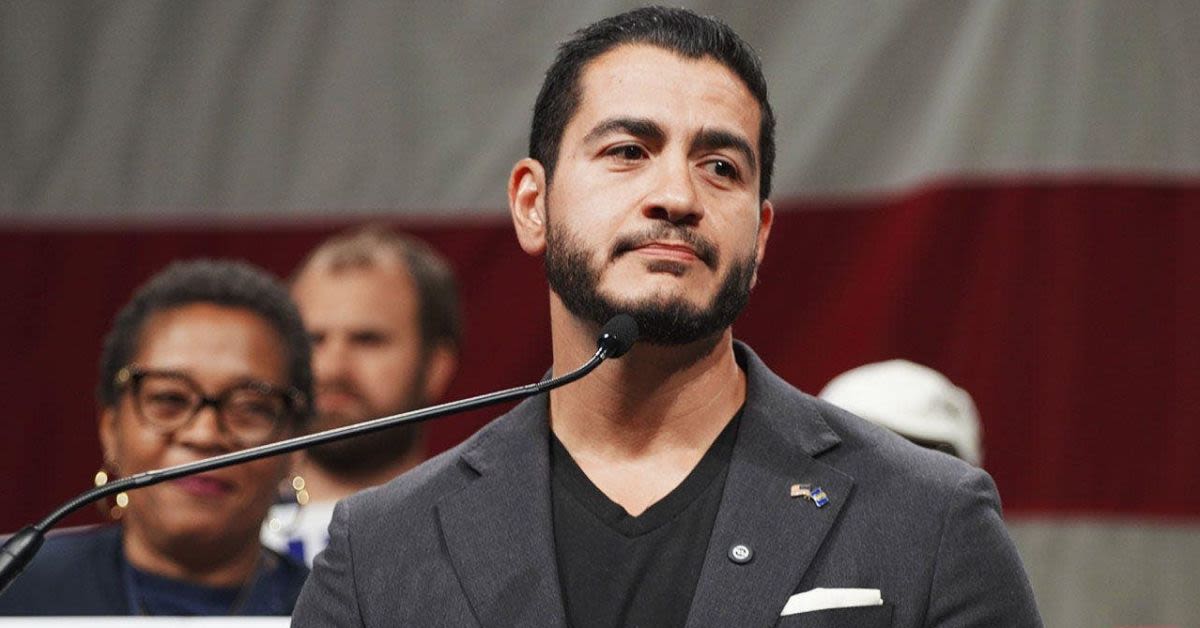
Michigans Democratic Senate nominee Abdul El-Sayed continues to present himself as a rising star of the progressive left, even as his rhetoric and record raise serious questions about his judgment, ideology, and political consistency.
During the primary campaign, El-Sayed openly cast himself as a future power broker in national progressive politics, suggesting he would help shape the 2028 presidential race despite not yet winning a general election. According to RedState, this self-styled visionary barely edged out Rep. Haley Stevens (MI-11) in the Democratic primary, a narrow victory that hardly justifies his apparent sense of inevitability or his ambitions to lead the broader left-wing movement.
El-Sayeds latest appearance on Fox News with anchor Martha MacCallum offered a revealing glimpse into both his political philosophy and his strategic missteps. He appeared to approach the interview as an opportunity to buffalo a Fox audience he may have underestimated, but MacCallums measured, almost genial tone allowed him to speak at lengthand, in doing so, expose the radical underpinnings of his agenda.
The conversation began with a discussion of the growing influence of democratic socialists and the comments of New York City Council member Zohran Mamdani, who claimed socialism is about providing what people need for a dignified life. El-Sayed insisted he is a capitalist, yet he quickly pivoted to a familiar progressive refrain, listing what he believes government must guaranteebasic things such as schools, healthcare, and childcaremirroring Mamdanis framing of state-managed needs rather than individual responsibility and free-market solutions.
MacCallum pressed him directly on this ideological drift, asking, Does that disturb you to hear this growing movement of democratic socialists in the United States who think it is the government's job to make sure you live a dignified life? El-Sayed responded by personalizing the issue, saying, I assume you went to good public school. And you get to drive on good roadways or wish, invoking public infrastructure and education as justification for a far more expansive federal role in Americans lives.
His repeated focus on schools was particularly telling, given that public education is primarily funded and administered at the state and local levels, not by the federal government. He offered no serious explanation of how, as a U.S. senator, he would finance this sweeping expansion of federal obligations, instead leaning on the familiar progressive tactic of labeling basic public servicesroads, sanitation, and the likeas evidence of socialism, a rhetorical move that blurs the line between limited, constitutional governance and cradle-to-grave statism.
El-Sayeds economic views became even clearer when he turned to the subject of wealth and billionaires. In another exchange, MacCallum noted Americas role as an engine of the world that produces innovation and, as a result, billionaires, prompting El-Sayed to argue that the real issue is not wealth itself but the alleged underfunding of the system that enabled it. The issue is not that some people have too much money. Its that the engine that created their opportunity to make money is being underfunded, he said, explicitly tying that engine to public schools, healthcare, and childcare.
He then made his priorities unmistakable, declaring, My interest is about making sure that we're funding things that people need in their lives. He contrasted this with private enterprise and wealth creation, saying he would rather direct resources into schoolsagain, institutions the federal government does not directly fundthan see a billionaire making a second billionaire, a formulation that betrays a deep skepticism of free-market success and a strong preference for centralized redistribution.
This worldview rests on a premise that runs counter to traditional American conservatism: that it is the federal governments job to provide what people need in their lives, rather than to protect liberty and allow individuals, families, communities, and markets to meet those needs. In tone and substance, El-Sayeds comments echoed the logic of Karl Marx more than that of any genuine capitalist, recasting personal responsibility and voluntary exchange as secondary to state-directed provision.
MacCallum also confronted El-Sayed over his own rhetoric, specifically a past remark that seemed to endorse political escalation rather than civil debate. He attempted to soften the impact by claiming his words applied only when they go low, as though that context somehow justified the imagery he used.
The full statement, however, was far more aggressive and revealing of his combative posture. When they go low, we dont go high, El-Sayed said at the time. We take them to the mud and choke them out, a line that stands in stark contrast to his public posture of moral high ground and reformist idealism.
The Fox host then turned to the question of money in politics, an area where El-Sayed has tried to distinguish himself as a crusader against big donors and billionaire influence. MacCallum noted that, despite his constant denunciations of money in politics and his attacks on wealthy donors, he has been traveling to deep-blue states such as California and meeting with members of the Soros family to raise funds for his campaign.
A viral clip captured the moment MacCallum challenged him directly: ?? OMG. Abdul El Sayed just got brutally CONFRONTED on national TV for demanding we get money out of politics, then appearing with the SOROS FAMILY and taking money from huge donors MACCALLUM: Here you are in LA with the Soros family. How is this not taking money from. El-Sayed attempted to draw a distinction that was never convincingly explained, suggesting that somehow accepting money from the Soros network was different from the kind of influence-peddling he routinely condemns.
MacCallum further highlighted that El-Sayed is benefiting from support by Senate Majority PAC, the powerful outside group aligned with Senate Minority Leader Chuck Schumer (D-NY), which is heavily funded by corporate and large-dollar donors. She pressed him on how this arrangement differed from the very system he claims to oppose, given that such PACs are a central vehicle for the big-money politics he rails against.
El-Sayed insisted that donors to the PAC would not circle back around to demand favors, portraying himself as uniquely immune to the pressures and expectations that typically accompany large political contributions. For many voters, especially those skeptical of Washingtons entrenched interests, that claim strains credulity, particularly when it comes from a candidate who has already shown a willingness to embrace left-wing class warfare while quietly courting the very elites he publicly vilifies.
Taken together, El-Sayeds Fox appearance underscored the core tensions in his candidacy: a professed capitalist who speaks in the language of redistribution, a self-styled reformer who relies on establishment money, and a would-be unifier whose past rhetoric invokes the mud and choke them out. For a man who aspires not only to a Senate seat but to a leading role in shaping the Democratic Partys future, this interview did little to reassure those who favor limited government, personal responsibility, and genuine free-market opportunity over the creeping advance of soft socialism dressed up as dignity and needs.
Login