
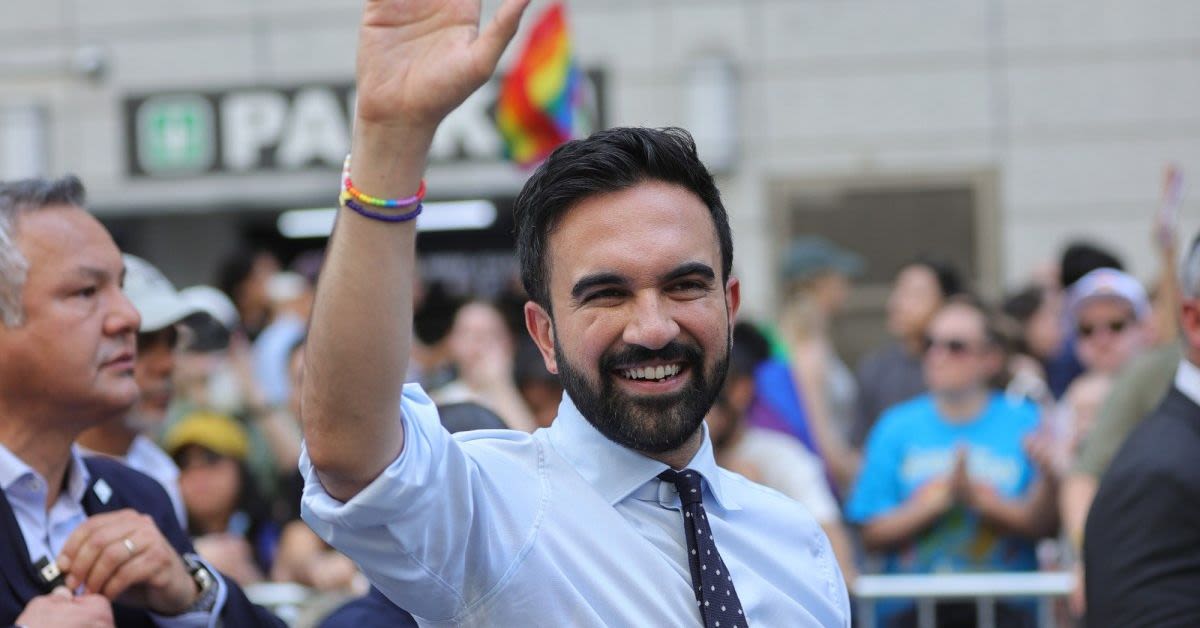
Socialist New York City Mayor Zohran Mamdani used a recent appearance on comedian Theo Vons podcast to demand that the United States join the International Criminal Court so that Israeli Prime Minister Benjamin Netanyahu could be arrested for what he called a "genocide," while also outlining an expansive vision of government-run socialism that would "deliver" nearly every basic necessity of life.
According to The Post Millennial, Mamdani framed Israels war against Hamas as a criminal enterprise rather than a defensive response to terrorism, insisting that Netanyahu was "the architect of a horrific genocide." He made these remarks despite the fact that the conflict began when Hamas terrorists slaughtered 1,200 Israelis and kidnapped more than 200 people, a context he largely brushed aside while focusing on an 11-year-olds death in Gaza as supposed proof of genocide.
Mamdani told Von that if he were running the country rather than serving as a local official, he would use American power to enforce the ICCs controversial arrest warrant against the Israeli leader. "If I had my say, the US government would have joined the ICC, honored every single warrant that theyve issued," Mamdani said, endorsing the idea of subjecting US foreign policy to an international tribunal often criticized for its politicized targeting of Western allies.
The ICC has sought warrants against Netanyahu on allegations of crimes against humanity in Israels war against Hamas, a move many conservatives view as a dangerous precedent that equates a democratic state defending itself with a US-designated terrorist organization. Von, for his part, responded enthusiastically to Mamdanis proposal, saying, "F*ck yeah. Sorry to say it like that, but yeah, I dont know. Its just crazy to see that guy speaking on our country. Its almost unbelievable."
When asked what he believed the United States should do going forward, Mamdani shifted from foreign policy to electoral politics, placing his hopes in a leftward shift within the Democratic Party by 2028. "I think Ive been asked about where do we go from here. And we have 2028 coming up and a big question of what happens after this administration. And I think that there has to be a commitment to a different kind of future. There has to be if were talking about reckoning with this, what will you do thats different? How will you deliver something else other than 1,000-pound bombs?" he said, suggesting that future Democratic leaders must dramatically break with current US policy toward Israel.
Beyond foreign affairs, Mamdani used the podcast to promote a sweeping socialist agenda that would dramatically expand the size and role of government in everyday life. He argued that the state should "deliver" housing, childcare, public transportation, and other essentials for every resident, effectively sidelining markets and private initiative in favor of centralized control.
Pressed to define socialism, Mamdani described it as a guarantee of cradle-to-grave provision by the government, rather than a system of opportunity and personal responsibility. He said socialism is the belief that "you will have whatever you need to live a dignified life, and that it is the governments job to deliver on that," and elaborated that a "dignified life" includes "the things that allow you to take a breath. Housing, childcare, right? Public transit. No one should be priced out of these things. These are non-negotiables. You need these to live."
Mamdani has long identified as a "democratic socialist," backing policies such as free childcare for all, free public transit, and even city-owned grocery storesproposals that would require massive taxpayer funding and expanded bureaucracy. His comments on the podcast underscore how far left some urban Democrats have moved, embracing ideas that would have been considered fringe only a decade ago and raising concerns among conservatives about the erosion of fiscal discipline and individual liberty.
The conversation also turned to the American Dream, which Mamdani portrayed not as a promise of opportunity through hard work, but as a near-impossible stroke of fortune. "It feels like you have to luck out in some big way. In many ways I feel like its why a lot of people play the lottery. For many it feels like their only chance. People think they have better odds playing the lottery than making it in their own life. What does that say about the country we live in? he asked, casting doubt on the meritocratic ideals that have long defined the United States and implicitly justifying his call for a far more interventionist state.
Login