
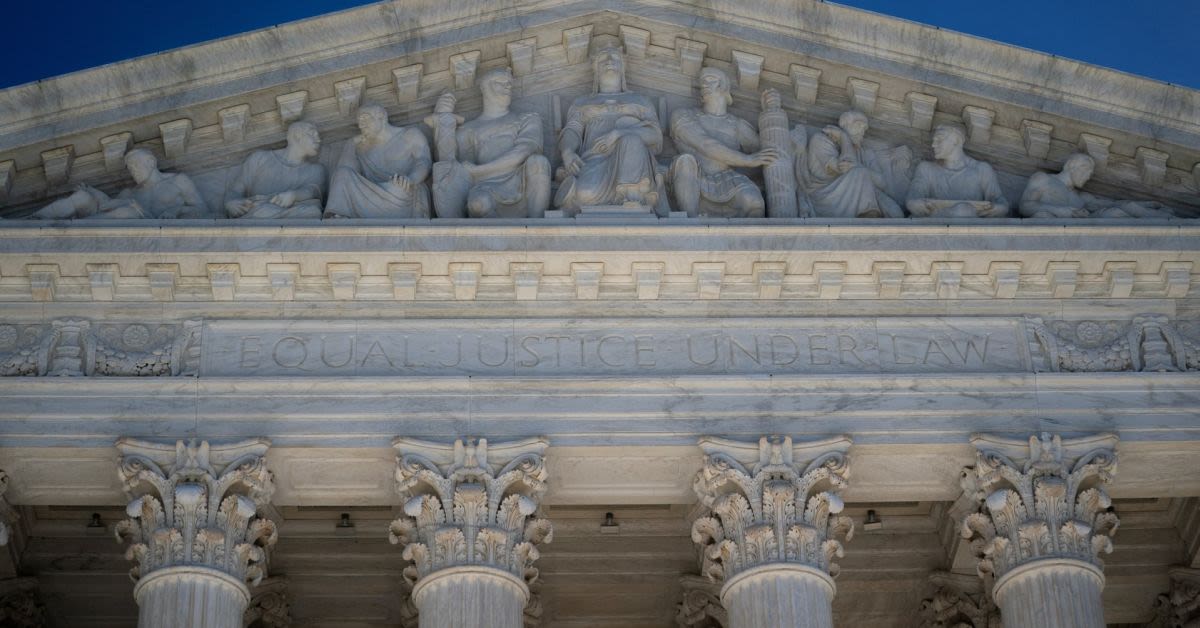
An immigration showdown now before the Supreme Court may determine whether President Donald Trump can fully execute the most tangible pillar of his border and deportation agenda.
For many conservatives, especially those who backed Trump on his promise to restore control over the nations borders, deportations stand out as the clearest measure of whether Washington is serious about sovereignty and the rule of law. According to RedState, while some in the MAGA base once imagined millions of illegal aliens rounded up and shipped on trains out of the country posthaste, that kind of mass operation was never realistic in a nation constrained by an activist media, a sprawling bureaucracy, and a judiciary increasingly willing to second-guess elected leaders. Instead, the real battleground has become the courts, where a single ruling can either empower or cripple the executive branchs ability to enforce immigration law as written by Congress.
It is in this context that a pivotal case has reached the Supreme Court, raising the stakes for Trumps second term and prompting unease among supporters who have watched judges steadily expand the rights of those who entered the country illegally. Some conservatives, frustrated by the Courts recent trajectory, have taken to dark humor about the justices themselves, with one commentator quipping, I know how the women will vote. I am including Roberts as one of the five women on the Court.
The underlying concern is not merely ideological but constitutional: so the judicial branch is now running this country? That question captures the anxiety on the right that unelected judges are increasingly dictating immigration policy, sidelining both Congress and the president in an area traditionally understood as central to national sovereignty.
The case now on the Courts docket asks whether the Trump administration may continue holding large numbers of illegal aliens without bond hearings while their deportation cases work their way through the system. President Donald Trumps administration had also urged the justices to take up a related case that would have addressed the broader constitutional dimensions of the policy, but the Court instead focused on a narrower statutory dispute that still carries enormous practical consequences.
At the heart of the administrations argument is the claim that conflicting rulings from lower courts have thrown immigration enforcement into chaos. Attorneys for the Republican administration warn that the split among the circuits is disrupting the orderly administration of immigration law, noting that federal courts have been swamped with thousands of petitions from illegal aliens challenging the governments interpretation of detention statutes. The result is an unworkable patchwork of inconsistent immigration enforcement, where aliens present without admission are subject to mandatory detention in some circuits but are entitled to bond hearings and often released in others, lawyers for the administration wrote.
On October 1, the justices agreed to hear the administrations appeal in the case of Ricardo Aparecido Barbosa da Cunha, a Brazilian national who entered the United States illegally more than twenty years ago. The Supreme Courts docket confirms that the petition was granted, setting up what some on the right are already calling the defining immigration case of Trumps second term.
One conservative commentator underscored the stakes in blunt terms: Easily the most important SCOTUS case being taken up during the 2nd Trump Admin. This easily could double deportations, or halve them, depending on the outcome. At issue is the administrations reading of a 1996 immigration law and, more specifically, which categories of illegal aliens Congress intended to be subject to mandatory detention without bond.
In 2025, the Trump administration adopted a policy requiring illegal aliens to remain detained throughout their removal proceedings, eliminating the individualized bond hearings that had previously been available to many who had lived for years in the interior before being arrested. That shift, rooted in the 1996 statute, could dramatically expand the pool of individuals who remain in custody until their cases conclude, rather than being released into the country while litigation drags on.
If the administration prevails, federal authorities will retain the ability to detain a far broader group of illegal aliens until their removal cases are resolved, sparing Immigration and Customs Enforcement (ICE) from the costly and often futile task of tracking down individuals who disappear after release. If the Supreme Court rejects the administrations interpretation, thousands of detainees could instead become eligible to seek bond before immigration judges, increasing the likelihood that many will vanish into the interior and never comply with final removal orders.
Barbosa da Cunhas case illustrates how the legal conflict emerged. He entered the United States illegally around 2004 or 2005 and later applied for asylum in 2016, only to be arrested by immigration authorities in Massachusetts in September 2025 while driving to work.
An immigration judge initially ruled that the governments new interpretation of federal law required his mandatory detention and therefore denied him a bond hearing. A federal district court disagreed, ordering the government to provide Barbosa da Cunha with a bond hearing or release him, and an immigration judge later found that he was neither a flight risk nor a danger to the community and released him on bond.
The Second Circuit Court of Appeals upheld the lower courts reading of the statute, effectively limiting the administrations ability to apply mandatory detention to long-term illegal residents in that jurisdiction. The Trump administration then turned to the Supreme Court, seeking a definitive ruling that would restore uniformity and strengthen its hand in enforcing immigration law nationwide.
From a practical standpoint, mandatory detention gives ICE a crucial advantage during lengthy removal proceedings: the government knows exactly where the individual is when the case concludes. By contrast, bond hearings introduce the possibility that an immigration judge will release the detainee after weighing factors such as public safety and flight risk, leaving federal authorities to locate that person again if a final removal order is issued.
The central legal question is which detention provision in the 1996 law applies to individuals like Barbosa da Cunha, who entered illegally but remained in the United States for years before being arrested. The administration maintains that Congress required their detention without bond, while Barbosa da Cunha and his attorneys insist that lawmakers did not impose such a mandate on this category of long-term illegal residents.
For many conservatives, the case is about more than statutory interpretation; it is about whether the United States will function as a sovereign nation that controls its borders and determines who has the right to remain within its territory. It could be argued, as some on the right have, that this case is only a matter of whether the United States is a sovereign nation of laws whose people decide who has the right to be in the country or not.
Now the Supreme Court will settle the dispute, and with it, a central test of Trumps promise to restore immigration enforcement after years of judicial and bureaucratic resistance. However the justices rule, the decision will reverberate far beyond one Brazilian nationals case, shaping whether the executive branch can detain illegal aliens as Congress intended or whether the courts will continue to chip away at the tools needed to secure the border and uphold the rule of law.
Login