
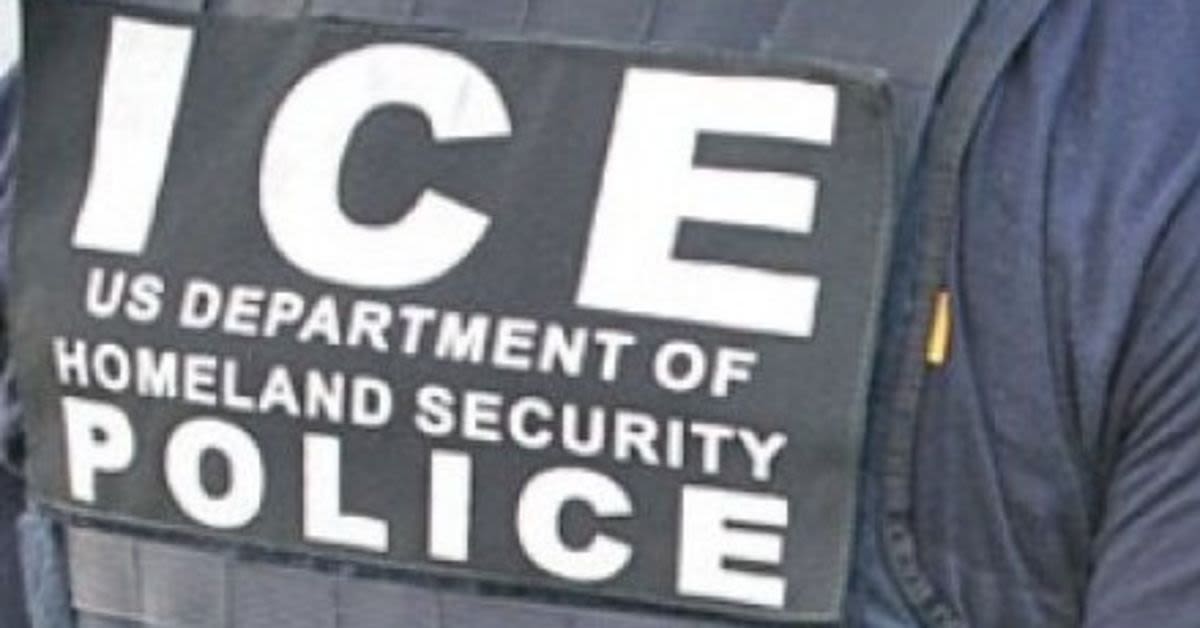
Immigration and Customs Enforcement is moving to dramatically expand its ranks, with plans to hire 5,000 additional employees by years end, the vast majority of them deportation officers tasked with carrying out the large-scale removals that Donald Trump promised on the campaign trail and that helped propel him to the White House.
According to RedState, four individuals familiar with the internal planning told The New York Times that ICE is now engaged in a major hiring push to meet that target. The agency had roughly 29,000 employees as of July, federal data cited by the paper show, an increase of about 8,000 since Trump first took office, and meeting the new goal would boost the workforce by another 17 percent.
The expansion comes as existing agents report being pressed into seven-day workweeks, juggling both arrests and case management with little relief in sight. With Congress having already approved the necessary funding, the argument for using those dollars to bring in thousands of additional officers is straightforward: the work is there, and the current force is stretched thin.
The Department of Homeland Security says the new positions are funded by that congressional appropriation and are distinct from the routine backfilling of jobs vacated after the previous hiring surge. In other words, this is not merely replacing attrition; it is a deliberate enlargement of the deportation apparatus, and the money is already in the bank to do it.
More than 3,000 employees left ICE in the first half of 2026, a figure that includes firings, resignations, and retirements, while nearly 12,000 full-time employees were brought on between January 2025 and June 2026. Those numbers do not prove that the earlier hiring wave failed; people naturally retire or move on, and when a recruit proves unfit for the job, the agency is right to show him the door rather than keep a liability on the payroll.
By spring, hundreds of recruits from that surge had been removed, a sign that ICE was willing to correct bad hiring decisions rather than entrench them. At the same time, the agency has nearly 7,500 employees still awaiting full background checks, allowed to perform only limited duties in the interim, underscoring the need to complete vetting for those who will be working side by side with them in high-risk situations.
These background checks are not a bureaucratic luxury; they are a frontline safety measure for officers who must be able to trust the partners standing next to them during an arrest. DHS insists it will maintain rigorous standards, and ICE has every incentive to follow through, given that weak vetting can cost lives and undermine public confidence in enforcement.
For a glimpse of what this growing workforce is already doing, DHSs September 29 arrest announcement offers a telling snapshot. Secretary Markwayne Mullin praised the agencys efforts, declaring: Day after day, the brave men and women of ICE are removing the worst of the worst from American communities. Just yesterday, ICE arrested killers, rapists, and thieves.
Among those highlighted was Ciro Valle-Robles of Mexico, who has convictions for rape and forgery in Goshen, New York, and whose presence in the country raises obvious questions about prior enforcement failures. DHS also cited Lazaro Rego-Otano of Cuba, convicted of sexual battery with a deadly weapon and aggravated battery in Miami, and there are, as the report makes clear, two very good reasons to support the officers making these arrests, because leaving either man in the community hardly sounds like the better option.
Mullin drove home the administrations stance on border security and interior enforcement, stating: Under President Trump, we will always put the safety of the American people first. We are sending a very clear message: Illegal aliens are not welcome in the U.S.
The risks ICE officers face are not theoretical, as Dallas personnel recalled in June when they described rescuing wounded detainees during the 2025 sniper attack, putting their own lives on the line amid gunfire. Those same officers, now working seven days a week, have more than earned reinforcements to share the burden of a mission that is both dangerous and indispensable.
With Congress having already signed off on the funding and ICE authorized to fill another 5,000 positions, the path forward is clear: vet candidates thoroughly, train them properly, and deploy them where they are most needed. The mass deportations Trump pledged aren't going to carry themselves out, and if the federal government is serious about protecting American communities from violent offenders who never should have been here in the first place, then building up ICEs enforcement capacity is not just justifiedit is overdue.
Login