
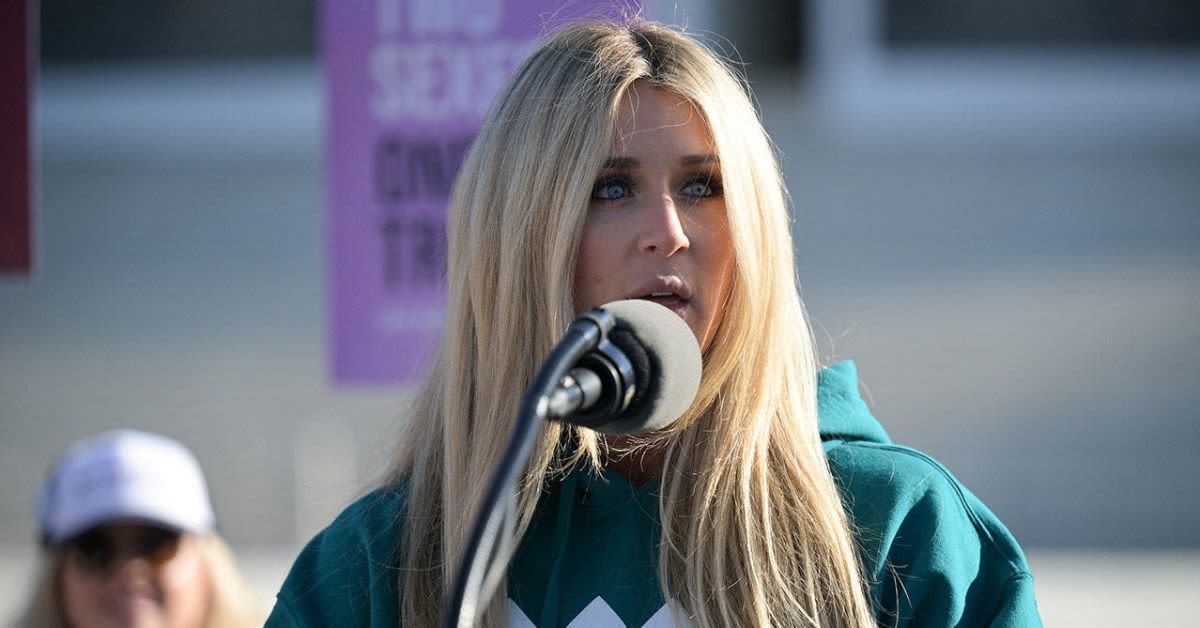
A Biden-appointed federal judge has thrown out womens sports advocate Riley Gaines lawsuit against the NCAA, ruling that the powerful college athletics organization is effectively beyond the reach of Title IX.
According to The Post Millennial, U.S. District Judge Tiffany R. Johnson of the Northern District of Georgia held that Gaines and her fellow plaintiffs could not sue the NCAA under Title IX because the association is not itself a recipient of federal funds. Johnson wrote that the record contained no proof that the NCAA takes federal money and therefore no basis to treat it like a federally funded educational institution subject to the landmark sex-equality statute.
"Here, there is no evidence that the NCAA ever received, or could have received, federal funds," Johnson stated in her decision, adding bluntly, "Thus, Plaintiffs' Title IX claims cannot proceed." The judge focused narrowly on direct funding streams, concluding that the NCAAs status as a non-profit that organizes competitions and earns billions from events like March Madness does not, by itself, trigger Title IX obligations.
The ruling effectively treats the NCAA as insulated from the federal civil-rights regime that governs the universities whose athletes it regulates, even though those schools rely heavily on federal student aid and other taxpayer-backed support. Without those federally subsidized student-athletes and their scholarships, the NCAA would have no product to sell and no championships to stage, yet Johnson declined to view that relationship as sufficient to bring the association under Title IX.
Gaines, a former collegiate swimmer who has become a leading voice for protecting womens sports from male participation, blasted the decision on X. "If the NCAA isn't subject to Title IX, then WHO is? Of course we will appeal. The goal from the beginning was to get this case before the Supreme Court," she wrote, signaling that the plaintiffs see this as a long-term constitutional and cultural battle rather than a one-off lawsuit.
Because Johnson found that the plaintiffs lacked standing and that the NCAA was not a proper Title IX defendant, she never reached the core question of whether allowing biological males to compete in womens events violates federal law. The judge had already dismissed the womens constitutional and bodily-privacy claims earlier in the case, and she revisited the funding theory only to reject it as well.
Her reasoning leaned on a 1999 Supreme Court precedent holding that merely collecting dues from federally funded universities does not automatically subject a private association to Title IX. By following that narrow reading, Johnson effectively signaled that even an organization that sets the rules for womens sports nationwide can avoid accountability so long as it keeps federal dollars at arms length on paper.
Gaines joined several other female athletes in filing the suit in March 2024, arguing that the NCAA violated Title IX by permitting men to compete in womens divisions. Their complaint was rooted in experiences like Gaines own 2022 tie for fifth place with University of Pennsylvania swimmer William "Lia" Thomas, a male athlete who identifies as female, at the NCAA womens championships.
When it came time to award the trophy, Gaines recounted that an NCAA representative informed her that her trophy would be mailed while Thomas would receive his on the podium. That moment became emblematic for many Americans of a system that, in the name of inclusion, was willing to sideline women in their own sports and deny them the recognition they had earned.
Women who speak out against this policy trend have been relentlessly attacked by progressive activists and much of the legacy media, smeared as transphobic, racist, or bigoted for defending sex-based categories. Most recently, WNBA player Sophie Cunningham publicly declared that womens sports should be reserved for women, echoing the concerns of countless female athletes who see their opportunities eroded by policies that allow men who identify as women to compete against them.
"This momentary setback will not deter me or other women athletes in the least," Gaines said after Johnsons ruling, making clear that she views the decision as a temporary obstacle rather than a defeat. "Rest assured, we will be appealing this decision. We are on the side of truth. I am confident Americans will rally to our side to fight the NCAA."
The plaintiffs next move is to take their case to the U.S. Court of Appeals for the 11th Circuit, where they will likely argue that an entity exercising sweeping control over federally funded college athletics cannot simply disclaim responsibility under Title IX. The NCAA, notably, has already reversed course and no longer permits men to compete in womens events, a shift that followed pressure during the Trump administration to restore fairness and common sense to womens sports.
The broader legal and political backdrop is the Biden administrations aggressive reinterpretation of Title IX to treat gender identity as interchangeable with biological sex, effectively forcing schools and agencies to treat men who claim to be women as women for athletic and other purposes. That policy move opened the door for male participation in girls and womens sports from elementary school through college, despite the statutes plain language that "No person in the United States shall, on the basis of sex, be excluded from participation in, be denied the benefits of, or be subjected to discrimination under any education program or activity receiving Federal financial assistance..."
When Congress enacted Title IX in 1972, none of its exemptions contemplated men who identify as women or so-called transgender women, and lawmakers clearly understood sex to mean biological reality, not subjective identity. The Gaines case now highlights a glaring contradiction: federal bureaucrats are stretching Title IX to erase womens sports in practice, while federal courts are allowing the NCAAthe very body that governs those sportsto stand outside the laws reach, leaving female athletes to fight on in the courts and in the culture for the protections they were promised more than fifty years ago.
Login