
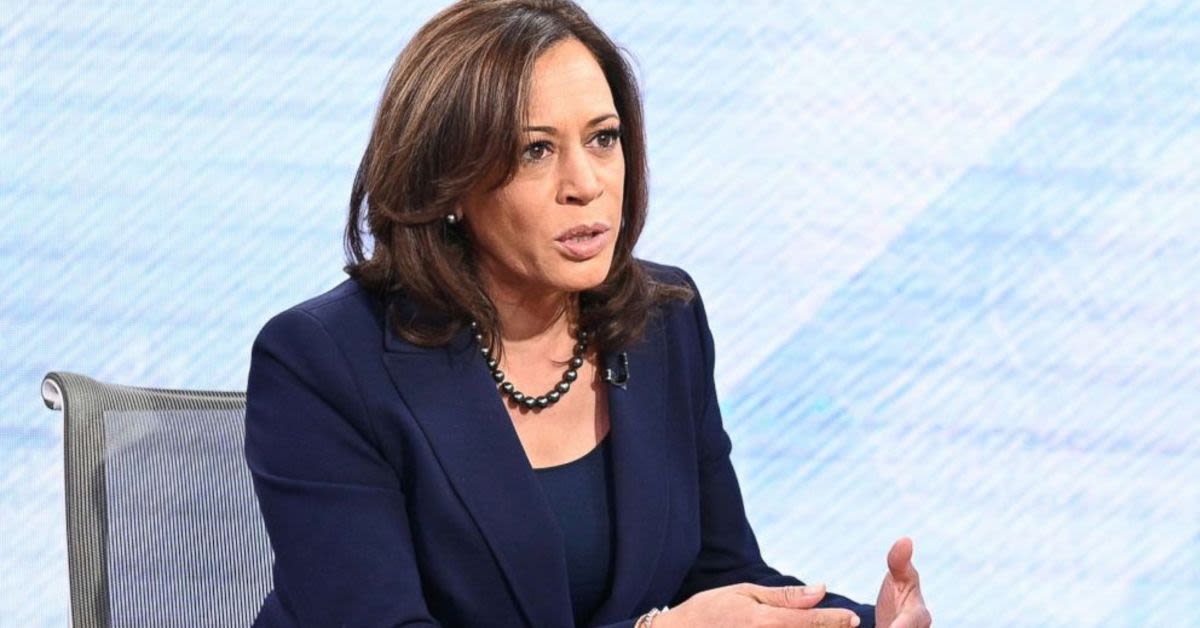
Democrats locked in the most competitive midterm contests are scrambling to keep former Vice President Kamala Harris at arms length, treating her presence on the campaign trail as more liability than asset.
According to The Blaze, a growing list of Democratic hopefuls in Republican-leaning states have either quietly declined or openly rejected Harris political assistance, underscoring how toxic the former vice president has become outside deep-blue enclaves. From Alaska to Kansas, the woman once heralded as the future of the Democratic Party is discovering that her supposed star power has all but evaporated in the places her party most needs to win. Having someone from California come in and try to tell Kansans who they should vote for is a pretty bad idea, one Democrat bluntly observed, capturing the unease of candidates who know that coastal progressivism does not sell in the heartland.
Harris team is trying to project confidence, insisting that the vice president remains an asset where it counts. Its all good, Harris spokesman Eduardo Negron told Politico. Vice President Harris will continue to raise money and travel on behalf of candidates in races where she can help make a difference. Yet the list of Democrats actually willing to be seen with her appears to be shrinking, suggesting that even within her own party, many see her as a symbol of the failed policies and cultural extremism that have alienated working- and middle-class voters.
In Alaska, Democratic Rep. Mary Peltola made a point of rebuffing an offer of fundraising help from Harris in August, a notable snub in a state where energy policy and federal overreach are front and center. Mary isnt seeking endorsements from anyone from the Lower 48 her focus is and always will be Alaska, a Peltola spokesperson told local outlet KTUU, signaling that association with the Biden-Harris agenda is politically radioactive in the resource-rich state. Peltola also refused to endorse Harris in 2024, though she later clarified on social media that she was not backing President Donald Trump, underscoring how Democrats in red states are trying to thread the needle between party loyalty and political survival.
Republicans, for their part, see Peltolas maneuvering as too little, too late. Mary Peltola stood by as Kamala Harris restricted Alaskas energy production, including ANWR, and shed shutter Alaskan energy and jeopardize jobs once again if elected, National Republican Senate Committee press secretary Bernadette Breslin told Blaze News when asked about Peltolas move. That critique reflects a broader conservative argument: Democrats who now distance themselves from Harris were happy to stand with her when it meant advancing a green agenda and identity politics, but are fleeing only because voters are finally holding them accountable. The political calculus is clearDemocrats want the benefits of the Biden-Harris years without the electoral consequences.
The Midwest is proving no more hospitable to Harris brand of progressive politics. I received 9,000 more votes than Harris in 2024, Democrat candidate for Wisconsins 3rd Congressional District Rebecca Cooke said in a statement to Politico. I dont need anyone to come and campaign with me in my district. I do the work of building relationships including across the aisle on my own. Her comments highlight a striking reality: even Democrats now boast about outperforming their own former vice president, treating distance from Harris as a badge of honor in swing territory.
Cookes newfound independence is particularly notable given her past enthusiasm for Harris. Though she is now publicly distancing herself, she was an outspoken supporter during the 2024 presidential election, aligning herself with the very agenda she now treats as a drag. Cooke previously and unsuccessfully ran for the same congressional seat in 2022 and 2024, and her shift in tone suggests a candidate who has learned the hard way that voters in western Wisconsin are not clamoring for San Francisco-style progressivism. For conservatives, it is a familiar pattern: Democrats embrace the lefts cultural and economic experiments, then scramble to rebrand when those experiments fail at the ballot box.
In Iowa, the rejection of Harris is even more blunt. Iowa Democratic Senate nominee Josh Turek gave a flat no when asked if he wanted the former vice presidents help on the campaign trail, a one-word dismissal that speaks volumes about her standing in rural America. Rob Sand, the Democrat running for governor of Iowa, provided Politico a similarly unenthusiastic response, making clear he sees no upside in tying himself to a deeply unpopular national figure.
Sand did not bother to dress up his refusal in diplomatic language. Nope, Sand said. Lets move on. That curt exchange encapsulates the mood among many Democrats in red and purple states: Harris is a distraction from the local issues they would rather emphasize, and her presence risks reminding voters of the inflation, cultural radicalism, and heavy-handed federal policies that have defined the last several years.
In Kansas, Democratic Senate candidate Adam Hamilton opted for a more polite, but equally firm, rebuff. Having somebody from California come in and try to tell Kansans who they should vote for is a pretty bad idea, the Methodist pastor told Politico, echoing the earlier sentiment that Harris coastal liberalism is unwelcome in the heartland. Hamiltons campaign is widely considered a long shotKansas has not sent a Democrat to the Senate since 1932, and he trails Sen. Roger Marshall (R) by several points even in Democrat-leaning pollsso his refusal to embrace a national figure like Harris underscores just how politically toxic she has become.
Hamilton is attempting to draw a contrast between Harris West Coast wokeness and what he portrays as his own Midwestern moderation. Yet his record suggests that ideological distance may be more rhetorical than real: the Methodist pastor admonished his congregation in 2020 and urged them to scrutinize their white privilege, language straight out of the progressive playbook. Hamiltons Resurrection church also touts extensive LGBTQ+ programming, and he has repeatedly landed in hot water for his unorthodox theological views, raising questions about whether his supposed centrism is more marketing than substance.
While Harris is striking out across much of the heartland, she has found a warmer reception in parts of the South where the Democratic base remains more reliably liberal. Former North Carolina Gov. Roy Cooper, now running for Senate, accepted a Harris endorsement in October 2025 and previously referred to the former vice president as my friend Kamala. That embrace suggests that in states where Democrats rely heavily on urban and minority turnout, Harris still holds some appeal as a symbol of the partys identity politics and progressive priorities.
Georgia Sen. Jon Ossoff is also quietly leaning on Harris as he seeks another term. The pair held a closed-door Women for Ossoff tele-rally in August, which was quickly slammed by his Republican challenger, Rep. Mike Collins, who sees the alliance as proof that Ossoff remains tethered to the failed Biden-Harris agenda. The secrecy surrounding the eventno big rallies, no open pressspeaks to a broader Democratic dilemma: they want Harris fundraising and activist energy, but they do not want voters to see just how closely aligned they remain with her unpopular policies.
Looking ahead to a likely 2028 presidential bid, Harris faces a fractured party and an electorate that has grown weary of progressive overreach. Many Democrats would prefer she quietly exit the stage, yet a handful of loyalists could still ride her coattails into the Senate this November, keeping her brand alive within the partys activist core. Either way, Democrats chaotic rebranding effort is far from finished, and the spectacle of candidates running from their own former vice president offers a revealing glimpse into a party still struggling to reconcile its coastal ideology with the values of the rest of the country.
Login