
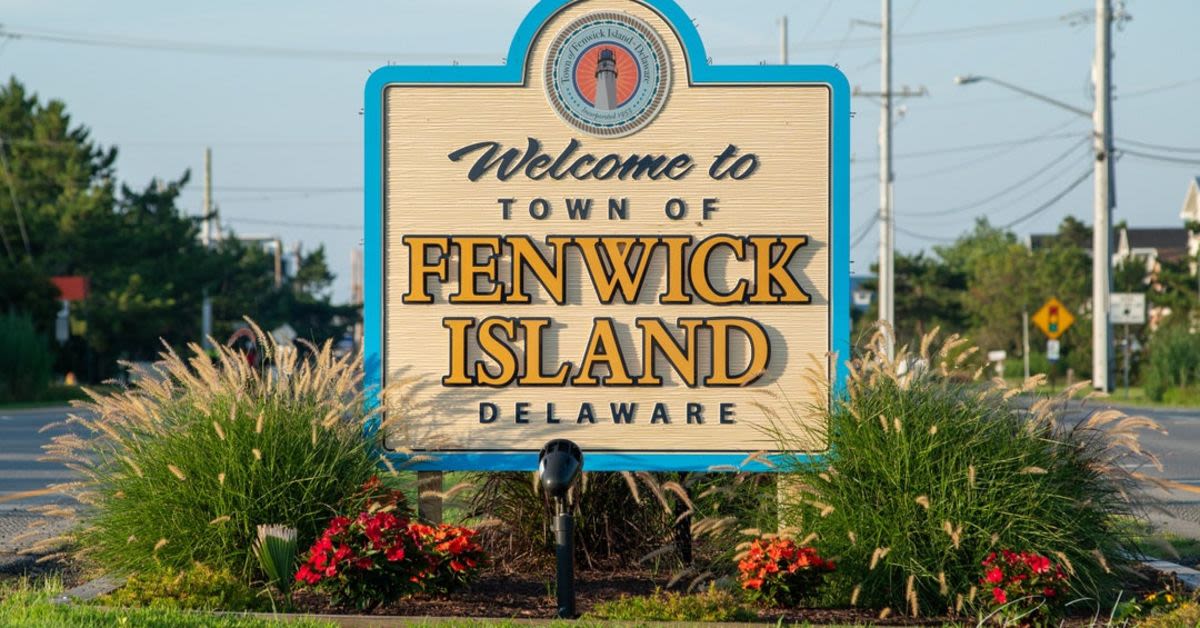
Fenwick Island, a tiny Delaware beach town better known as a pass-through on the way to Ocean City, Maryland, has suddenly become ground zero in a constitutional fight over whether corporations should have a say at the ballot box.
The town, long regarded as artsy and cute and quirky, is now drawing national attention because its charter permits roughly 200 artificial entities corporations, limited liability companies, trusts, and partnerships to vote in local elections alongside human residents. As reported by RedState, this unusual arrangement has prompted the American Civil Liberties Union to demand that the Delaware Supreme Court strike down what it derides as generous voting rights for non-human entities, turning a sleepy resort community into a test case for the future of corporate participation in civic life.
Under Fenwick Islands rules, these artificial entities cast ballots in municipal contests for local leaders and on ballot referendums, and their votes are counted exactly the same as those of individual residents. There is, however, one important limitation: a person who qualifies to vote both as a resident and as the representative of an artificial entity is still restricted to a single vote, with no double-dipping allowed.
This policy did not emerge in a vacuum, but reflects Delawares broader, business-friendly legal culture, which has long extended certain voting rights to business entities, particularly on municipal questions. Fenwick Island simply pushed that framework further, applying it not just to narrow fiscal or technical issues but to the full range of local electoral decisions, from town council races to referendums that shape the communitys future.
The result is a sharp clash between two visions of democracy: one that recognizes property owners and business stakeholders as legitimate participants in local governance, and another that insists only individual citizens should ever cast a ballot. Many locals, especially those with deep roots and substantial investments in the town, see the current system as both fair and practical.
I think its important that they allow entities that own properties to vote, said Spiro Buas, the owner of Fenwick Shores, who votes on behalf of the Hilton Hotel franchise. People that own property in town have a vested interest in what happens in the town, he said.
Others, however, are uneasy with the idea that a business charter can carry the same electoral weight as a flesh-and-blood voter. I dont agree that the businesses should have a vote, Lisa Ryan, who lives and votes in Dallas, said one recent afternoon while sitting on her screened-in porch in Fenwick Island a few blocks from the beach. Im a business owner in Dallas, and I dont get an extra vote.
Mayor Natalie Magdeburger, who presides over this unusual civic experiment, stresses that many of the entities on the rolls are not faceless conglomerates but vehicles for families with longstanding ties to the community. We believe that it is important that all of our residents have a voice, or at least vote, she said. They are taxed and they are subject to our ordinances.
Her argument reflects a traditional conservative principle: those who shoulder the tax burden and bear the consequences of local regulations should have a meaningful say in how they are governed. From that perspective, excluding property-owning entities from the franchise would not enhance democracy but would silence a significant portion of the towns real stakeholders.
Progressive activists and civil-liberties lawyers see it differently, framing the issue as a threat to the egalitarian ideal of equal voting power for each individual citizen. Delaware lawmakers, under pressure from such groups, are now weighing a constitutional amendment that would abolish the states practice of granting any voting rights to businesses and corporations, even in limited municipal contexts.
The ACLU has distilled its position into a simple slogan, insisting that voting is for people, not businesses. Andrew Bernstein, the ACLU of Delaware's civic engagement counsel, commented, "One person, one vote is a foundational principle to American democracy. He continued, Allowing corporations to vote in Delaware, where over two million artificial business entities are incorporated, can drastically undermine the voting power of real, human Delawareans.
Academic critics have joined the chorus, arguing that Delawares expansive corporate voting regime erodes public trust. Legal analysts, such as Dael Norwood, an associate professor of history at the University of Delaware, contend that these policies have damaged the legitimacy of government and turned away from democracy.
Norwoods concern is that empowering non-human entities dilutes what he calls popular human sovereignty and weakens the moral foundation of self-government. Its undermining the fundamental legitimacy of governments by removing popular human sovereignty, Norwood said.
Mayor Magdeburger, by contrast, sees the ACLUs campaign and the proposed constitutional amendment as an overreach that would strip long-participating community members of their voice. She responds in unapologetically populist terms, remarking, Frankly, taking away the rights of our LLC or trusts, youre trying to disenfranchise 200 voters for an election that has 900 on a good day, To me, its the antithesis of democracy, with a little d.
Her stance underscores a broader conservative concern that, under the banner of reform, activist groups and sympathetic legislators are willing to curtail established rights and local autonomy in favor of a more centralized, ideologically driven model of governance. The looming legal showdown will test whether Delawares courts side with that activist vision or with a town that insists its taxpayers, however organized, deserve representation.
Oral arguments before the Delaware Supreme Court are scheduled for 10:00 AM on September 23, 2026, setting the stage for a high-stakes ruling that could reshape corporate voting rights across the state. For those inclined to follow the proceedings from afar, the case offers more than just a quirky beach-town dispute it is a window into the ongoing struggle over who truly counts in American democracy, even as observers are invited to get yourself a box of saltwater taffy and watch all the fun here.
Login