
Three prominent media organizations now find themselves barred from the White House grounds, escalating an already fraught confrontation between President Donald Trump and a press corps that has long abandoned any pretense of neutrality.
According to Western Journal, the Trump administrations decision to revoke access for Politico, CNN and MS NOW has triggered an immediate legal counterattack, with all three outlets filing suit on First Amendment grounds. The complaint, citing the Constitutions protections for a free press, argues that the First Amendment does not allow a president or any other government official to deprive the press of their First Amendment rights and liberty and property interests with no notice or process based solely on his dislike of the content of their reporting.
The legal argument is not new, and history suggests the outlets may well prevail, as they did when CNNs Jim Acosta lost his press pass during Trumps first term. In that 2018 case, a federal judge notably a Trump appointee ordered Acostas credentials restored, a precedent that makes it difficult to imagine a dramatically different outcome this time.
Yet the more pressing question is not whether the media will win in court, but why a sitting president would feel compelled to take such a drastic step in the first place. One of the banned outlets, Politico, inadvertently provided a compelling answer in a 2025 exchange that has resurfaced online, underscoring precisely why the administration has lost patience with what it views as partisan activism masquerading as journalism.
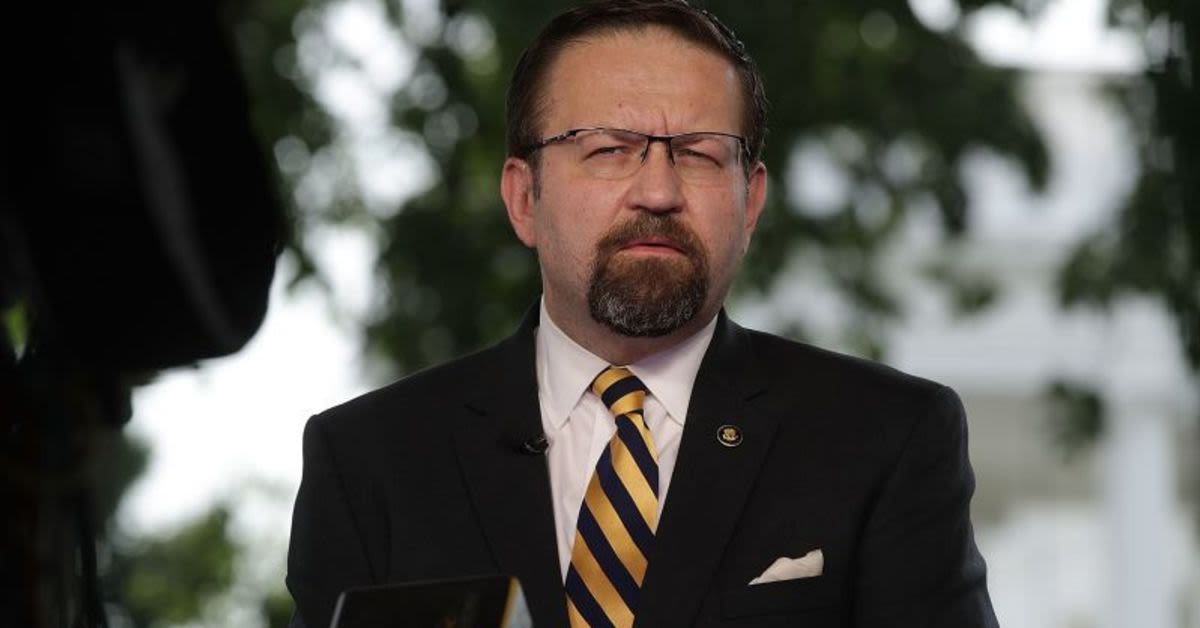
The clip, now circulating widely after being reposted by former Trump deputy assistant and counterterrorism adviser Sebastian Gorka, comes from the Politico Security Summit in May 2025. On that stage, Gorka sat opposite Politicos White House bureau chief, Dasha Burns, who pressed him on the case of Kilmar Abrego Garcia, a man widely described in sympathetic media coverage as a Maryland father.
Abrego Garcia, however, was not merely a benign suburban parent swept up in an overzealous immigration dragnet, as much of the establishment press implied. He was an alleged MS-13 gang member who had been detained by Immigration and Customs Enforcement and returned to El Salvador, only to be brought back after a judge ruled he could not be deported there, and he now remains free under ICE supervision while his case winds through the courts.
Despite this background, Politico and other outlets leaned heavily into the Maryland father framing, downplaying or outright questioning his alleged gang ties in a way that fit neatly into a broader narrative of Trump-era immigration enforcement as cruel and arbitrary. Burns, reflecting that narrative, suggested in her questioning that Gorka and others in the administration believed its OK to skirt due process, implying a disregard for constitutional protections when dealing with illegal immigrants.
Gorkas response was swift and unequivocal. Never happened. Due process has never been skirted, he said, before turning his fire directly on Politicos coverage. Politico used the Maryland father, fake news Maryland father, twice adjudicated by an immigration judge to be here illegally and to be deported. An individual whos arrested on body cam footage, anyone watching right now can watch him being stopped by local police with seven illegals in his vehicle and no driving license. An individual whos arrested on body cam footage, anyone watching right now can watch him being stopped by local police with seven illegals in his vehicle and no driving license. And this is a Maryland father for Politico.
In other words, the man at the center of Politicos sympathetic narrative had twice been ordered deported by an immigration judge and was caught transporting seven illegal immigrants while driving without a license. For a conservative audience already skeptical of legacy media, this was not journalism; it was spin, carefully curated to cast immigration enforcement as the villain and to sanitize the record of someone with serious legal and possibly criminal entanglements.
Gorka went further, noting that MS-13 had been designated a foreign terrorist organization and pointing out that Abrego Garcia bore tattoos on his knuckles strongly suggestive of membership in the notoriously violent gang. Burns, clearly uncomfortable with where the exchange was heading, tried to minimize that detail.
The tattoo did not say MS-13, she interjected, quickly adding, I dont want to get into that.
That attempt to sidestep the obvious only fueled Gorkas indignation. Its just accidents that the four symbols represent the letters MS-13, he shot back. This is why Politico is a joke. This is why you are gutter press and fake news. That those four symbols that just happen to comport with the letters MS and the numbers 13 dont in this case represent MS-13? Youre sitting here live defending a member of MS-13. Thats why I regret coming here, because this isnt journalism.
For many on the right, this exchange encapsulated the core grievance with the corporate press: a willingness to bend reality to fit a progressive narrative, even if that means downplaying the threat posed by violent criminal networks like MS-13. The focus, in this telling, is not on the safety of American citizens but on the supposed victimhood of individuals whose legal status and associations raise serious concerns.
Gorka then broadened the lens, accusing Politico and its peers of obsessing over the deportation of illegal immigrants while showing far less interest in the Americans who suffer and sometimes die at the hands of those who should never have been in the country in the first place. He cited the case of Jocelyn Nungaray, a 12-year-old Texas girl who was raped and murdered, allegedly by two men described by CNN as undocumented men from Venezuela.
The euphemistic language, again, was telling. Rather than plainly labeling the suspects as illegal immigrants, the network opted for a sanitized phrase that blurs the line between lawful and unlawful presence, softening the reality of a crime that shocked the conscience of the nation.
From there, Gorka recounted a harrowing story relayed to him by Republican Rep. Dan Crenshaw of Texas, a tale that underscores the human cost of a porous border and lax enforcement. Crenshaw, he said, told me a story once of a 16-year-old girl who came, was smuggled across this border.
The parents paid $5,000 for her to live in America, the land of milk and honey. She ended up locked in a room in New York, raped by more than a dozen men every day for 18 months until she escaped. She went to Dan Crenshaws office that girl said to him, please close the border so another girl doesnt have to be raped by 12 strange men every day for 18 months.
Gorka then delivered the indictment that hangs over much of the establishment medias immigration coverage. Its strange that Politico doesnt cover those stories. Could you tell me why? he asked Burns, who, unsurprisingly, had no substantive answer and instead tried to move on from a line of questioning that exposed the selective priorities of her outlet.
For conservatives, this is precisely the problem with what they deride as Trump Derangement Syndrome media: outlets that insist on being treated as neutral arbiters of fact while consistently framing stories in ways that advance progressive policy goals and undermine conservative ones. They highlight deportations and alleged abuses of process, but they bury or minimize the brutal consequences of open borders, human trafficking and gang violence that flow from the very policies they tacitly support.
Trumps decision to ban Politico, CNN and MS NOW from the White House grounds must be understood against this backdrop of long-simmering distrust and open hostility. On Truth Social, the president announced that the three outlets were barred for their constant reporting FAKE NEWS! and added a broader critique of media malpractice.
Media Outlets shouldnt be able to constantly write or report FICTION and LIES when theyre covering the President of the United States, the Trump Administration, or the United States of America, Trump declared, articulating a view widely shared among his supporters, who see the press not as a watchdog but as an opposition party.
The lawsuits now moving through the courts will test, once again, the limits of presidential authority over press access and the extent to which the First Amendment constrains efforts to hold demonstrably biased outlets to account. If past is prologue, the judiciary will likely side with the media, restoring their physical presence on the White House grounds even as their credibility continues to erode in the eyes of millions of Americans.
What the courts cannot resolve, however, is the deeper crisis of trust that underlies this conflict. When a major outlet like Politico can sit on stage and effectively defend an alleged MS-13 member while quibbling over tattoos and ignoring the pleas of trafficking victims and the families of murdered children, it becomes harder and harder to argue that the problem lies solely with an intemperate president.
The GorkaBurns exchange, now recirculating at a moment when Politico is again at the center of a mediaWhite House clash, serves as a stark reminder of how the press arrived at this low point. Years of slanted coverage, selective outrage and narrative-driven reporting have convinced a large segment of the public that the so-called mainstream media are not merely biased but fundamentally hostile to their values, their safety and their way of life.
Whether or not Politico and its fellow plaintiffs win their day in court, they still face a more daunting challenge: persuading Americans that they are interested in more than scoring partisan points and protecting their ideological allies. Until outlets like Politico show as much zeal in covering the victims of illegal immigration and gang violence as they do in defending those who stand accused, the charge of fake news will continue to resonate far beyond the walls of the White House briefing room.
Login