
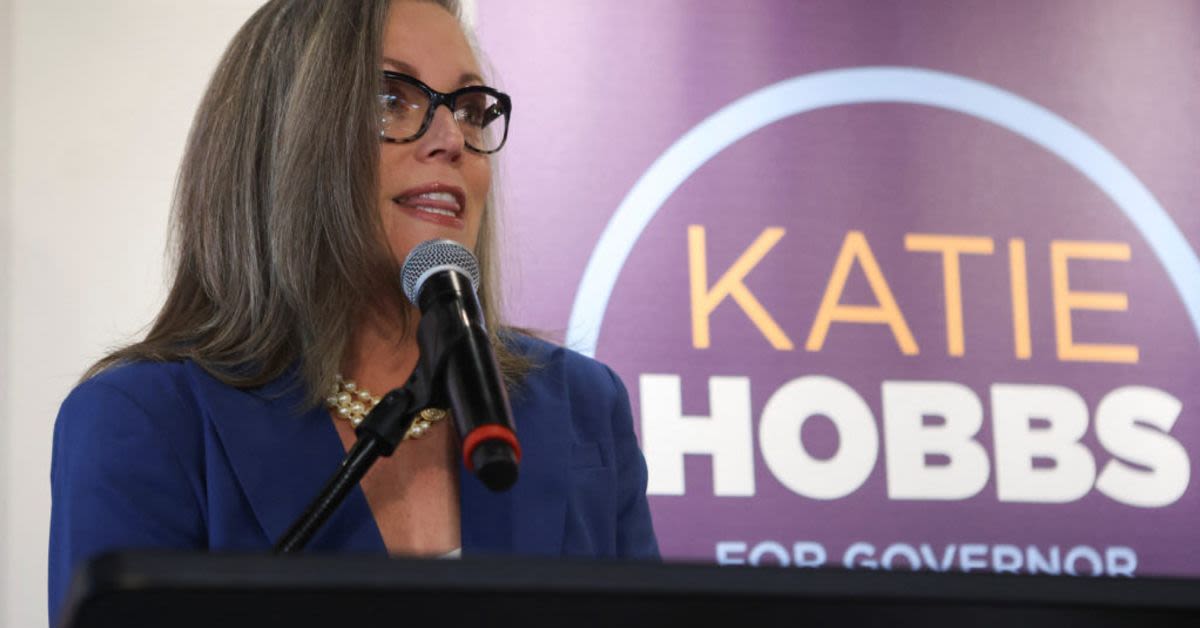
Arizona Governor Katie Hobbs is heading into a tight reelection fight under the cloud of serious pay-to-play allegations involving a politically connected foster-care contractor that poured more than half a million dollars into efforts benefiting her campaigns and allied funds.
According to RedState, the controversy centers on Sunshine Residential Homes, a private operator of group homes for children and youth in Arizonas foster care system, which allegedly saw its state reimbursement rates soar after its executives and associates became major financial backers of Hobbs. Speaking at a press conference, Arizona State Senator Jake Hoffman, a Republican, said Sunshine Residential executives and connected individuals allegedly contributed more than $500,000 to benefit Hobbs, her political operations and various funds.
Following these contributions, Hoffman said Sunshine received per-child rate increases (a 56% hike), making them the highest-paid group home provider in Arizona, despite internal staff noting no increase was necessary.
Hoffman did not mince words about what he believes the pattern of donations and state action represents.
"Political donations went in, taxpayer-funded rate increases came out, all to benefit a key donor to Katie Hobbs, said Hoffman, chairman of the Senate Committee on Government. "What we have seen has every appearance of a pay-to-play corruption scandal at the highest levels of our state government."
For many Republicans, the sequence of events looks like a textbook case of political favoritism: a generous donor secures a lucrative government benefit while taxpayers foot the bill. These allegations appear the very definition of a pay-to-play scheme: swapping a very generous political donation for a big rate increase, making Sunshine the highest-paid operation of its kind in the state.
Despite the apparent red flags, Arizona Attorney General Kris Mayes, a Democrat and political ally of Hobbs, previously declined to bring charges after a lengthy inquiry. This has already been the subject of an investigation by Arizona Attorney General Kris Mayes, who claimed there wasn't sufficient evidence for a prosecution.
Now the Republican-controlled Arizona State Senate has moved to reexamine both the underlying conduct and the attorney generals decision not to prosecute. Former Arizona Supreme Court Justice Andrew Gould has been named special counsel in the state Senates investigation of Attorney General Kris Mayes decision not to prosecute Gov. Katie Hobbs over allegations of a pay-to-play scheme.
The stakes are high for both parties, as the investigation unfolds in the final stretch of a contentious election season. The Democratic governor, who is running for reelection against U.S. Rep. Andy Biggs, R-Gilbert, has been accused of approving rate increases by Sunshine Residential Homes because they donated more than $500,000 benefitting Hobbs' political operations and various funds.
Mayes, another Democrat, is also on the ballot, facing Republican Senate President Warren Petersen, which further heightens concerns about partisan protection of political allies. Mayes, another Democrat, is running for reelection against Senate President Warren Petersen, who's also a Republican living in Gilbert.
Democrats, including Hobbs and Mayes, have dismissed the Senates move and the appointment of Gould as nothing more than an election-year ploy designed to damage their campaigns.
This case has become a hotly contested issue in Arizona.
Republicans counter that the facts speak for themselves and that the public deserves answers when a major donor appears to receive preferential treatment with taxpayer dollars. The Senate Republicans maintain it has all the appearance of a pay-to-play scheme, and from what is known, it does indeed look like just that: campaign contribution in, fat rate increase out.
The Attorney Generals Office insists it already conducted a thorough review before deciding against prosecution, pointing to the scale and duration of its inquiry. "The Attorney General's Office interviewed multiple sources, reviewed more than 100,000 pages of records and compiled nearly a terabyte of data during a two-year investigation," Richie Taylor, Mayes' director of communications, told The Center Square during a phone interview late Monday morning.
Taylor further argued that the renewed scrutiny is driven by politics rather than evidence, accusing GOP lawmakers of weaponizing the issue ahead of Election Day. He said the office believes the Republican senators' investigation and Hoffman's previous announcement of subpoenas is a political stunt ahead of the Nov. 3 general election.
Even if the timing is politically advantageous for Republicans, the underlying sequencelarge donations followed by a 56 percent rate hikeremains difficult to ignore. That's as may be; the timing is certainly close.
For voters concerned about integrity in government and the responsible use of public funds, the optics of this arrangement are troubling, particularly when vulnerable foster children and overburdened taxpayers are involved.
But the primary facts remain: Sunshine delivered on a big campaign donation, then was awarded a fat rate hike.
As the November 3 election approaches, polls still show Hobbs with a notable lead, but scandals of this nature can erode trust quickly if new details emerge or if Goulds review uncovers inconsistencies in the original decision not to prosecute. That's kind of hard for even a Democrat to just wave away.
Republican challenger Andy Biggs and his allies are likely to press the issue relentlessly, framing it as emblematic of a broader culture of Democratic cronyism and misuse of public funds. It could be a major campaign point for Andy Biggs and his campaign in these last few weeks, as the Republican campaign is looking to close the deal with Arizona voters.
Whether this investigation becomes a decisive turning point or merely background noise in a polarized environment will depend on what Gould uncovers and how persuasively Republicans can connect the dots for skeptical voters. The election is growing close indeed, and it's not yet clear if this could be a game-changer.
For now, Arizona voters are left to weigh the seriousness of the allegations against the denials from Hobbs and Mayes, and to decide whether the pattern of donations and state action reflects coincidence or corruption. We'll find out on November 3rd.
Login