
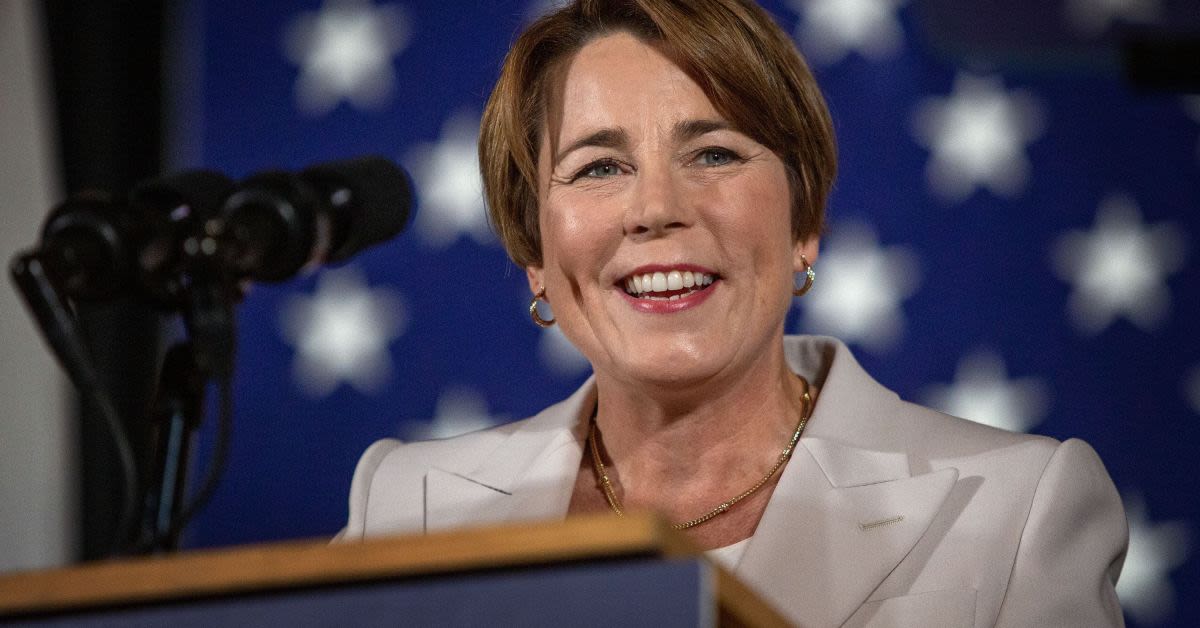
Massachusetts Democrat Governor Maura Healey is advancing a sweeping plan that would put state-funded personnel at the doorstep of virtually every newborn in the Commonwealth under the banner of postpartum care and mental health support.
.
According to Gateway Pundit, the far-left governor is promoting a dramatic expansion of government involvement in the earliest days of family life, framed as a compassionate effort to help new mothers but raising serious alarms among those wary of state intrusion into the home. The proposal centers on a $2 million boost to the states Welcome Family initiative, a home-visiting program that would be scaled up to reach every parent or caregiver following childbirth, along with additional funding for a mental health program targeting mothers.
On Boston Public Radio, Healey made her intentions unmistakably clear as she touted her postpartum package and the universal nature of the visits. Everybody in the state, when you have a baby, youre going to have a home visit. Youre going to have a home visit within days, weeks, and that will be an opportunity for a healthcare provider to make an assessment and to see if you need some additional support and resources.
State documents describe a program in which a maternal and child health nurse enters the home to examine both the parent and newborn, discuss feeding and sleep, and screen for depression and other mental health conditions. The nurse is also instructed to ask about support at home and, as the states own family handout notes, to discuss ensuring that your home is safe, followed by a call two to three weeks later to check whether the family used the recommended resources.
While the administration insists the visits are voluntary and designed to provide help, critics see a troubling blueprint for normalizing government oversight of private family life. The idea that a state-backed nurse will be assessing not only a babys health but also the condition of the home and the parents mental state is precisely the kind of mission creep conservatives have long warned about when bureaucrats are empowered to cross the threshold of the front door.
In a September 15 press release, the governors office framed the initiative as a compassionate response to postpartum challenges and mental health needs. Governor Maura Healey today announced new measures to strengthen postpartum care and mental health support for mothers and families across Massachusetts, with a focus on reaching people earlier, making support easier to access and helping providers connect patients to care when they need it.
The administrations plan calls for $2 million to provide universal access to the Department of Public Healths Welcome Family home visiting program statewide and $250,000 to strengthen the Department of Mental Healths Massachusetts Child Psychiatry Access Program for Moms, known as MCPAP for Moms. Officials say this money will be folded into an upcoming supplemental budget, while the Department of Public Health moves to update state regulations to strengthen screening for perinatal mood and anxiety disorders and help providers identify concerns earlier.
Under the Expanding Postpartum Support at Home section of the announcement, Healeys team describes Welcome Family as a voluntary and free home visiting program that supports parents and caregivers in the weeks after a baby is born. At present, the program serves about 3,000 births annually, but the new funding would extend the offer of a home visit to every parent and caregiver in the postpartum period across Massachusetts roughly 68,000 annual births.
Through this initiative, an experienced maternal and child health nurse visits a familys home following the birth of a child to check on both the caregiver and baby, answer questions and connect the family with additional support when needed. The service, the state emphasizes, is available regardless of age, income or other eligibility criteria, effectively embedding the program as a universal feature of childbirth in the Commonwealth.
During these visits, nurses are empowered to help with breastfeeding and newborn care, screen for mental health concerns and substance use, connect families with health care and social supports, and provide referrals for needs including domestic violence, food access and other community resources. They then follow up with caregivers by phone two to three weeks later to make sure they were able to connect with services, address barriers and provide additional support, creating an ongoing relationship between the state and the family during a highly vulnerable period.
The second prong of Healeys plan, Helping Providers Recognize Concerns Earlier, involves an additional $250,000 for MCPAP for Moms, a Department of Mental Health program that embeds mental health oversight into routine medical care for pregnant and postpartum women. MCPAP for Moms gives obstetricians, pediatricians, primary care providers, psychiatrists and other clinicians real-time access to specialists in perinatal mental health, along with care coordination and training.
According to the administration, The additional funding would allow the program to expand its reach and capabilities so that providers are better equipped to recognize serious concerns and help mothers get connected to appropriate care as quickly as possible. Supporters frame this as a way to catch mental health and substance use issues early, but skeptics note that it also broadens the network of professionals who may flag parents for further state scrutiny.
For conservatives, the core concern is not whether new mothers deserve supportthey dobut who controls that support and what strings are attached when government agents are invited, or pressured, into the home. With Healey openly declaring that everybody in the state will be slated for a home visit and the states own materials highlighting assessments of ensuring that your home is safe, the proposal looks less like simple healthcare and more like a test case for normalized state surveillance of families under the pretext of compassion.
Login