
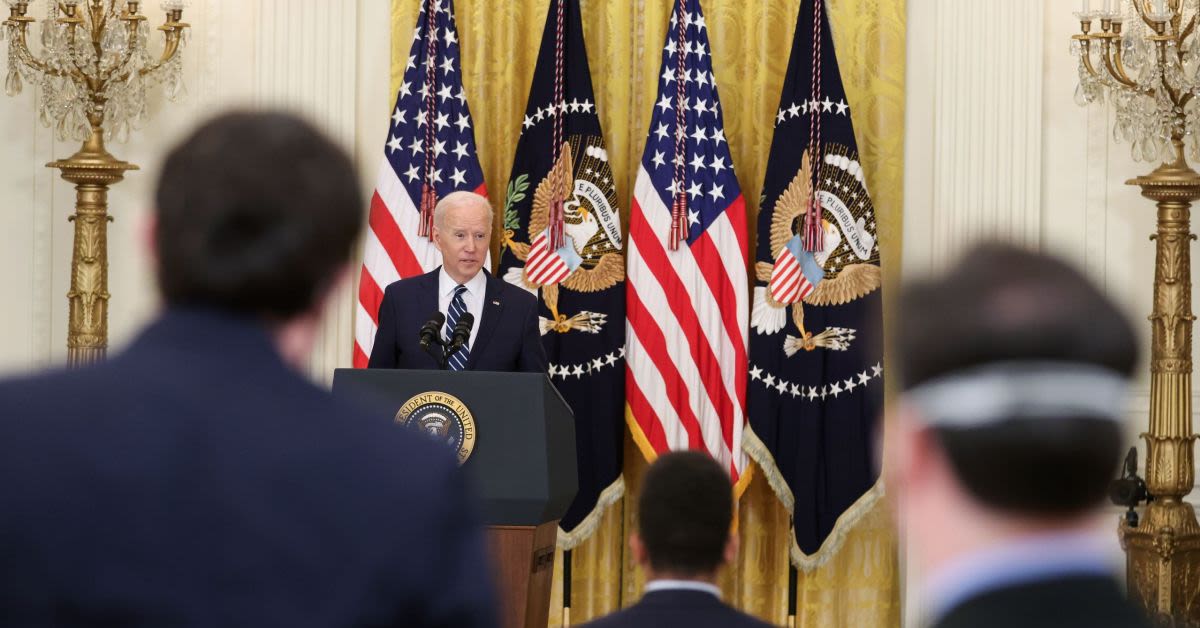
The corporate medias sudden concern for press freedom rings hollow when measured against its silence during Joe Bidens sweeping purge of reporters from the White House press corps.
According to the Gateway Pundit, more than 440 journalists lost their hard passes in 2023 after the Biden team imposed new credentialing rules that conveniently squeezed out independent and conservative voices. One of the most visible casualties was Simon Ateba, Chief White House Correspondent for Today News Africa, who publicly shared the letter threatening to revoke his access and refused to quietly disappear from the briefing room.
Ateba responded not with submission but with a federal lawsuit, Ateba v Jean-Pierre, targeting Biden Press Secretary Karine Jean-Pierre and the Secret Service for what he argued was a blatant violation of his constitutional rights. Filed by the Center for American Liberty, the suit alleged that the White House trampled his First and Fifth Amendment protections when it stripped him of his press badge for daring to challenge the narrative.
Throughout this episode, the White House Correspondents Association (WHCA) showed little interest in defending a colleague whose only real offense was asking inconvenient questions from a non-approved ideological lane. The same organization that claims to stand for transparency and access had no apparent issue with a conservative reporter being sidelined by the Biden Regime and even bullied by fellow journalists inside the briefing room.
Their selective outrage only surfaced when the tables turned under President Trumps second administration and the Far-Left Associated Press lost its privileged Oval Office access. The APs refusal to acknowledge the Gulf of Americas new legal name cost it a favored spot, and suddenly the WHCA rediscovered its passion for constitutional principles and press rights.
In February 2025, White House Press Secretary Karoline Leavitt moved decisively to end the WHCAs gatekeeping power over who gets close to the President. She stripped the association of its monopoly on access and simultaneously announced a plan to broaden the press pool to include new media outlets that had long been frozen out by the Beltway cartel.
The Gateway Pundit published Leavitts full remarks from the podium, where she underscored that access to the most coveted spaces is a privilege, not an entitlement reserved for a protected class of insiders. Asking the President of the United States questions in limited spaces, such as the Oval Office and Air Force One, is a privilege that, unfortunately, has only been granted to a few. It is not a legal right for all As you all know, for decades, a group of DC-based journalists, the White House Correspondents Association, has long dictated which journalists get to ask questions of the President of the United States in these most intimate spaces. Not anymore. I am proud to announce that we are going to give the power back to the people who read your papers, who watch your television shows, and who listen to your radio stations. Moving forward, the White House press pool will be determined by the White House press team.
Legacy outlets were not expelled; they retained their seats, but they no longer sit alone. New media organizations and streaming platforms, shut out for decades by an insular club, finally gained a foothold in the briefing room and on Air Force One.
For years, the DC press corps cloaked self-interest in the language of press freedom, defending its own status while ignoring censorship aimed at outsiders who challenged progressive orthodoxy. Under President Trumps second administration, that closed circle has been broken, and the power to question the most powerful office in the world is being redistributed beyond the old guards control.
Login