
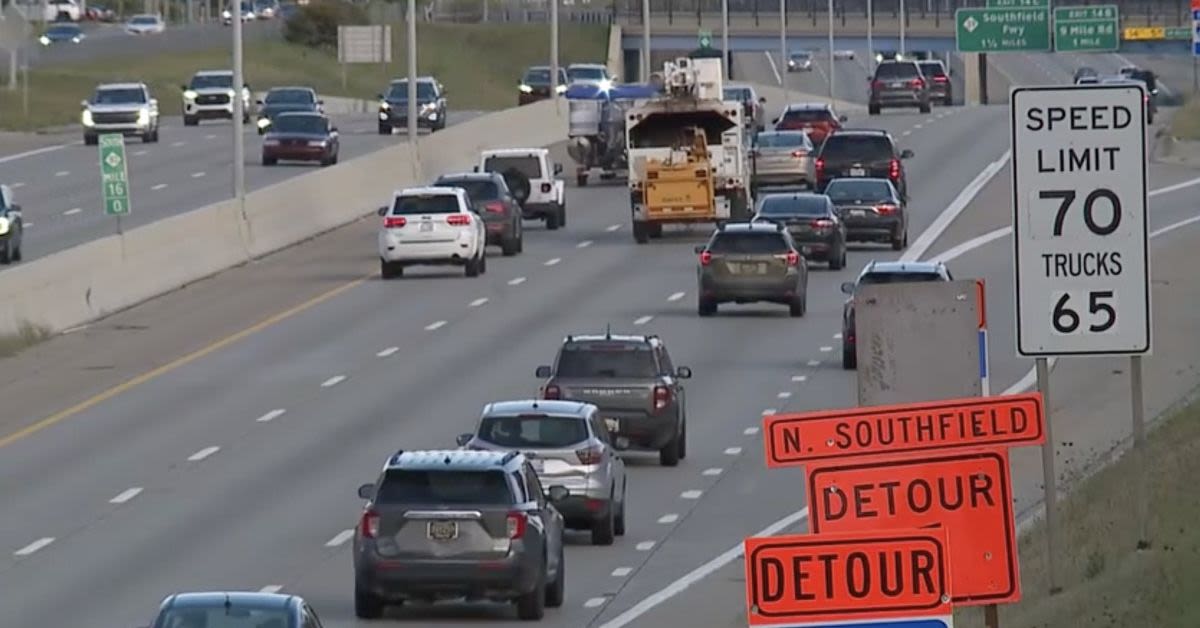
Michigan is preparing to track how far residents drive using GPS-equipped vehicles and smartphone apps, despite the fact that its own data show a sizable share of citizens are deeply uneasy about government access to their movements.
According to Western Journal, the states Department of Transportation is moving ahead with a six?month road usage charge pilot program scheduled to begin in February 2027, enlisting 1,000 volunteer drivers to test various mileage?tracking technologies. Minutes from an Aug. 24 meeting of the Michigan Department of Transportations (MDOT) technical advisory committee show that the trial will compare odometer readings, in?vehicle telematics, a plug?in device and a smartphone application as potential tools for calculating how much each driver uses the roads.
The initiative is being designed at a time when location technology has become extraordinarily precise, raising the stakes for privacy and civil liberties. GPS can get you within two meters reliably today, John Peracchio, a State Transportation Commission appointee helping design the pilot, said in a Feb. 4 interview with WDIV, underscoring just how closely a drivers movements could be mapped.
MDOTs own 2024 survey of 19,160 residents suggests that many Michiganders are not comfortable with that level of scrutiny from their government. The departments report found that more than 30 percent were worried about data privacy and that 17 percent would refuse to provide mileage data, a warning sign that the public is far from sold on the idea of a state?run tracking system.
Conservatives in the state legislature have already sounded the alarm, arguing that the pilot is less about maintaining roads and more about expanding government power and revenue. Michigan families are already struggling to afford everyday life, and the last thing they need is state government tracking their every move just to take more of their hard-earned money, Michigan Senate Republican Leader Aric Nesbitt said in a statement to the Daily Caller News Foundation.
Nesbitt framed the mileage?based concept as a classic example of big?government thinking that reaches for new taxes and new surveillance rather than reining in spending. Instead of coming up with new ways to reach into drivers pockets and invade their privacy, Democrats need to end their corporate welfare and root out wasteful spending to fix our roads, he added, placing the blame squarely on the states Democratic leadership.
For now, MDOT is stressing that the pilot will be voluntary and that no immediate policy change is on the table. On its website, the department says participation is optional and that no changes are planned at this time, while also acknowledging that lawmakers would have to pass new legislation before any permanent mileage charge could be imposed on drivers.
That assurance has not quieted concerns among skeptics who see pilot programs as the first step toward mandates once the infrastructure is in place. MDOT, Peracchio, and Democratic Michigan Gov. Gretchen Whitmers office did not respond to the DCNFs requests for comment, and Whitmer is scheduled to leave office on Jan. 1, a month before the pilot begins, potentially leaving her successor to manage the political fallout.
Free?market advocates argue that the crucial difference between private?sector telematics and a state?run mileage system is choice. Drivers can choose whether to share location data with an insurer or automaker and can leave if the company breaks their trust, James Czerniawski, head of emerging technology policy at the Consumer Choice Center, told the DCNF, emphasizing that market competition gives consumers leverage.
By contrast, he warned, a government?run mileage charge that relies on the same kind of data would be coercive by design. He added that a state collecting the same data to bill for road use amounts to a government monopoly with enforcement powers, and he stressed the lack of alternatives once the state is in control of the system.
You cant swap providers when driving on a public road, Czerniawski stressed, capturing the core conservative objection to turning basic mobility into a monitored, metered service. From his perspective, the issue is not only what data are collected, but who holds the power to demand them and what penalties can be imposed for noncompliance.
Czerniawski urged Michigan drivers to press for clarity on what exactly the telematics option would capture beyond simple mileage. Michigan drivers should ask whether the telematics option would collect speed or braking data in addition to location, Czerniawski said, and they should also ask whether third parties or law enforcement could access the data, how long it would be stored and whether participation would remain voluntary if the state expanded the program.
He argued that states facing declining gas tax revenues must not use that fiscal challenge as a pretext to build permanent tracking systems. Governments trying to replace declining gas tax revenue must avoid mandatory solutions that subject their drivers to a transportation surveillance state, Czerniawski went on to say, warning that once such systems are in place, they are rarely rolled back.
Civil liberties advocates see a familiar pattern in the way governments repurpose data collected for one stated goal. Location data collected for one government purpose can later be used for another, Alex Marthews, national chair of Restore the Fourth, told the DCNF, noting that mission creep has been a recurring feature of modern bureaucracies.
He pointed to federal agencies that gained access to IRS records, Selective Service data and voter rolls originally gathered for other purposes, arguing that Michigans proposed system could easily follow the same trajectory. The Supreme Courts recent jurisprudence has only heightened those concerns, especially regarding digital location trails.
The Supreme Court ruled June 29 in Chatrie v. United States that police conduct a Fourth Amendment search when they obtain cellphone location history from a technology company, even if the records cover only two hours. Marthews said the ruling makes the pilots current design constitutionally perilous, suggesting that any system that routinely compiles location histories for millions of drivers could invite legal challenges.
Even short-term location information, like a single ALPR [automated license plate reader] snapshot, or a single reading seized as part of the Michigan pay-by-mile pilot, can potentially reveal a persons activities, preferences, habits and beliefs, Marthews said. Elected officials can no longer fairly rely on an assumption that a sweeping system of collecting and parsing all drivers location records will not violate the Constitution.
The Michigan pilot is emerging just as Americans across the political spectrum are pushing back against automated license plate readers and other forms of mass monitoring. On Aug. 31, Florida ordered Flock Safety cameras removed from state highways within 30 days after Republican Gov. Ron DeSantis said he did not want the state to become a surveillance state, the Daily Caller reported, signaling a clear preference for liberty over convenience.
Fixed license plate reader cameras are quietly turning American streets into zones of constant monitoring, Republican Colorado Rep. Lauren Boebert wrote in a Sept. 1 op-ed for the Caller, a warning that resonates with conservatives wary of government overreach. Against that backdrop, Michigans move toward GPS?based billing looks less like a neutral policy experiment and more like another step toward normalized surveillance.
Some transportation policy experts argue that the most intrusive elements of the Michigan pilot could be mitigated by outsourcing data handling to private vendors. The telematics and GPS options would create location records, but a private vendor rather than the state would hold them, Baruch Feigenbaum, senior managing director of transportation policy at the Reason Foundation, told the DCNF in a phone interview.
It would be a private vendor. It would not be the state of Michigan thats tracking it, Feigenbaum said, suggesting that contractual safeguards and data?retention limits could reduce the risk of abuse, even if they do not eliminate it. He also noted that much of this data is already being collected outside of government.
Automakers already collect the same data from any vehicle built in the past five years, he added, highlighting how modern cars function as rolling computers. With the automakers, I actually think the data is less secure because most people, when they buy a car, they sign that 100-page document, he said, arguing that consumers often have little idea what they are agreeing to.
Peracchio, a member of the advisory committee, told WDIV that one option is to leverage the embedded telematics already built into most new and used vehicles. Another is to leverage a smart device like an iPhone, and to marry that data up with information about your vehicle, he said, describing a system that would knit together multiple streams of personal information.
He said a per-mile system is analogous to tolling but that he resists the ugly gantries, toll tags, tag readers and video capture, framing the GPS?based approach as a more elegant alternative to physical toll infrastructure. For privacy advocates, however, the absence of gantries does not make the invisible tracking any less concerning.
Feigenbaum acknowledged that there is a less invasive option on the table: simple odometer readings. The odometer option would not reveal when or where someone drove, Feigenbaum said, adding that Nobody would know when youre driving, where youre driving, how youre driving. They would just know that you drove a certain number of miles.
He conceded, however, that such a system has technical and policy drawbacks from the states perspective. Verifying the reading is a challenge, and the approach is a very blunt tool because it cannot tell which roads a driver used, he added, arguing that The telematics option or the GPS-based option is more ideal. There are some trade-offs with the odometer reading, but we want to give people a choice.
From a privacy?first standpoint, Czerniawski sees the odometer?only approach as the clear favorite. An odometer-only system is certainly the most privacy-preserving way to go, Czerniawski told the DCNF, pointing to Hawaii as a model for how to structure such a program without building a surveillance architecture.
The Hawaii Department of Transportation allows electric vehicle owners to choose between a flat $50 annual fee or $8 per 1,000 miles, capped at $50, with odometers photographed during annual safety inspections, according to the agency. An odometer-only system would resolve Restore the Fourths concerns because the state would receive only total mileage, Marthews said, though Michigans lack of annual safety or emissions inspections complicates that option.
Michigan is among the few states without such regular inspections, leaving no built?in opportunity for a mechanic to record and transmit odometer readings. Safeguarding location data is the key, and zero-location approaches like odometer readings and periodic payments are workable, Electronic Frontier Foundation Legislative Director Lee Tien said in a statement to the DCNF, reinforcing the argument that technical design choices can either protect or endanger constitutional rights.
Feigenbaum argued that if Michigan insists on moving forward, it should at least adopt the strongest privacy framework currently in use. Michigan should model its privacy rules on Oregon, which has the strongest privacy protections, Feigenbaum told the DCNF, pointing to statutory limits that go beyond what most states have contemplated.
Oregon requires the state and its vendors to destroy location and daily mileage records within 30 days after payment processing or the end of a dispute or noncompliance investigation, whichever comes last, according to the statute. Michigan should also require a warrant for law enforcement access, because the idea is that if you are the owner of that vehicle, the driver of that vehicle, that is your data, Feigenbaum said, echoing a property?rights view of personal information that aligns with conservative principles.
Grassroots conservative groups in Michigan have been warning for months that a mileage tax would inevitably expand the reach of government into citizens private lives. When lawmakers first proposed funding the pilot in 2024, the Michigan Freedom Fund, a conservative advocacy group, said there was no way to implement a miles traveled tax on Michigan drivers without a significant growth of government intrusion into our privacy, according to Bridge Michigan, and the Senate proposal that year required at least one reporting option that does not rely on vehicle location data, the outlet reported.
MDOTs own survey data show that public opinion is fractured and far from enthusiastic. About 35% of respondents preferred automatic collection through an installed device or vehicle telematics, while about 45% preferred a manual upload or an app, according to the report, and no option for who would hold the data drew more than 37% support, while 16% either opposed data collection or the concept generally, the report states.
The advisory committee overseeing the pilot has at least acknowledged that privacy and security will be central to any evaluation. The advisory committee will grade the pilot on data security and privacy among other criteria, the minutes state, and the committee meets next on Sept. 28 in Lansing, according to MDOTs events page, giving opponents another opportunity to press their case.
On the streets of Grand Rapids, ordinary drivers sound far less interested in policy nuance than in basic freedom from tracking. I dont really like the idea on tracking, Grand Rapids driver Yosef Gage told Fox 17 on Monday, summing up a sentiment that many Americans instinctively share.
I dont think that they need to track every mile and everywhere I go. They basically do that already with all the cameras everywhere, Liz Cook told the station, suggesting that patience with constant monitoring is wearing thin. Public resistance tends to fade once drivers see how the programs work, Feigenbaum said, though theres probably going to be some people that are never going to be comfortable with that high-tech option.
As Michigan edges toward this experiment in pay?by?mile taxation, the central question is whether a state that already struggles to maintain roads can be trusted with a powerful new tool for monitoring its citizens. With privacy advocates warning of a transportation surveillance state, conservative lawmakers decrying another tax?and?track scheme, and residents openly skeptical of being followed by their own government, the coming pilot will test not only technology, but the balance between infrastructure funding and individual liberty in a state that has yet to prove it can protect either effectively.
Login