
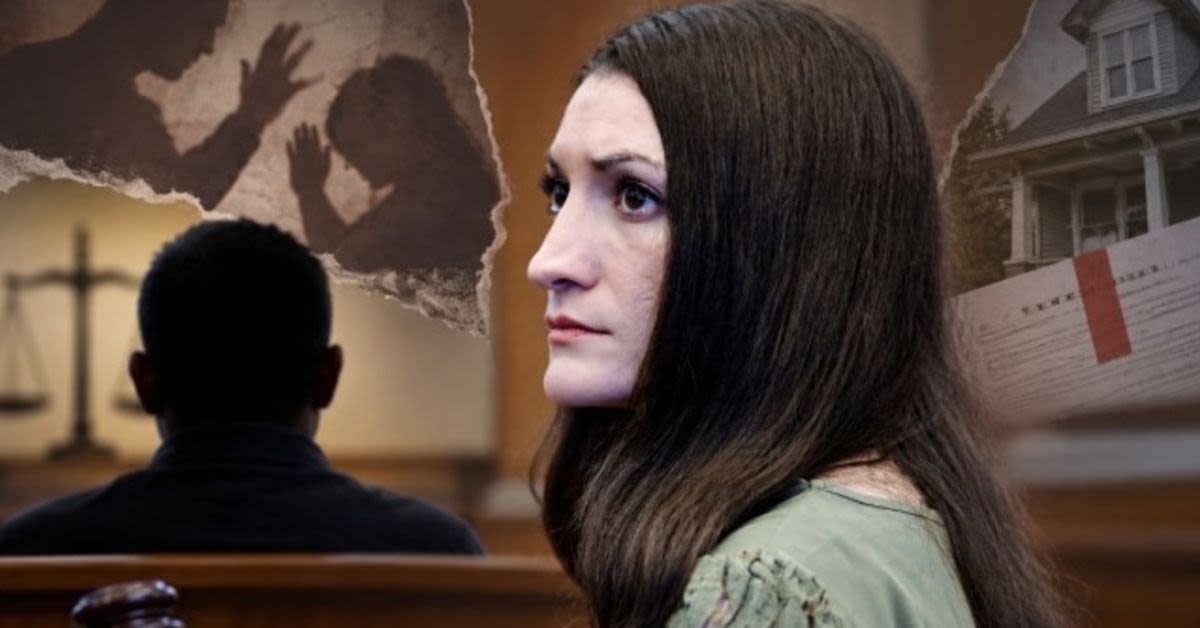
The lone juror who refused to acquit Massachusetts mother Lindsay Clancy by reason of insanity has broken his silence, insisting he didnt have any doubts about her guilt and believed prosecutors had fully proved their case.
His statement, delivered through NewsNation, comes after days of speculation, media pressure and online harassment over his role in forcing a mistrial, as reported by Western Journal. The juror, identified as Michael P. Desronvil, had been portrayed by some of his fellow panelists as confused, conflicted or improperly influenced, but he now says those characterizations are false and that his position was clear from the outset.
Clancy, a Duxbury mother who strangled her three young children before attempting to take her own life, faced a jury that split 11-1 in favor of a verdict of not guilty by reason of insanity. The majority claimed Desronvil had acknowledged reasonable doubt about her criminal responsibility but refused to act on it, a narrative that quickly spread through sympathetic media coverage and social media activism.
One juror, Kellie Farina, summarized the majoritys frustration in a clip that has since gone viral. He had the hardest time getting off the fact that Lindsay viciously killed her children, Farina said in what has become an infamous clip regarding the holdout.
Progressive commentators and Clancy supporters then began to probe Desronvils personal life and beliefs, suggesting that his devout Catholic faith or past allegations of domestic violence somehow tainted his judgment. In the current climate, where jurors are increasingly subjected to public shaming when they do not align with elite narratives, such attacks function as a warning to anyone who dares to resist the preferred outcome.
Desronvil, however, flatly rejected those insinuations in a written statement released by NewsNation on Thursday evening. I didnt have any doubts. As I tried to explain different possible theories during deliberation, I kept getting cut off as if I had doubts based on the evidence present, Desronvil said via a statement.
He emphasized that his conclusion was rooted in the evidence and the law, not in ideology or emotion. Based on all the physical evidence, key witnesses, and what the prosecution presents, I thought it was enough proof that she [Clancy] knew exactly what she was doing and planned.
NewsNations Ray Marcel, who interviewed Desronvil on Tuesday, backed up the jurors account of his consistent stance. He felt that she was sane when she did it. And thats exactly what he told me, Marcel told Chris Cuomo.
Marcel further noted that Desronvil never wavered in his belief that Clancy met the legal standard for guilt. He said, from day one, that he always felt that she was guilty, and he never displayed or said anything about reasonable doubt.
That account stands in stark contrast to the version offered by jury foreperson Roni Carlson, who publicly claimed that Desronvil admitted he had reasonable doubt but refused to explain it. The discrepancy underscores how quickly internal jury deliberations can be weaponized in the court of public opinion when a single juror resists a consensus that aligns with a fashionable narrative about mental health and victimhood.
Marcel also reported that the atmosphere inside the jury room was far from calm or collegial. He said things got heated in the jury room, Marcel said.
Jurors were not agreeing, some agreeing, some not agreeing . What he told me was, from day one, they voted every single day. That description suggests a panel under intense pressure to reach unanimity, with the lone dissenter facing mounting hostility as the days wore on.
While several jurors have eagerly granted interviews detailing their push for an insanity verdict, Desronvil has largely stayed out of the spotlight. His relative silence has been driven in part by the ferocity of Clancys supporters, who have focused their anger on him personally because his refusal to bend means the state will likely have to retry the case or negotiate a plea deal.
Yet the holdout has not been entirely abandoned, particularly by those who still believe in the integrity of the jury system and the presumption that verdicts should be based on evidence, not mob sentiment. He has attracted tangible backing, including a crowdfunding campaign that had raised more than $280,000 for him as of Thursday night, and an offer of asylum in Florida by Republican Gov. Ron DeSantis.
That offer from DeSantis is more than a symbolic gesture; it reflects a broader conservative concern that ordinary citizens who fulfill their civic duty are increasingly at risk of retaliation when their decisions conflict with progressive expectations. In a justice system already strained by politicized prosecutions and media-driven narratives, the spectacle of a juror being doxed and vilified for insisting that a mother who viciously killed her children be held responsible sends a chilling message.
Desronvils statement, and the support he has received, raise uncomfortable questions about whether juries can truly remain independent when activists and commentators stand ready to destroy anyone who resists a preferred storyline. As the Clancy case moves toward a likely retrial or plea, the unresolved issue is not only whether she was legally insane, but whether future jurors will feel free to follow the evidence and the lawor whether they will simply follow the crowd to avoid becoming the next target.
Login