
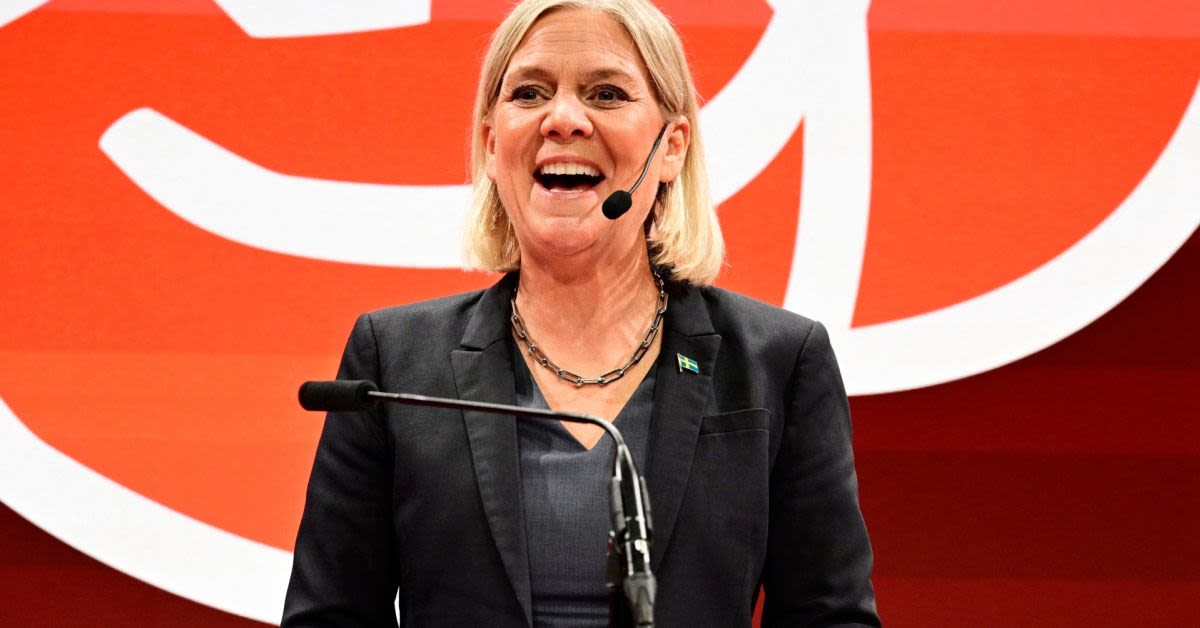
Sweden appears set to swing back to left-wing rule after one of the tightest elections in the nations modern history, dealing a blow to the countrys conservative experiment in tougher borders and law-and-order governance.
According to Gateway Pundit, with virtually all ballots tallied, a Social Democrat-led opposition bloc has secured a tentative 176 seats in the 349-seat Riksdag, edging out the governing right-wing alliance, which stands at 173. Swedens Election Authority has indicated that it will not formally certify the final result or the definitive allocation of seats until the weekend, leaving only a sliver of uncertainty in an already razor-thin contest.
The outcome places former Prime Minister Magdalena Andersson back in contention to reclaim power, four years after her Social Democrats were pushed into opposition. However, she would be reliant on a fragile coalition of the Social Democrats, the socialist Left Party, the Greens, and the Centre Party to sustain a working majority in parliament.
The Social Democrats held their position as Swedens largest party with roughly 28 percent of the vote, though they still lost eight seats in the process. By contrast, the Left Party gained six seats and the Greens added four, underscoring a consolidation of support on the broader left despite internal ideological rifts.
On the right, Prime Minister Ulf Kristerssons Moderate Party captured just under 20 percent of the vote and 70 seats, a respectable showing but not enough to preserve conservative rule. The conservative Sweden Democrats, who had been instrumental in steering the government toward significantly tougher policies on immigration and crime, suffered the sharpest reversal, slipping to around 17.5 percent and surrendering 11 seats compared with 2022.
This result effectively ends four years of conservative governance during which Sweden dramatically tightened its immigration policies following decades of mass migration. Yet the prospective left-wing government faces immediate structural instability, as the Centre Party has ruled out serving in a government alongside the Left Party, while the Left insists it expects a place in government rather than merely providing parliamentary support.
Those entrenched divisions mean Andersson must attempt to forge an arrangement that can hold together four parties with serious policy disagreements, from economic priorities to cultural and environmental issues. The stakes are amplified by the wafer-thin marginReuters reported that only around 26,000 votes separated the two blocs as the count neared completionand by the Election Authoritys confirmation that the final seat distribution will only be announced once the full count is completed this weekend, leaving Swedens political direction hanging in the balance.
Login