
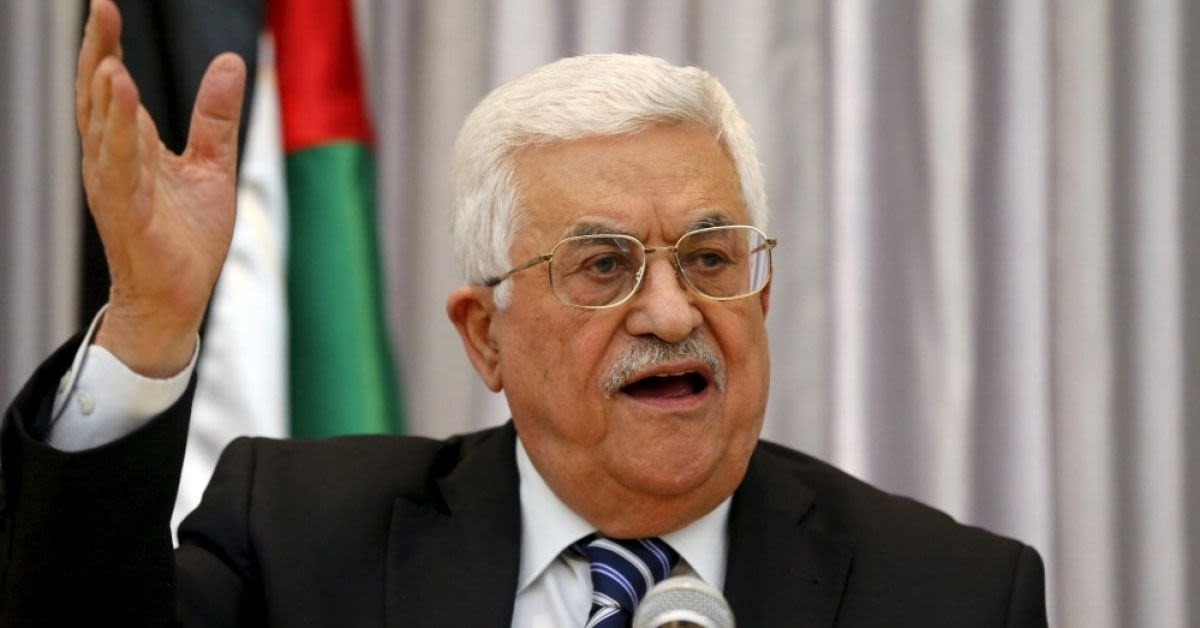
For the second consecutive year, the Trump administration has refused an entry visa to Palestinian Authority (PA) leader Mahmoud Abbas ahead of the United Nations General Assembly in New York, extending the ban to dozens of other PA officials.
According to Gateway Pundit, the State Department formally notified Congress on Wednesday that the Palestine Liberation Organization (PLO) and the PA had again fallen short of their obligations under longstanding U.S. law. Officials stated, The State Department has reported to Congress that the Palestine Liberation Organization (PLO) and Palestinian Authority (PA) have, once again, failed to live up to their commitments as described in the PLO Commitments Compliance Act of 1989 (PLOCCA) and the Middle East Peace Commitments Act of 2002 (MEPCA).
The Department detailed a pattern of conduct that directly conflicts with the framework for peace that Washington has backed for decades. This includes initiating and supporting actions at international organizations that undermine and contradict prior commitments in support of Security Council Resolution 242 and 338, taking actions to internationalize the Israeli-Palestinian Conflict including through the International Criminal Court (ICC) and International Court of Justice (ICJ), seeking to bypass negotiations through seeking unilateral recognition, and continuing to pay stipends to terrorists and to glorify acts of terrorism and terrorists in public pronouncements and school textbooks.
As a result, the administration is invoking statutory sanctions that target the PAs political leadership and its diplomatic reach. As a consequence of their failure to reform, contrary to their commitments to the United States, and their ongoing activities that undermine the prospects for peace, the United States will extend sanctions that deny visas to PLO members and PA officials in accordance with section 604(a)(1) of the MEPCA.
The State Department emphasized that it would preserve a narrow exception for personnel attached to the PLOs U.N. observer mission, reflecting a limited diplomatic channel rather than a broader endorsement. The Department has maintained the standing waiver for personnel notified to the PLO Observer Mission to the United Nations as was the case in the Departments prior determinations. It is in our national interest to impose consequences and hold the PLO and PA accountable for glorifying terrorism.
Abbass own rhetoric since the October 7, 2023, Hamas-led atrocities in Israel has only deepened concerns among U.S. lawmakers and many in the West who expect clear moral clarity against terrorism. In the immediate aftermath of the massacre, he declined to issue an unequivocal condemnation, instead asserting that Palestinians have the right to defend themselves against the terror of settlers and occupation troops.
In the months that followed, Abbas offered only muted and indirect criticism of the attacks while relentlessly portraying Israels military response in Gaza as the primary outrage. He has continued to describe the Gaza campaign as a greater calamity than the deliberate murdering, raping, and kidnapping of civilians, a framing that aligns more with radical narratives than with any serious peace process.
The visa denials underscore a broader conservative critique that U.S. policy must be tied to behavior, not empty promises, particularly when American taxpayers are asked to underwrite Palestinian institutions. Last year, Gateway Pundit reported that Secretary of State Marco Rubio revoked the visas of Abbas and 80 other officials, and the latest move signals that Washington is finally beginning to match its rhetoric on counterterrorism and accountability with concrete action.
Login