
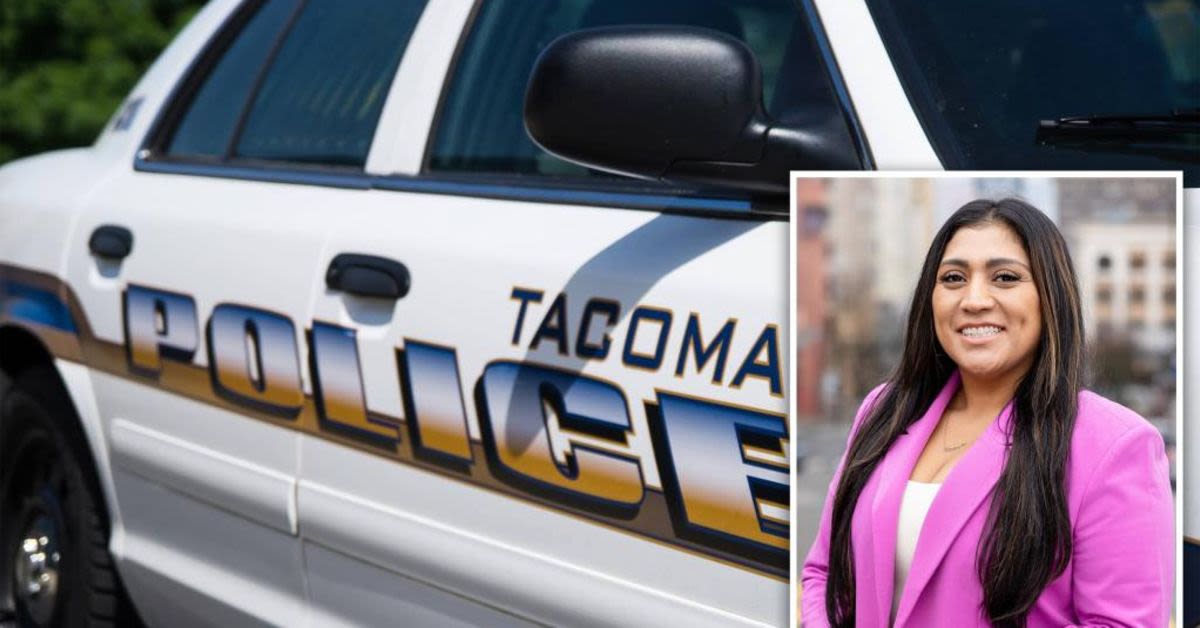
Washington state Democratic candidate Krista Perez is facing a drunk driving charge after police body camera footage captured her admitting to drinking wine, refusing field sobriety tests, and later praying and weeping in the back of a patrol car following a late-night crash in Tacoma.
Perez, who topped the August primary in the 29th Legislative District, Position 1, is set to face fellow Democrat and incumbent state Rep. Melanie Morgan in November, meaning voters could soon be asked to send a candidate with an active DUI case to Olympia. According to Fox News, Tacoma Police allege that Perezs 2019 Chevrolet Silverado slammed into a parked vehicle on South G Street shortly after midnight on August 11, triggering a chain-reaction collision that damaged five cars, as first detailed by The Jason Rantz Show on Seattles KTTH.
Prosecutors have charged Perez with driving under the influence and added a refusal enhancement tied both to the crash and her later conduct at the police station, raising the stakes of the case beyond a routine DUI. Body camera footage obtained by The Jason Rantz Show shows officers questioning Perez at the scene, placing her under arrest, and then recording her emotional breakdown and prayers in the back seat of a patrol vehicle.
When officers first approached, Perez appeared disoriented and insisted she did not understand what was happening, according to the footage. She denied any role in the collision when asked directly, despite the damaged vehicles nearby.
"Did you get into an accident here?" an officer asked her at the scene.
"I did not," Perez responded.
Pressed to explain what had occurred, Perez again distanced herself from the crash. "I dont know. Ive never been in an accident before," she replied, even as officers continued their investigation around her.
When asked for her insurance information, Perez told the officer she had recently changed carriers just weeks earlier. She was, however, able to provide the name of the new insurance company, suggesting she was at least partially oriented to her circumstances.
Perez said she had been driving from a friends business on Tacoma Avenue South when the collision took place, placing herself behind the wheel shortly before the incident. That admission set up the officers next line of questioning about possible alcohol use.
"Did you have anything to drink tonight?" the officer asked.
"I just had some wine while I was there," Perez replied.
When the officer followed up and asked how much she had consumed, Perez claimed it was a single glass of wine. But when pressed on the size of that glass, she deflected, telling the officer, "I think you might need to contact the business."
The officer then tried to gauge her level of impairment by asking her to rate her own sobriety on a scale from zero to 10, with zero meaning completely sober. Initially, Perez avoided answering and instead pleaded to be allowed to go home.
After the officer repeated the question, Perez finally offered a number and rated herself a four, effectively acknowledging she was not fully sober. That admission, combined with the crash and her earlier statements, prompted the officer to request standardized field sobriety tests.
"So its a series of tests that I take you through to make sure to see if youre impaired by alcohol, or youre not. Are you okay with doing that? Its totally voluntary," he said, emphasizing that she was not legally required to comply.
Perez refused to participate, repeatedly insisting that she wanted to go home and telling the officer she was "confused." "Not right now. Id like to go home first," she said, continuing to resist the officers efforts to evaluate her condition.
The officer made clear that going home was not an option at that point and pressed her for a definitive answer. "Youre not going to go home first. Im going to tell you that right now, okay? So your options between the test, yes or no, thats going to be determined tonight, right now, not when you go home. So would you like to take these tests or no?" he asked.
Perez responded by asking whether she was allowed to decline the tests, seeking clarity on her rights. "You do have a choice. You can either say yes, or you can say no. Theyre totally voluntary tests," the officer answered.
"Yeah, I would like to go home first," she replied, again avoiding direct cooperation. When the officer asked if that meant she was declining the tests, Perez confirmed that she was refusing to participate.
At that point, the officer informed her she was under arrest for DUI and instructed her to place her hands behind her back. "Hold on. Hold on. One second. Hold on," she said, still appearing to resist the reality of the situation.
Perez repeatedly told the officer she did "not know what any of this means," even as he explained that she was being arrested on suspicion of driving under the influence. Under Washington law, roadside sobriety tests are optional, and declining them is legally distinct from the refusal enhancement now attached to her case.
According to an arrest report cited by The Jason Rantz Show, the refusal enhancement stems from Perezs conduct later at Tacoma Police headquarters. Officers say she failed to provide a usable breath sample after three attempts, leading the machine to time out and triggering the additional penalty.
Once placed in the patrol car, Perezs demeanor shifted from argumentative to distraught, as seen on the body camera footage. She sobbed uncontrollably, prayed aloud, and pleaded for divine intervention for several minutes.
"Help me, God. Help me. Help me. Holy Spirit, help me, God," she said, her voice breaking as she sat handcuffed in the back seat. The emotional display underscored the gravity of the situation for a candidate who is now asking voters to trust her judgment and character.
Washington state law does not bar individuals facing DUI charges from serving in the legislature, leaving the decision largely in the hands of voters rather than ethics panels or party leaders. In fact, Democratic lawmakers in the state have weathered alcohol-related controversies before and remained in office.
House Majority Leader Joe Fitzgibbon, a powerful figure in the Democratic caucus, kept his leadership role after admitting he drank alcohol before a House Appropriations Committee hearing in February. "I made a poor choice last night by drinking alcohol before we had finished our work for the day. I am disappointed in myself and take responsibility for that poor choice. It wont happen again, and Im committed to completing my work this session without alcohol," Fitzgibbon said in a statement at the time to The Jason Rantz Show on Seattle Red.
For voters who believe public officials should be held to a higher standard, Perezs case raises serious questions about judgment, accountability, and the culture of leniency that often surrounds Democratic politicians when alcohol is involved. With no legal barrier preventing her from serving if elected, it will fall to constituents in the 29th District to decide whether a candidate who admitted to drinking, refused sobriety tests, and now faces a DUI charge should be entrusted with writing the laws everyone else is expected to follow.
Login