
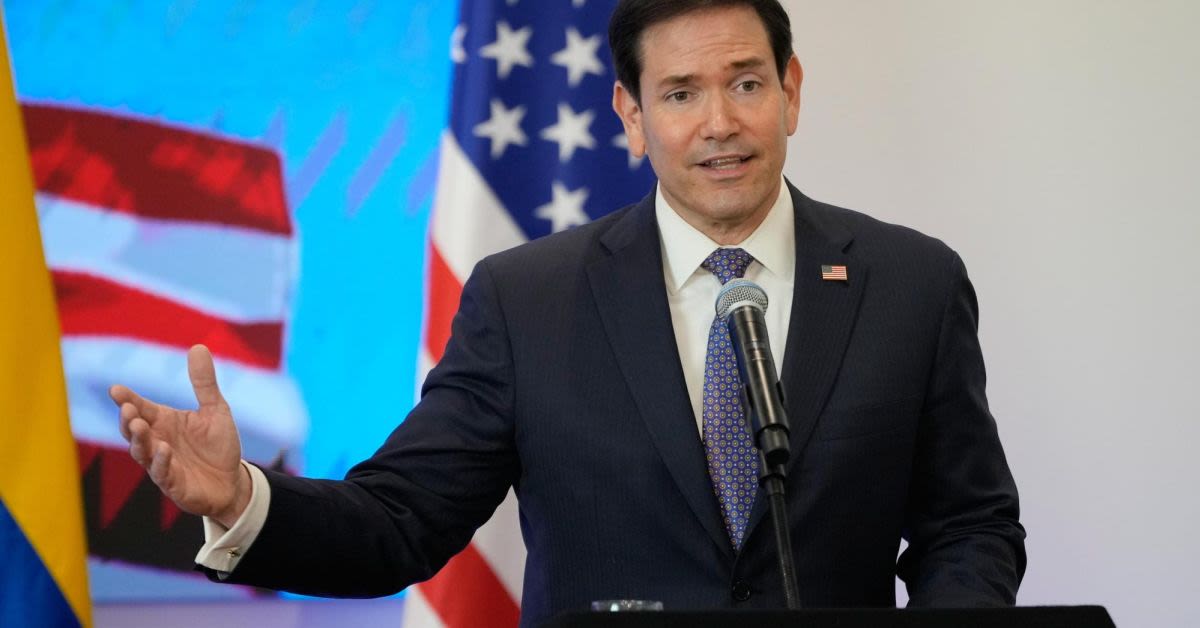
U.S. Secretary of State Marco Rubio formally designated the Ecuadorian criminal syndicate Los Tiguerones as both a Foreign Terrorist Organization (FTO) and a Specially Designated Global Terrorist (SDGT), signaling a sharp escalation in Washingtons response to hemispheric narco-violence.
According to Breitbart, Los Tiguerones has emerged as one of Ecuadors most violent and entrenched gangs, building its power since the 2010s through a portfolio of crimes that includes drug and arms trafficking, extortion, kidnappings, and contract killings. Rubio stated on social media that Los Tiguerones is among the Ecuadorian groups partnering with Mexican cartels to move narcotics and finance terrorism and other transnational criminal enterprises.
The gang drew global attention on January 9, 2024, when its members carried out a live, on-air assault on the Ecuadorian broadcaster TC Television. During that brazen attack, armed criminals stormed the studio, seized journalists and staff as hostages, and reportedly stuffed improvised explosive devices into the pockets of media workers to maximize fear and leverage.
Investigations in recent years have found that Los Tiguerones has not confined its operations to Ecuadors borders, expanding its drug trafficking and illegal mining rackets into neighboring Peru. That cross-border reach has heightened concerns in Washington and among regional allies that the group is evolving from a domestic gang into a fully fledged transnational criminal organization with terrorist capabilities.
The Trump Administration will continue to use all available tools to protect our nation by keeping illicit drugs off our streets and disrupting the revenue streams funding violent narco-terrorists, Rubio said in a statement underscoring the administrations law-and-order posture. Todays action taken by the State Department further demonstrates that the Trump Administration continues to deliver on its promises to the American people to dismantle cartels and narco-terrorist networks in our region, ensuring the safety of the American people.
Rubios announcement followed a meeting in Quito with Ecuadorian President Daniel Noboa, whose government has taken a notably tougher line against organized crime than many of its left-leaning predecessors. The secretary of state is on a multi-day tour of Latin America that includes stops in Colombia, Ecuador, and Peru, three countries whose current leaders have aligned themselves with the United States in a joint campaign against narco-terrorism and international criminal syndicates.
In Quito, Rubio and Noboa discussed deepening cooperation to curb transnational crime, stem illegal migration flows, and bolster regional security architecture. Standing alongside Ecuadorian Foreign Minister Roberto Kury at a press conference, Rubio made clear that Washingtons pressure will not be limited to street gangs, declaring that the United States will also target corrupt Ecuadorian officials who have enabled or profited from criminal networks.
Rubio said the U.S. government will soon designate seven former Ecuadorian officials for their role in accepting bribes from terrorist-linked organizations. Such designations would further isolate those individuals from the global financial system and send a message that political office offers no shield for those who collude with cartels and terror groups.
In recognition of his efforts to strengthen bilateral security ties, President Noboa awarded Rubio Ecuadors National Order of Merit in the grade of Grand Cross. The decoration is one of the countrys highest honors, reserved for individuals whose work advances national security, development, and friendly relations with Ecuador.
Earlier in the week, before arriving in Quito, Rubio published a Spanish-language opinion essay titled A Hemisphere that Delivers. In that piece, he described how the United States and President Donald Trump are working directly with Colombia, Ecuador, and Peru to secure the region, promote economic growth, and safeguard the sovereign future of Western Hemisphere nations, an approach that contrasts sharply with the more accommodationist posture often favored by progressive governments.
The op-ed, printed in Ecuadors El Universo, framed the Trump administrations strategy as a partnership of strong, like-minded states determined to confront cartels rather than appease them. Rubio emphasized that President Noboa is challenging criminal organizations in Ecuador that once operated as if they were untouchable. But they are not.
Rubio noted that the United States has opened channels for military coordination, public security cooperation, and critical intelligence sharing with Ecuador through the Americas Counter Cartel Coalition (A3C). Those efforts build on last years FTO designations of other Ecuadorian gangs, including Los Lobos, Los Choneros, and the Chone Killers, tightening the legal and financial noose around the countrys most notorious groups.
The secretary of state also announced that Washington is overhauling its extradition treaty with Ecuador to ensure that fugitive criminals face prompt and inevitable justice. As security conditions improve, Rubio added, U.S. commercial engagement in Ecuador is expected to expand, reinforcing a conservative vision in which robust law enforcement, sovereign borders, and free-market growth go hand in hand to stabilize a region long destabilized by cartels and their political enablers.
Login