
The finest journalists do not merely report history; they walk straight into danger to document it, often paying a price that lingers long after the cameras are turned off.
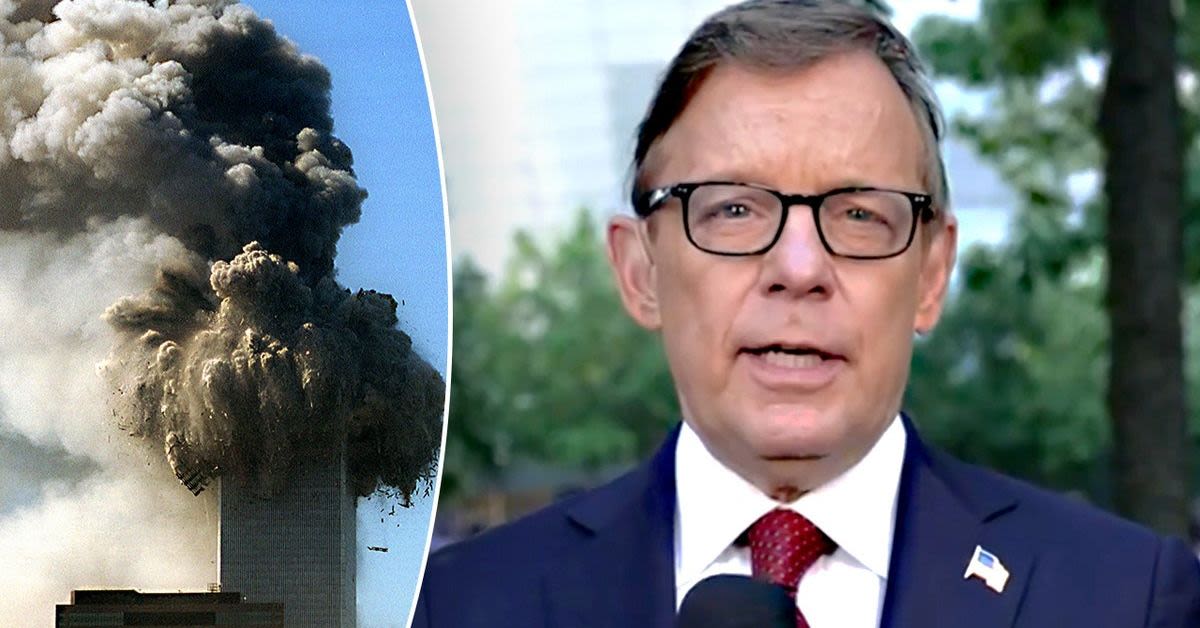
That is the tragic legacy now confronting Fox News anchor Eric Shawn, who has revealed that his years-long battle with serious illness began only after he spent weeks reporting amid the toxic ruins of the World Trade Center.
As reported by RedState, Shawn has spoken publicly about his cancer and related health struggles as the nation approaches the 25th anniversary of the September 11 attacks, underscoring that the damage inflicted that day did not end when the fires were extinguished.
In an exclusive interview with People, Shawn recalled the surreal horror of watching the first moments of the attack unfold over Manhattan.
I thought it was gonna hit a skyscraper and my mind was playing tricks on me, he said of seeing the hijacked plane, adding, You dont think you really see what youre seeing.
He immediately rushed back to the Fox News newsroom and urged his colleagues to launch wall-to-wall coverage as the scale of the atrocity became clear.
By that evening, he was on the ground at what would soon be known as Ground Zero, beginning a reporting assignment that would last for weeks.
I was there reporting for at least a month, if not longer. We did 12-hour shifts. It was a shocking hellscape, he said, describing the devastation that surrounded him.
It was an overwhelming experience seeing the photographs and seeing it on television from home certainly does not give justice to what I was confronted with and what we saw. It was just monstrous and momentous.
Shawn, a veteran correspondent who has covered conflict zones abroad, said nothing compared to the trauma of witnessing the carnage in lower Manhattan.
Ive covered war zones and this was by far the worst traumatic thing that a reporter can experience, just by seeing what I saw that first night, he continued.
He reported from the smoldering pile and surrounding streets despite a suffocating cloud of debris and contaminants that blanketed the area.
He recalled a thick haze of choking dust, saying, I remember the first night thinking, This is not healthy, just on the basis of dust. Not even knowing about carcinogens, not knowing about toxic chemicals.
Even in those early hours, he sensed that the health consequences might not surface for decades.
And I remember back then thinking, I wonder whats gonna happen in 20, 30 years from now. Well, were there now. This is the time period we were concerned about.
Not long after his extended assignment at Ground Zero, Shawn developed an uncontrollable cough that refused to subside.
I went to the doctor in November and he said, Oh, youve got the World Trade Center cough. Thats what we called it at the time, he related.
Like many New Yorkers and first responders, he initially dismissed the symptoms as a temporary irritation caused by dust and smoke.
I thought, I know its a cough from all that dust and smoke. Itll go away. No. The World Trade Center cough actually turned into acute chronic bronchitisand I suffered from it for years.
Doctors treated him with heavy doses of prednisone in an effort to control the inflammation and persistent respiratory problems.
He was also diagnosed with GERD, or gastroesophageal reflux disease, a condition that further complicated his health.
It felt like I had a golf ball in my throat on and off for years, he remarked, describing the constant discomfort that followed him long after the news cycle had moved on.
Those chronic ailments were only the beginning of a more serious medical ordeal that would emerge over time.
Eventually, Shawn received the devastating news that he had developed skin cancer, a diagnosis that came after years of exposure to the toxic environment at Ground Zero.
He had been exposed to more than 350 chemical, physical, and biological hazards during his reporting in the aftermath of the attacks.
Medical reports also revealed that his prostate-specific antigen (PSA) levels were abnormally high, raising alarms about another potential cancer.
His testing showed the highest level of probable prostate cancer, and the report notes that he is currently in active surveillance and undergoes testing every three months.
Shawn has made clear that his illnesses are not random misfortunes but are directly linked to his time at the 9/11 site.
So, Im certified for cancer under the World Trade Center Health Program, he said, placing his case squarely within the broader category of 9/11-related conditions.
As the 25th anniversary of the attacks approaches, Shawn has chosen to speak out to remind Americans that the human toll of that day is still unfolding.
When you think about 9/11, you know about the brave, courageous first responders and the amazing stories of that day, he said.
He stressed that the countrys understanding of the tragedy often stops at the heroism of that morning, overlooking the slow, grinding cost borne by thousands in the years since.
But a growing and tragic legacy of that day that people dont really know about is the vast number of 9/11-related illnesses and growing number of victims that 9/11 will claim.
Shawn is quick to insist that journalists are not the heroes of that day, but he argues they, too, became part of the community of the exposed and afflicted.
News people are not first responders. I went there because thats where the story was, he adds. Were not the heroes. So a lot of news people, we dont think of ourselves as being part of the community. But we are.
He also honors colleagues who paid the ultimate price years after the towers fell, their deaths tied to the same toxic exposure.
Mike Sheehan, my colleague, passed away from 9/11-related prostate cancer. Steven Edwards was a reporter with the National Post, he passed away from kidney cancer. And if I die from a 9/11-related cancer, I will consider myself having been killed by al-Qaeda," he said.
I dont think theres a realization of all the people who are suffering and all the families who have lost loved ones years and now decades after that day, he added, warning that the nations memory of 9/11 is fading even as its consequences persist.
Now, as the 25th anniversary arrives, it is more important than ever that Americans resist the cultural and political drift that seeks to downplay the attacks, especially in places like New York City where left-wing politics often overshadow hard lessons about national security, patriotism, and the evil that struck the country that morning.
Login