
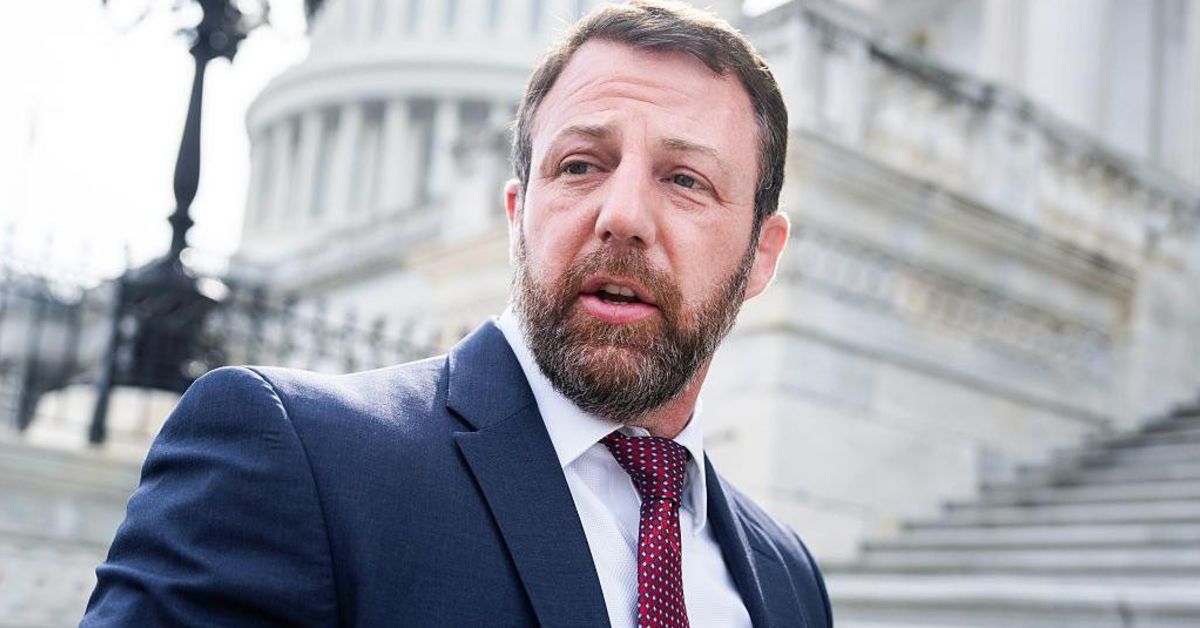
Homeland Security Secretary Markwayne Mullin says his department is preparing to alter its official seal to reflect what he describes as Americas current state of war against a growing array of threats.
The cabinet secretary outlined the change during an appearance on Fox News with host Peter Doocy, stressing that the Department of Homeland Security must adapt both tactically and symbolically to an increasingly dangerous world, according to Western Journal. Mullin framed the redesign as more than cosmetic, casting it as a sober acknowledgment that the United States is no longer in a peacetime posture, at least as far as homeland security is concerned.
Every single day I get a briefing; every single day we have new threats, and every single day the threats are changing, he said during an interview with The Sunday Briefing. He emphasized that the departments mission requires constant vigilance and flexibility as adversaries evolve their methods.
Every time we stop a threat, a terrorist act, or a criminal activity thats taken place, they also change their tactics. We have to be constantly moving from cyber to sea, to air, and to land. We are constantly moving, Mullin stated. That sense of perpetual motion, he suggested, must now be reflected in the very symbols of the agency charged with defending the homeland.
In fact, I tell you, if you look at most of our seals throughout all the agencies the eagle looks to the palm leaf, because thats in a time of peace. Were actually changing our seal to make it look towards the arrows because when it looks towards the arrows, it means were at war. Mullin added that Homeland Security is at war every single day against bad actors trying to hurt our backyards, and were not going to allow that to happen.
The current DHS seal draws heavily from the Great Seal of the United States, a design steeped in the nations founding history and its understanding of peace through strength. The eagle on that emblem clutches an olive branch in one talon, symbolizing the American preference for peace, and a bundle of 13 arrows in the other, representing both the original 13 states and the countrys readiness to fight when necessary.
By shifting the eagles gaze from the olive branch to the arrows, Mullin is signaling a more hard-edged posture that many conservatives argue is long overdue in an era of open borders, cyber warfare, and emboldened adversaries. The move underscores a philosophy that deterrence and preparedness, not wishful thinking or diplomatic niceties, are what ultimately keep American families safe.
Mullin also highlighted the nature of the threats facing the United States, singling out Irans leadership as a prime example of the dangers confronting the West. He said Iran is being led by a murderous regime, and he placed cyber aggression from China, Russia, and North Korea alongside Tehrans malign activities as top priorities for U.S. officials.
China has a tremendous amount of effort moving towards cyber attacks, because of all the technology they have shipped in to the United States with our infrastructure and the amount of intellectual property that they have stolen, he explained. Russia has bad actors that they allow to operate within their boundaries that are also protected, and they know about it. So it doesnt stop. We have hundreds of thousands of attacks every week thats coming against our critical infrastructure.
Those remarks reflect a broader conservative critique that for too long Washington downplayed the seriousness of foreign cyber intrusions and intellectual property theft, particularly from Beijing and Moscow. Mullins comments suggest a more confrontational stance that treats these incursions as acts of aggression rather than mere nuisances or law-enforcement matters.
His warnings came on the heels of a personal brush with danger that underscored the risks inherent in public service and official travel. Just days before his Fox News appearance, a Coast Guard Gulfstream jet carrying Mullin was forced to make an emergency landing after one of its engines failed.
The aircraft ultimately landed safely at Ronald Reagan Washington National Airport in Virginia, and no injuries were reported among the 14 people on board. Mullin later took to social media to commend the crew for their calm and competence under pressure.
The United States Coast Guard pilots made the single engine landing feel routine, he wrote on X. No panic, just straight professionalism. After we landed, the pilots told me that was a first for them! We could not have been in better hands. For a secretary now openly declaring that were at war in the realm of homeland security, the episode served as a vivid reminder that preparedness, professionalism, and a willingness to confront danger head-on are not just abstract principles, but daily necessities for those tasked with defending the country.
Login