
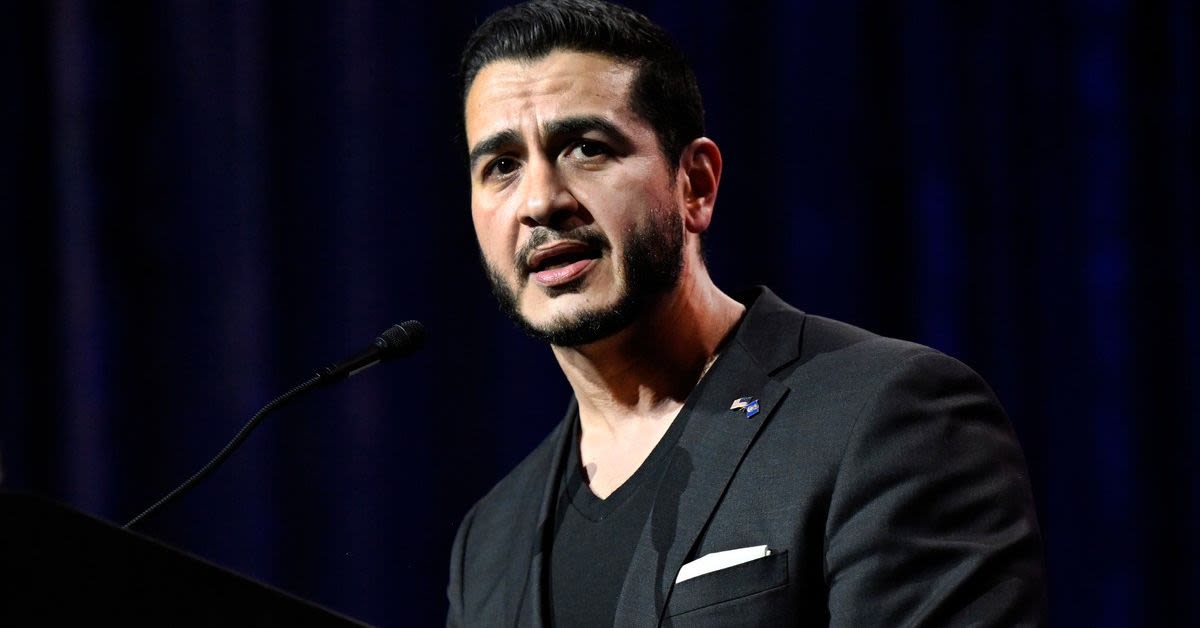
Democratic Senate hopeful Abdul El-Sayed chose to spend the weekend before the 25th anniversary of 9/11 headlining an Islamic Society of North America convention in Detroit, sharing the stage with figures known for anti-Israel rhetoric, conspiracy theories, and open hostility to core American values like individual responsibility and hard work.
According to RedState, the 63rd Annual Convention of the Islamic Society of North America (ISNA) in Detroit assembled a roster that reads like a whos who of never done wells, Israel critics, and Iran apologists, with one previously announced speaker, Tariq Masood, reportedly dropped from the program after allegations that he forced his 13-year-old niece into marriage. El-Sayed, the Democratic nominee for U.S. Senate in Michigan, was not merely a participant but a headliner, appearing on a Saturday panel just days before the 9/11 anniversary alongside left-wing commentator Cenk Uygur and New Jersey-based cleric Zaid Shakir, a 9/11 truther who has called for an examination of the official account of the attacks.
The panel, titled Cultivating God Awareness in a Turmoiled America, was framed as a discussion of a supposedly broken nation, with the clear implication that America itself is the problem. El-Sayed used the opportunity for his characteristic pulpit-style rhetoric, handing Republican opponent Mike Rogers fresh material for campaign ads in a state where patriotism and skepticism of radicalism still run deep.
In one of his more revealing remarks, El-Sayed dismissed a foundational American beliefthat hard work can lift people out of povertyas a kind of fanaticism. His Hot Take, as critics have described it, was that believing effort and perseverance can lead to success is not a virtue but a cultic mindset, a message that is unlikely to resonate with Michiganders who pride themselves on grit, self-reliance, and personal responsibility.
Abdul El-Sayed: Being poor is not a failure. We need to push back against the cult of hard work, read one widely circulated clip from the event. Expanding on this theme, El-Sayed told the audience, We've got this culture in our society, that we've allowed to fester, where, we think that when people... when people don't have means, it's because they have failed. Poverty is not a failure, that when people live in persistent poverty, it is a failure on our society and not on those people.
Notably absent from his remarks was any acknowledgment of individual agency, wise decision-making, or the role of personal choices in shaping ones circumstances. Instead, El-Sayed placed the blame entirely on society, absolving individuals of responsibility and reinforcing a collectivist narrative that treats government and social structures as the primary engines of both failure and redemption.
He pressed the point further, urging his audience to challenge what he derisively labeled a national ethic of effort and initiative. And we should be driving that conversation and have the courage to have that conversation against this Cult of Hard Work, like everyone's got bootstraps to pull up, he declared, prompting the panels moderator, Azhar Azeezwho responded with an enthusiastic Amen, brotherto join in as the crowd applauded.
For many in the Midwest, such rhetoric is not merely tone-deaf but fundamentally at odds with the culture they know and live. Generations of Midwestern families, regardless of religious background, have been raised on the conviction that in all labor there is profit, that diligence and discipline may not guarantee riches but do tend to yield stability, the ability to support a family, and the chance to save and build a modest futureoutcomes that depend as much on character as on circumstance.
This ethic is not only cultural but grounded in observable reality: people who work consistently, avoid trouble, and make prudent choices generally fare better than those who do not. Yet El-Sayed, who frequently brands himself as a man of science, appears eager to dismiss this empirical truth in favor of a narrative that casts citizens as passive victims and the broader society as the sole culprit whenever poverty persists.
Abdul El-Sayed: Im not a socialist, Im a scientist, Im a doctor. If I had one political philosophy its that I want us to build what we would build if we took seriously the idea that all of our kids were all of our kids... he proclaimed in another clip, using his professional credentials as a shield against accusations of socialism. Abdul El-Sayed: Im not a socialist, Im a scientist, Im a doctor. If I had one political philosophy its that I want us to build what we would build if we took seriously the idea that all of our kids were all of our kids... he repeated, underscoring how central this self-description is to his political identity.
Yet El-Sayeds repeated invocation of the title doctor raises its own questions, given that he has never completed a medical residency, never passed board examinations, and has never held a medical license in Michigan, New York, or any other state. Despite listing himself as a physician, the record shows no experience as a practicing, licensed medical doctor, making his reliance on that titleand his disdain for hard work rhetoricall the more striking.
For a candidate who has not done the grueling work required to treat patients independently, to liken the ethic of hard work to a cult is revealing. It suggests a worldview in which credentials and lofty rhetoric matter more than the grind of real-world experience, and in which success is something to be redistributed or engineered from above rather than earned through perseverance and sacrifice.
As Vice President JD Vance has argued, El-Sayeds language fits neatly into a broader pattern of collectivist claptrap dressed up in poetic phrasing, a style that flatters progressive elites while insulting the very voters he claims to champion. From his past sneering at football culture to his digs at iconic Michigan locales like Mackinac Island, and now his attack on the virtue of hard work, El-Sayed has repeatedly managed to belittle the traditions and values that define the state he wants to represent.
His bid for a U.S. Senate seat, framed as a crusade for justice and equity, increasingly looks like a campaign built on contempt for the habits and beliefs that have sustained American families for generations. Whether Michigan voters will reward a candidate who derides their work ethic as a cult while standing shoulder to shoulder with 9/11 conspiracy theorists and radical apologists is a question that will be answered at the ballot box, but the contrast between his message and the states deeply rooted respect for hard work could not be clearer.
Login