
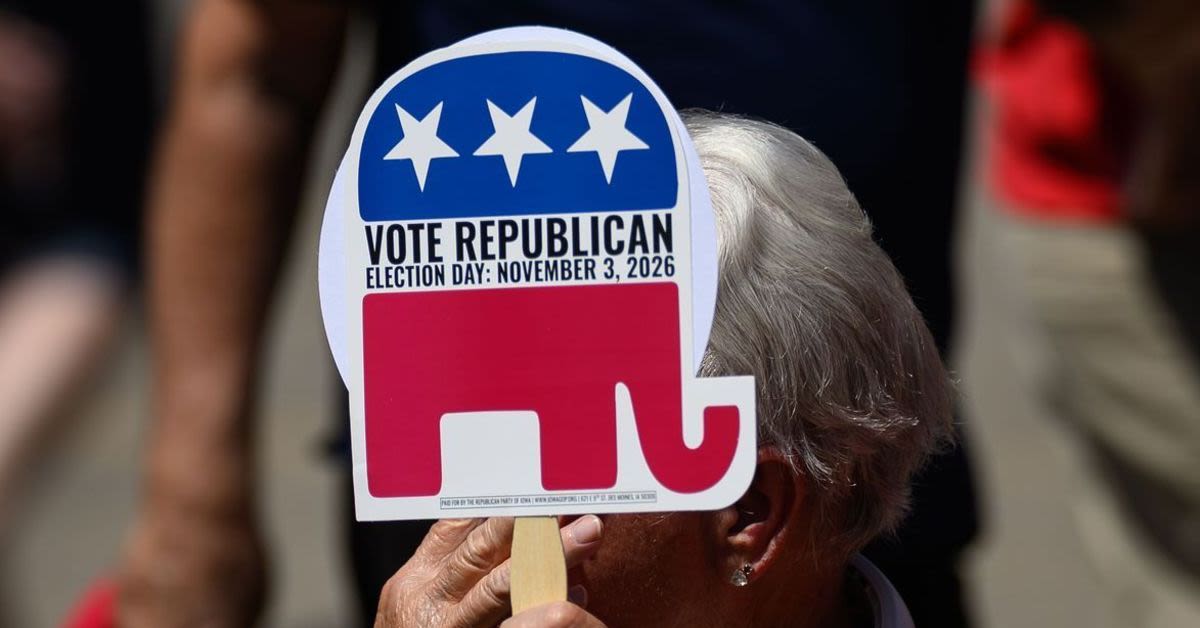
With the midterm elections fast approaching, Republicans face a political landscape that is far more complicatedand far less forgivingthan many on the right might prefer to admit.
According to RedState, while historical trends typically favor the party out of power in House contests, it is the Senate map that is generating the most anxiety among GOP strategists. The RealClearPolitics (RCP) polling average currently shows Republican candidates trailing in eight key Senate battlegrounds, a sobering snapshot that underscores how fiercely contested control of the upper chamber has become.
The latest RCP aggregate has Republicans down 2 points in Alaska, 7.5 points in Georgia, 2.3 points in Maine, 1.8 points in Michigan, 2.6 points in Ohio, 2 points in New Hampshire, 8 points in North Carolina, and 1.9 points in Texas. These are not fringe races; they are the core battlegrounds that will determine whether the Senate reins in a progressive agenda or rubber-stamps it.
There is at least one encouraging data point for conservatives in the Midwest. Rep. Ashley Hinson (R-Iowa) holds a 1.4 percentage-point edge over Democrat Josh Turek in Iowa, though the narrow margin suggests the Hawkeye State is far more competitive than in recent cycles, when it leaned more reliably Republican.
Democrats currently hold three of the battleground seats in contention, while Republicans control the remaining six. All of the races in the RCP battleground listexcept Georgia and North Carolinafall within what would typically be considered the margin of error in standard polling, meaning the apparent Democratic edge may be far less secure than it appears on paper.
Democrats path to a Senate majority is straightforward but steep. They must defend all three of their vulnerable seatsGeorgia, New Hampshire, and Michiganwhile also flipping four Republican-held seats, a task that would require both flawless execution and continued polling momentum.
Yet there are compelling reasons for Republicans to treat these numbers with skepticism rather than despair. Polling, as recent history has repeatedly demonstrated, is not an infallible predictor of electoral outcomes, particularly in an era of low response rates and shy conservative voters.
Michigans recent primary offers a cautionary tale about overreliance on surveys. Polls had Abdul El-Sayed leading by 10 points, but when the votes were counted, he only just squeaked by with a one-point difference, a glaring miss that should give Democrats little comfort about their supposed leads.
Maine provides another example of pollings chronic blind spot when it comes to certain Republican candidates. Sen. Susan Collins (R-ME) has long been underestimated by survey research; in her 2020 race, they had her opponent up in all the polls, some by double digits, yet Collins ultimately won by almost nine points, a dramatic reversal that exposed the limits of the polling industrys models.
If Collins is currently behind by 2.3 points to Democrat Troy Jackson, that history suggests she may in fact be ahead. Democrats also damaged their own prospects by initially backing Graham Platner, and Jackson carries his own political baggage, making Collins appear to many voters as the steadier, more experienced choice in uncertain times.
Broader polling analysis further reinforces the case for Republican optimism. Echelon pollster Patrick Ruffini examined 3,312 polls over the past four election cycles and found they had, on average, overestimated Democratic performance by 3.7 points, with the error rate rising to about 5.9 points during the summer months when many of todays midterm surveys are being conducted.
Beyond the polling, Republicans possess a formidable financial edge that has yet to be fully deployed. The party enjoys a massive cash advantage between President Trumps super PACs and official GOP committees, and there are open questions about how much one-time trillionaire Elon Musk will dip into his deep pockets, potentially adding another layer of firepower to conservative efforts.
On the map itself, several Democratic strongholds are more vulnerable than they appear. Michigan, long a blue-leaning state at the federal level, presents a genuine pickup opportunity for Republicans, with Mike Rogers emerging as a strong contender and Abdul El-Sayed described as an incredibly problematic one for the Democrats, making that seat a plausible flip.
New Hampshire is another state where Republicans see a realistic opening. With John Sununubacked by a powerful family name and a solid policy platformRepublicans could well grab it, especially if voters tire of the leftward drift of national Democrats.
Not every race, however, tilts in the GOPs favor. North Carolina appears to be the most problematic contest for Republicans, and there is growing unease about Texas, where complacency could prove costly if conservatives simply assume its Texas and fail to hammer away to the voters what a disaster James Talarico would be.
The ideological stakes in these races are not abstract. Conservatives warn that Democrats, through their embrace of figures like Talarico and extreme socialists, pose a direct threat to the constitutional order, and even so-called establishment legislators are talking about targeting the Supreme Court once they get into power, a radical project that should send voters running to the polls to vote to stop that.
At the heart of the midterm argument, however, remains the issue that has defined American politics for generations: the economy. Republicans must highlight the contrast between their pro-growth, limited-government policies and the train wreck we had when the Democrats were in charge under Joe Biden, when the left talked endlessly about affordability even as their agenda meant higher taxes, more spending, and an obsessive focus on going after President Donald Trump.
Democrats like to claim they will only tax billionaires, stoking class warfare to justify ever-expanding government. But as Abdul El-Sayed himself made clear, the burden will not stop at the ultra-wealthy: when NBC pressed himYou are effectively acknowledging that people making less than a million dollars could see their taxes go up...is that a yes?EL-SAYED replied, Wed be paying for healthcare in a different way..., a candid admission that middle-class Americans will be footing the bill for progressive ambitions.
Login