
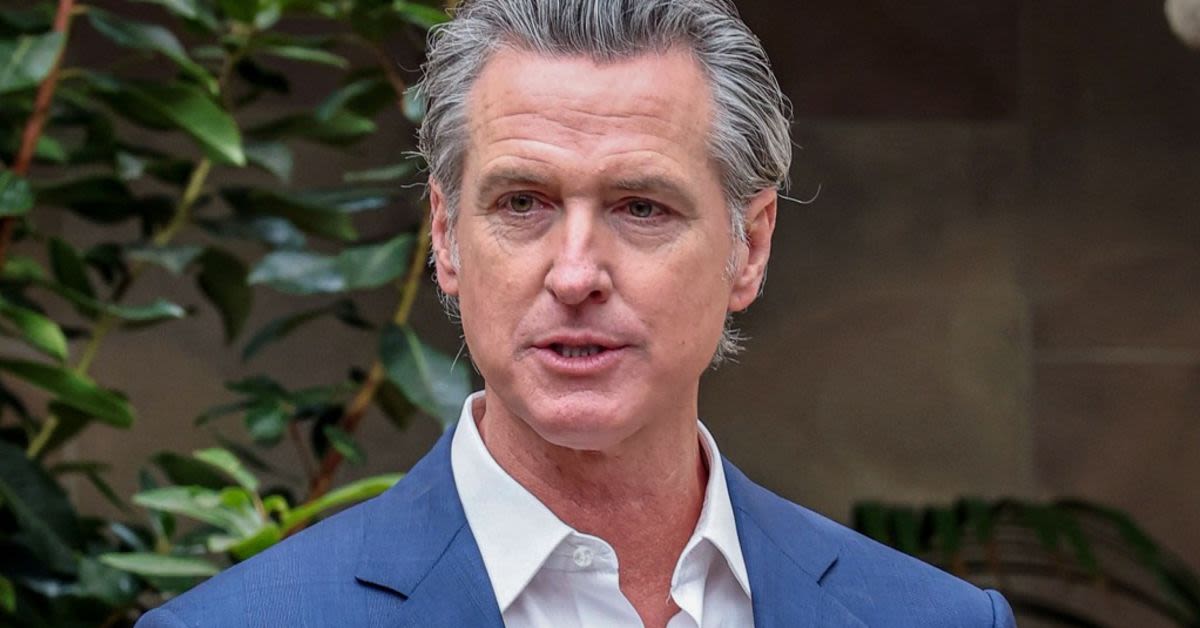
For years, suggesting that Barack Obama would remain a central force in Democratic Party power plays after leaving the White House was dismissed as conspiracy talk, yet California Governor Gavin Newsom has now openly confirmed that the former president is still very much in the game.
Speaking to Democrats in Lexington, South Carolina, Newsom recounted how he personally sought Obamas blessing before launching one of the most aggressive redistricting maneuvers in the country. According to RedState, the governor told the crowd that the only way I could feel that I had real permission was I called you-know-who Barack Obama, as he described his decision to move ahead with Proposition 50, a measure designed to reshape Californias congressional map to the advantage of Democrats.
Newsoms remarks were not framed as a casual anecdote about a friendly chat with a former president. Instead, he made clear that Obamas approval was the decisive factor that allowed him to proceed, underscoring how deeply the former president remains embedded in the partys strategic decisions.
The only way I could feel that I had real permission was I called you-know-who Barack Obama, Newsom said, explicitly tying his comfort with the plan to Obamas personal sign-off. He was referring to his push for Proposition 50, a measure that effectively sidelined Californias supposedly independent redistricting process in favor of a partisan power grab.
The governor even acknowledged his own hesitation in approaching Obama, given the former presidents long-cultivated image as a champion of nonpartisan map-drawing. Newsom told the audience, I called you know who Barack Obama. Because Im like, come on, we go high invoking Michelle Obamas famous slogan as a kind of self-aware joke about the hypocrisy of what he was about to do.
Newsom then described Obamas response in unmistakable terms. I wish I can tell you exactly what he said. Lets just say, green light. And Im like lets go, were gonna win this thing, he said, making clear that the former president did not merely tolerate the scheme but actively encouraged it.
This was not the first time Newsom has told the story, but his latest retelling was unusually candid about the nature of the exchange. He did not present Obama as a passive listener; by Newsoms own account, Obama was the one whose blessing gave him real permission to move forward with a plan that would tilt the electoral playing field.
The question, then, is what exactly Newsom needed permission to do. Proposition 50 was crafted as California Democrats response to a Republican-backed mid-decade redistricting push in Texas, and it was sold to voters as a necessary corrective, even as it undermined the very idea of neutral mapmaking.
California voters approved the measure with nearly 65 percent of the vote in November 2025, a testament to how effectively Democrats framed the issue. Under the new rules, the states independent redistricting commission is scheduled to resume congressional mapmaking only after the 2030 census, leaving Democrats ample time to benefit from the changes.
In the meantime, the new lines shifted five Republican-held districts toward Democrats, giving the party a clear path to pick up additional House seats. For all the rhetoric about protecting democracy, the practical effect was to entrench Democratic power in one of the nations largest states.
Critics have long used the term gerrymander to describe partisan map-rigging, but in this case, some might argue Obamamander is more fitting. Newsom himself has not been shy about the partisan intent behind the maneuver, making little effort to disguise that this was about raw political advantage, not civic virtue.
Yet even Newsom, a man not known for modesty, appeared to want some form of political absolution before taking the plunge. For that, he turned not to voters, not to the legislature, but to the man who officially left office nearly a decade ago and still functions as a kind of shadow leader of the party.
In a more detailed account he gave Axios in March, Newsom made Obamas role even more explicit. He said he called the former president in the summer of 2025 because he was very nervous about what he was planning to do and wanted guidance from the partys most revered figure.
I remember calling him very nervous when I was seeking his advice. It wasnt even approval or support, it was just advice, Newsom recalled, suggesting that he initially tried to frame the conversation as a simple consultation. But the way he describes what happened next makes clear that Obama did far more than offer neutral counsel.
I didnt even get into the conversation and he says, I just want to let you know I like what youre saying and I hope you do this, Newsom said. That early and enthusiastic endorsement from Obama appears to have erased any lingering doubts the governor might have had.
Newsom later admitted that Obama gave us the cover and the moral authority despite all of his work that he did around independent redistricting, because Proposition 50 was about fighting fire with fire. In other words, the same man who once preached the virtues of nonpartisan commissions was now providing cover for a partisan power play, so long as it benefited his own side.
After that private conversation, Obama did not stay in the background. He went out and aggressively sold the measure to the public, adopting the very rhetoric of election denialism that Democrats routinely condemn when it comes from Republicans.
Democracy is on the ballot Nov. 4, Obama warned, accusing Republicans of trying to steal enough seats in Congress to rig the election. The irony of using apocalyptic language about rigging elections to justify a partisan redistricting scheme was apparently lost on him and on the media outlets that cheered him on.
For conservatives, this is a textbook case of projection: accusing opponents of precisely what one is doing behind the scenes. It also underscores how deeply Obama remains involved in Democratic politics, not as a retired elder statesman but as an active strategist helping to shape congressional maps and electoral outcomes.
The episode is especially striking when set against Obamas own musings in 2020 about what a hypothetical third term might look like. In a lighthearted exchange with Stephen Colbert, Obama joked that he would gladly arrange for a stand-in president wearing an earpiece while he sat in my basement in my sweats feeding lines, because he still found the work of governing fascinating.
Then came the Biden presidency, marked by policies and personnel that often looked like an extension of the Obama years, and the joke stopped sounding like a joke. The idea of a behind-the-scenes Obama whispering in the ear of Democratic leaders suddenly seemed less like late-night comedy and more like a working theory of how the party actually operates.
The reality is that Obama never truly exited the political stage after January 2017. He remained a campaigner, adviser, and powerbroker, with Democrats at every level of government seeking his counsel, and as the party looks toward 2028, ambitious figures like Newsom are still calling him when they want to bend the rules.
When one of the nations most prominent Democratic governors contemplated overriding Californias normal congressional redistricting process, he did not act until he had, in his own words, real permission from Barack Obama. Nearly a decade after Obamas presidency ended, the debate is no longer about whether he is still involved in Democratic politics, but about why so many in the media and the political establishment pretended for so long that he had stepped aside.
Login