
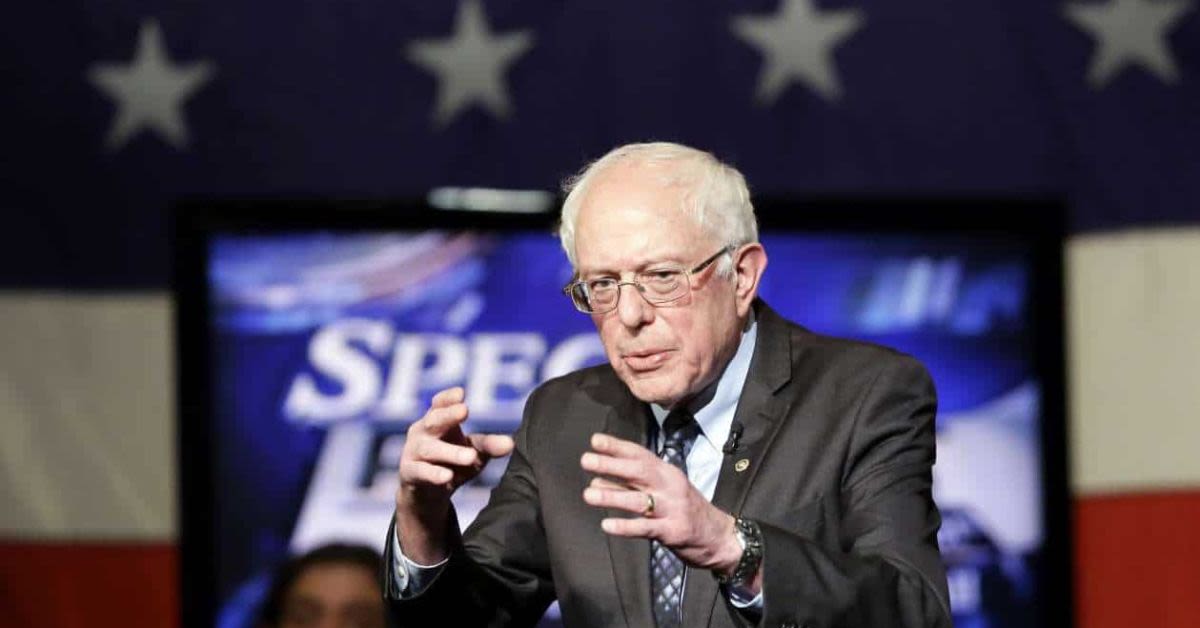
Sen. Bernie Sanders is once again demanding that professional sports teams slash ticket prices, this time framing live attendance at games as a human right for working Americans.
The independent senator from Vermont took to X to unveil his latest populist crusade, insisting that ordinary fans are being priced out of stadiums built with their own tax dollars. According to RedState, Sanders declared, Mayor Mamdani is right. Working people should be able to afford to attend live sporting events. Ill soon be introducing a bill demanding that professional sports teams make their tickets affordable. If taxpayers helped fund a stadium they must be able to afford to sit in it. The message, aimed squarely at blue-collar resentment toward billionaire team owners, quickly drew a torrent of mockery and skepticism online.
Critics on social media wasted no time dismantling the senators premise, arguing that attending a ballgame is a luxury, not an entitlement. One user responded bluntly, What? lol No. He's not right. If you can't afford to pay your bills, you shouldn't go to sporting events. Socialism is really just about making excuses for stupid people, isn't it? Another commenter skewered Sanderss class-war rhetoric by pointing out its logical endpoint: I should live in a massive mansion for equity, give me one of yours Bernie.
Others took the idea to its absurd conclusion, sarcastically cheering for fully subsidized entertainment at someone elses expense. Yeeesss. Make it $0 Id love to see it. Couldnt happen to a nicer bunch, one critic wrote, while another quipped, Youre going to do to sports teams what you did to Spirit Airlines. The underlying message from detractors was clear: central planning and price controls do not magically create affordability; they simply distort markets and shift costs elsewhere.
Some responses highlighted the obvious workaround that any business would pursue if Washington tried to dictate ticket prices. One viral post imagined the fine print of a Sanders-style regime: ??? Fine. Five-dollar tickets. Now read the board. No outside food. No outside drink. Water is $75. Beer is $110. A hot dog is $99.50. Bernie can cap the seat. He cannot cap the tap. A stadium still has a fixed number of chairs and a monopoly on the nachos. Cheap tickets The point was unmistakable: government can cap one price, but it cannot repeal basic economics.
Others called out the ideological roots of the proposal, likening it to failed socialist experiments of the past. Its Marxism. Government provided food stores and price controls. Not sure how it isnt obvious to everyone now, one user wrote, drawing a straight line from Sanderss rhetoric to command-and-control economics. Another critic went after the senators own brand of capitalism, noting, Says the guy who charges $27 for a cheap t-shirt made in China ????.
Some pushed Sanders to put his own money where his mouth is instead of conscripting taxpayers and private owners into his scheme. Buy your own sports team and give the tickets away for free. No one is stopping you so put up or please shut up, one commenter snapped. Another simply dismissed the entire spectacle as gladiator games F R A U D, suggesting that the outrage over ticket prices is more political theater than serious policy.
For many on the right, Sanderss latest proposal is just another example of economic illiteracy dressed up as compassion. Now, if Bernie Sanders were economically literate, he wouldn't be a communist, one critic observed, capturing the exasperation conservatives feel toward repeated attempts to regulate prices by fiat. So the ship has kind of sailed on trying to explain to radicals why their ideas won't work, the same user added, implying that the real danger lies not in Sanderss understanding, but in the publics willingness to take him seriously.
Not everyone in the thread opposed Sanders outright, though even some supporters revealed the deeper ideological divide. One progressive voice chimed in, Totally agree. People are so used to the rich hogging it all up, they think it's normal. Meanwhile we used to tax the rich at 70% in the 1970s before the scam of trickle down economics scammed us all. We have been reeling since. Amazing so many people love only the rich hogging. Another user, hardly a fan of Sanders, conceded a narrow point: This may be the only thing I agree with you and MADmani on. Youre still both idiots.
A few critics, however, seized on the one part of Sanderss argument that touches a legitimate concern: taxpayer subsidies for stadiums. I agree with you Bernie. We should NOT be funding sports stadiums on the tax payers backs. This is complete bullshit, one user wrote, separating opposition to corporate welfare from support for price controls. Another added a caveat that underscored the tension between public funding and private pricing: The taxpayers heavily subsidize the building of these stadiums. Therefore the taxpayer, by their representatives, should have a level of bargaining power for ticket prices beyond standard market pressure. If a stadium received no funding, then yes I would agree with you.
From a conservative perspective, that is precisely where Sanders accidentally brushes up against a valid critique of the current system. The real solution, however, is not to have Washington dictate what a ticket should cost, but to end the subsidies and sweetheart public-private partnerships that distort the market in the first place. If government stopped showering sports leagues, film studios, and politically connected corporations with special tax breaks and direct funding, teams would have to compete on a level playing field, and taxpayers would no longer be forced to underwrite billionaire owners.
Under a genuinely free-market approach, there would be one simple, low, and neutral tax code applied equally to everyone, with no carve-outs for stadiums or entertainment conglomerates. That would be a different kind of socialism one where all individuals are treated equally under the law, rather than a system in which politicians pick winners and losers and then demand affordable prices as a political payoff. Conservatives argue that when government steps back, competition and consumer choice do far more to lower prices than any senators grandstanding.
For fans who cannot afford to attend games in person, modern technology already offers alternatives that do not require federal intervention. If an American wants to watch a baseball game and cannot pay stadium prices, he can watch from his living room, often with high-definition coverage that earlier generations could only dream of. The real frustration today is not a lack of access, but the way sports leagues have carved up broadcasting rights into a maze of streaming services and cable packages.
As leagues chase ever-higher media revenues, they have fragmented their content across multiple platforms, forcing fans to juggle subscriptions that can run into hundreds of dollars a year just to follow a single team. On top of that, blackout restrictions often prevent local fans from watching their home team on certain services, even when they are willing to pay. If more games were available on basic broadcast television, families might be able to save enough to splurge on a few live games each season without needing a government mandate.
Market forces, when allowed to operate, already demonstrate how prices adjust when demand falls. One observer noted that the New York Mets, despite carrying one of the highest payrolls in baseball, have struggled on the field this season, and the market has responded accordingly. The ticket prices are now a whopping $5-10 to get into the stadium, the writer observed, illustrating how poor performance and soft demand naturally push prices down.
Of course, the total cost of attending a game still includes parking, concessions, and other add-ons that can quickly inflate the bill. Now, of course, you've got parking if you drive there. And you've got pricy hot dogs. And overpriced beer, the same account noted, before adding that a determined fan can still get in for $20 if you wanted to pay your own way in. That is hardly a human-rights crisis; it is the predictable reality of entertainment in a free society.
History offers little comfort to those who believe that more government control will make any of this cheaper. Just like everything else where the government gets involved, this kind of intervention tends to drive up prices or force businesses to shut down, the writer warned, echoing decades of experience with rent control, wage mandates, and other forms of economic micromanagement. You could bet that if the government tried to make sports teams slash ticket prices, it would backfire. Bigtime.
The impulse behind Sanderss proposal may be to help working families, but the path he is charting leads toward more central planning, more distortion, and ultimately fewer choices for consumers. The road to socialism, after all, is paved with good intentions. And bad ideas.
Login