
A longtime California city official who admitted stashing nearly $63,000 in cash in his backyard has been sentenced to 18 months in federal prison for a bribery scheme tied to a police-union contract and commercial marijuana permits, underscoring once again how entrenched corruption can become when local power goes unchecked.
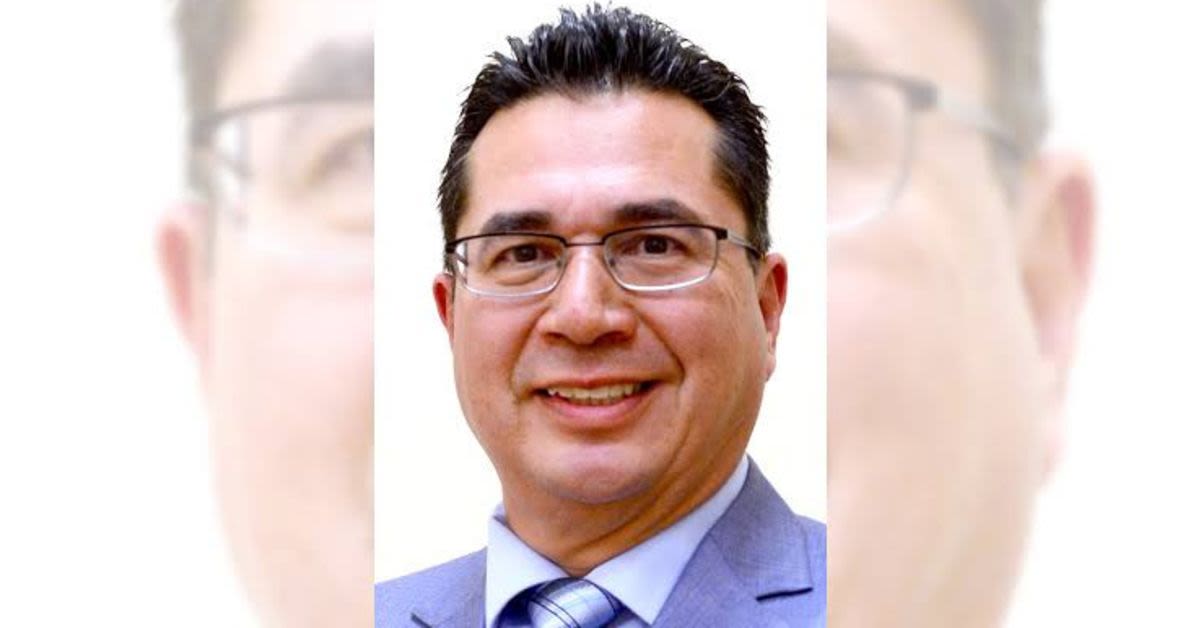
Ricardo Pacheco, 63, who spent more than 20 years on the Baldwin Park City Council before resigning in 2020 as part of a plea agreement, was accused of turning his elected office into a personal cash machine. According to Fox News, federal prosecutors said Pacheco not only pocketed bribes directly but also funneled illicit payments through his church and political organizations, exploiting institutions that should have been dedicated to public service and community values.
The Department of Justice said Pacheco and former Compton City Councilman Isaac Jacob Galvan engaged in corrupt acts while they were elected officials, including both accepting and paying bribes in exchange for political support and city permits. Their conduct, federal authorities argued, reflected a broader pattern in which public offices were treated as commodities to be bought and sold rather than as positions of trust.
Pacheco was fined $10,000 and ordered to forfeit $219,755, a sum that reflects years of illicit gain rather than public-minded stewardship. The FBI seized $83,145 in cash proceeds from him, including $62,900 that Pacheco admitted he had buried in two locations in his backyard, prosecutors said, and a restitution hearing has yet to be scheduled.
Galvan, 39, received the same 18?month federal prison term and was ordered to pay $323,557 in restitution, highlighting that the corruption extended beyond a single city and into neighboring jurisdictions. The parallel sentences underscore how federal authorities viewed the pair as central players in a pay?to?play culture that has plagued parts of Southern Californias local government.
The scheme first came to light through a police?union contract that should have been a straightforward matter of public negotiation. Between January and October 2018, Pacheco solicited and received $37,900 from a Baldwin Park police officer in exchange for supporting the Baldwin Park Police Associations contract with the city, prosecutors said, a deal worth at least $4.4 million over three years.
The officer, rather than participating in the corruption, chose to cooperate with federal authorities, working at the FBIs direction after he and another officer approached the bureau to assist in its investigation, according to the DOJ. Their decision to expose wrongdoing from within the system stands in stark contrast to the elected officials who abused their positions for personal enrichment.
In October 2018, the cooperating officer handed Pacheco a $20,000 cash bribe inside an envelope at a Baldwin Park coffee shop, prosecutors said, a transaction that would later become central evidence. Pacheco also directed $17,900 in checks to his church and to political action committees that had been set up in other peoples names but were controlled by him, according to the DOJ, blurring the line between religious, political, and criminal activity.
Pacheco had already cast his vote in favor of the police association contract in March 2018, aligning his official actions with the bribe money he was quietly collecting. Once FBI agents caught him in a video?recorded sting at the same coffee shop, Pacheco agreed to cooperate and became an FBI informant, according to the Los Angeles Times.
The outlet reported that Pacheco wore a concealed wire as investigators built cases that led to six indictments involving more than 20 individuals tied to local government and the marijuana industry. The same outlet also reported that the broader probe implicated Galvan, a former Baldwin Park city attorney, a Commerce city manager, a San Bernardino County planning commissioner, and a marijuana distributor, revealing a network of influence that reached across multiple cities and agencies.
The investigation also exposed what prosecutors described as a pay?to?play system surrounding marijuana permits in Baldwin Park, a predictable outcome when rapid legalization meets weak oversight and entrenched political interests. After the city began allowing marijuana cultivation, manufacturing, and distribution in 2017, Pacheco quickly began seeking money from businesses pursuing development agreements and related permits, according to federal authorities.
Galvan, then serving on the Compton City Council, stepped in as a self?styled consultant to W&F International Corp., a Diamond Bar import?export firm seeking a marijuana permit in Baldwin Park, prosecutors said. Galvan then helped arrange $70,000 in bribes from the companys owner, Yichang Bai, to Pacheco in exchange for the councilmans votes and political backing, according to the DOJ.
Pacheco followed through, prosecutors said, voting in favor of W&Fs permit in June and July 2018 and later supporting the companys effort to relocate its operations. The payments were laundered through checks from third parties, including checks with blank payee lines, prosecutors said, a tactic designed to obscure the money trail from public scrutiny and law enforcement.
When Pacheco later sought additional funds for his legal defense, Galvan told Bai that the councilman wanted $25,000, further entangling the trio in criminal conduct. Bai agreed to provide $20,000 through seven checks drawn on bank accounts that were not his or W&Fs, the DOJ said, illustrating how far participants were willing to go to conceal the flow of money.
Galvan also admitted he failed to report about $560,525 in income to the IRS from 2017 through 2020, turning his corruption into a federal tax crime as well. Prosecutors said the scheme caused a tax loss of $115,816, depriving taxpayers of revenue even as local residents were already being cheated out of honest government.
Bai pleaded guilty to conspiracy to commit bribery and in July was sentenced to 20 months in federal prison and a $3,000 fine, adding another conviction to a widening roster of disgraced officials and business figures. The case stands as a stark reminder that when government expands its reach into lucrative, heavily regulated markets like marijuana, the absence of firm ethical standards and accountability invites exactly the kind of corruption federal agents have now laid bare.
Login