
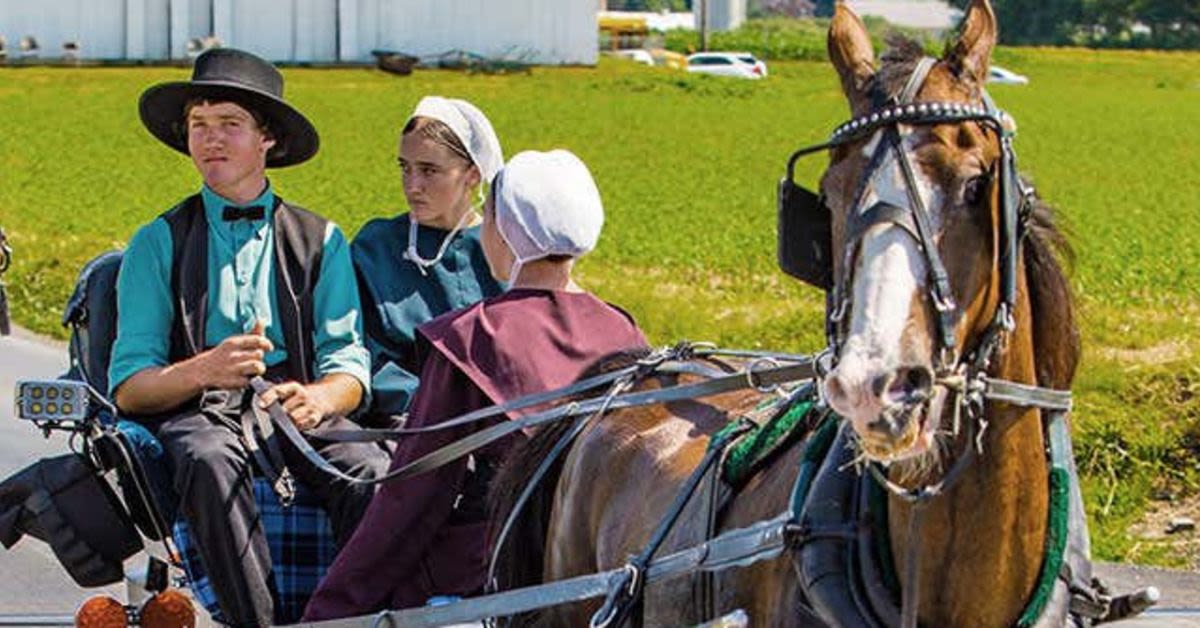
A constitutional clash over religious liberty and state power is intensifying in New York, where members of the states roughly 25,000-person Amish community say they may uproot their families rather than submit to mandatory school vaccination rules.
According to One America News, the dispute traces back to a 2019 statute signed by thenNew York Democrat Governor Andrew Cuomo, which abolished non-medical and religious exemptions for school-required immunizations after a measles outbreak centered in Orthodox Jewish neighborhoods. State officials insist that strictly enforced vaccination mandates are necessary to protect public health and sustain high immunization rates, but Old Order Amish families counter that compelling their children to receive vaccines violates their sincerely held religious convictions, their long-standing separation from modern society, and their reliance on divine providence.
The conflict has placed intense financial strain on the small, rural, one-room schoolhouses that serve Amish communities and operate on modest budgets. Health authorities have levied civil penalties of up to $2,000 per violation against schools that refuse to comply with the vaccination mandate.
Three plaintiff schools Dygert Road, Pleasant View (also known as Twin Mountain or Twin Mountains), and Shady Lane have already been hit with fines totaling roughly $118,000. Attorneys from First Liberty Institute and Siri & Glimstad warn that if similar penalties are imposed across additional Amish schools, the resulting financial burden could be devastating, potentially triggering enforcement actions against property if fines remain unpaid.
Faced with the stark choice of paying the penalties, altering practices they believe conflict with Gods commands, or leaving the state, Amish parents and community leaders say they are prepared to move to jurisdictions that still recognize broader religious exemptions. Their stance underscores a broader concern among religious conservatives that progressive public-health regimes are increasingly intolerant of faith-based dissent, even when it comes from peaceful, self-sufficient communities that ask little from government.
The lawsuit, Miller v. McDonald, rests on First and Fourteenth Amendment protections for the free exercise of religion and parental rights in directing the upbringing of children. The Amish plaintiffs ground their claims in the Supreme Courts 1972 decision Wisconsin v. Yoder, which held that the state could not force Amish children to attend school beyond the eighth grade because of their distinctive religious way of life.
Their lawyers argue that New Yorks policy draws an unconstitutional line by allowing medical exemptions for children who might suffer physical harm from a vaccine while refusing religious accommodations for families who believe immunization inflicts spiritual harm. That disparity, they contend, reveals a regime that privileges secular concerns over religious conscience, in direct tension with the Constitutions promise of equal treatment for faith-based objections.
The case has already taken a winding route through the federal judiciary. In December of last year, the U.S. Supreme Court vacated a prior ruling by the U.S. Court of Appeals for the Second Circuit that had sided with the state and sent the matter back for reconsideration in light of Mahmoud v. Taylor, a 2025 Supreme Court decision that strengthened parental rights in certain religious contexts.
On remand, however, a Second Circuit panel again upheld New Yorks mandate on June 30, 2026, declaring that the vaccine requirement is a neutral law of general applicability aimed at curbing the spread of contagious diseases and that Mahmoud did not change the legal analysis. Attorneys for the Amish are now preparing a fresh petition asking the Supreme Court to take the case once more and directly address whether states may effectively erase religious exemptions in the name of public health.
The appeal carries national significance as courts continue to wrestle with the collision between expansive public-health mandates and the free-exercise rights of religious minorities. While the Supreme Court has historically been cautious about striking down state vaccine laws, recent decisions reflecting a renewed respect for parental authority and religious liberty suggest the justices may be more willing to rein in aggressive state policies that treat faith-based objections as second-class.
As both sides ready themselves for the next phase of litigation, the outcome could help define how far government may go in subordinating religious conscience to bureaucratic health directives. For many conservatives, the case is about more than vaccines; it is a test of whether a nation founded on limited government and robust religious freedom will still make room for communities that choose faith over fashionable orthodoxy.
Login