
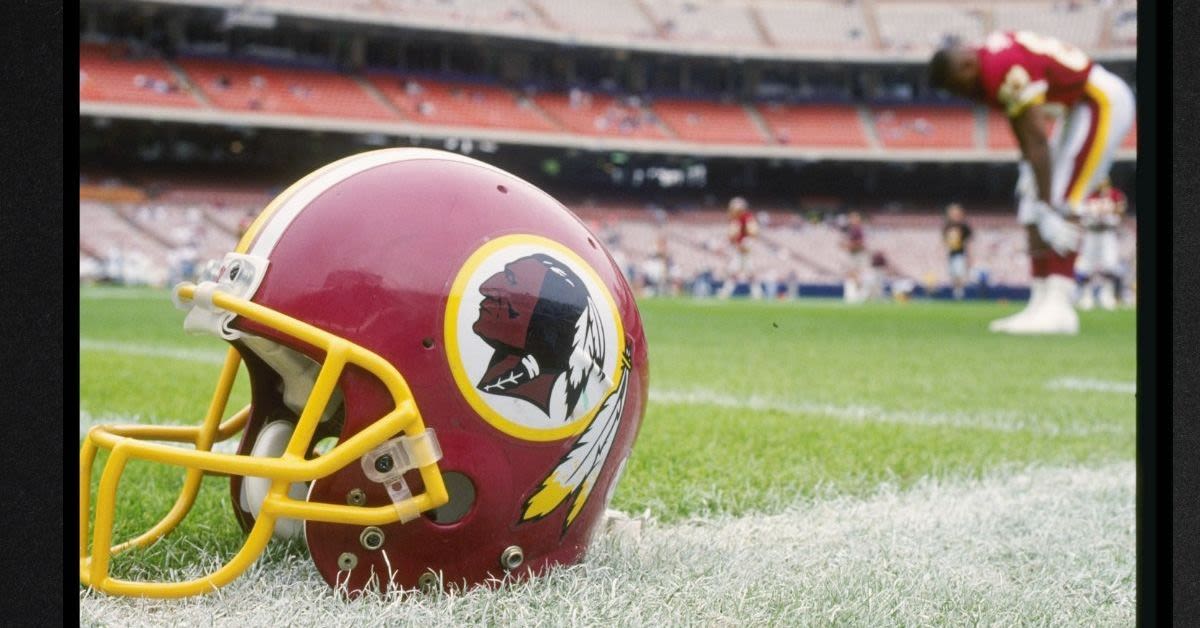
The Washington Commanders have quietly begun selling officially licensed merchandise bearing their former Redskins name and logo, rekindling a long-simmering debate in the nations capital over whether the franchise might one day reclaim its historic identity.
The move has electrified a fan base that never fully embraced the Commanders rebrand, with many supporters openly wondering if this signals a serious reconsideration of the old name. According to Western Journal, however, the development appears less like a cultural about-face and more like a calculated legal maneuver designed to protect the teams intellectual property.
The franchise, founded in 1933 when it was still based in Boston before relocating to Washington in 1937, long operated under the Redskins banner, a name that itself has Native American origins. The Redskins moniker was actually created by Native Americans, a historical detail often ignored by activists who have spent years insisting the name is nothing more than a racial slur.
Despite that heritage and decades of tradition, the team eventually bowed to progressive pressure in 2020, abandoning the Redskins identity after years of being accused of open bigotry. While left-wing activists celebrated the change, many fans and some Native Americans saw it as another example of cultural erasure driven by political correctness rather than genuine concern for indigenous communities.
Indeed, not all Native Americans take offense to the Redskins moniker, and some have even fought to change it back, underscoring how one-sided the media narrative has often been. Since the name change, the franchise has been engulfed in controversy and identity confusion, with the Commanders label failing to inspire the same loyalty or sense of history that defined the Redskins era.
Calls to restore the old name have come from across the spectrum, including former coaches and even the president of the United States, who have urged the team to return to its Redskins roots. While ownership has consistently resisted those appeals in public, the organization has also dropped occasional hints that it understands how deeply the old brand still resonates with its core supporters.
Now, as reported by WUSA-TVs Eric Flack, the team has taken its most concrete step yet by offering officially licensed NFL merchandise featuring the Redskins moniker. Fans visiting the Commanders team store can find gear emblazoned with both the classic logo and the retired name, a sight many thought they would never see again after 2020.
Team officials, however, insist this is not a trial balloon for a full-scale rebrand. Flack reported that executives told him they are required to maintain the marks in commercial usage so that marks remain under franchise control, a statement that frames the move as a defensive legal strategy rather than a cultural or political statement.
In practical terms, the organization appears to believe that if it does not periodically use the Redskins trademark in commerce, it risks losing exclusive rights to it, potentially allowing anyone to print and sell Redskins merchandise. Legal analysts have questioned whether that fear is fully grounded, noting that, according to NBC Sports, it does appear possible to shelve a trademark indefinitely, but the Commanders are clearly erring on the side of aggressive protection.
Adding to the intrigue, all of the Redskins-branded items on the online team store are categorized as Commanders merchandise, despite the latter nickname not appearing anywhere on some of the merchandise, according to Fox News. That odd labeling choice reinforces the perception that this is a narrow legal tactic, not an honest effort to test the waters for a return to the Redskins identity that so many fans still cherish.
For now, Washington loyalists who never accepted the name change can at least purchase gear that reflects the team they grew up with, even if the front office insists it has no plans to restore the old brand. The episode highlights a broader cultural divide: a franchise caught between a vocal activist class that demanded the names removal and a traditional fan base, including some Native Americans, who see the Redskins legacy as a proud part of football history rather than a slur to be erased.
Login