
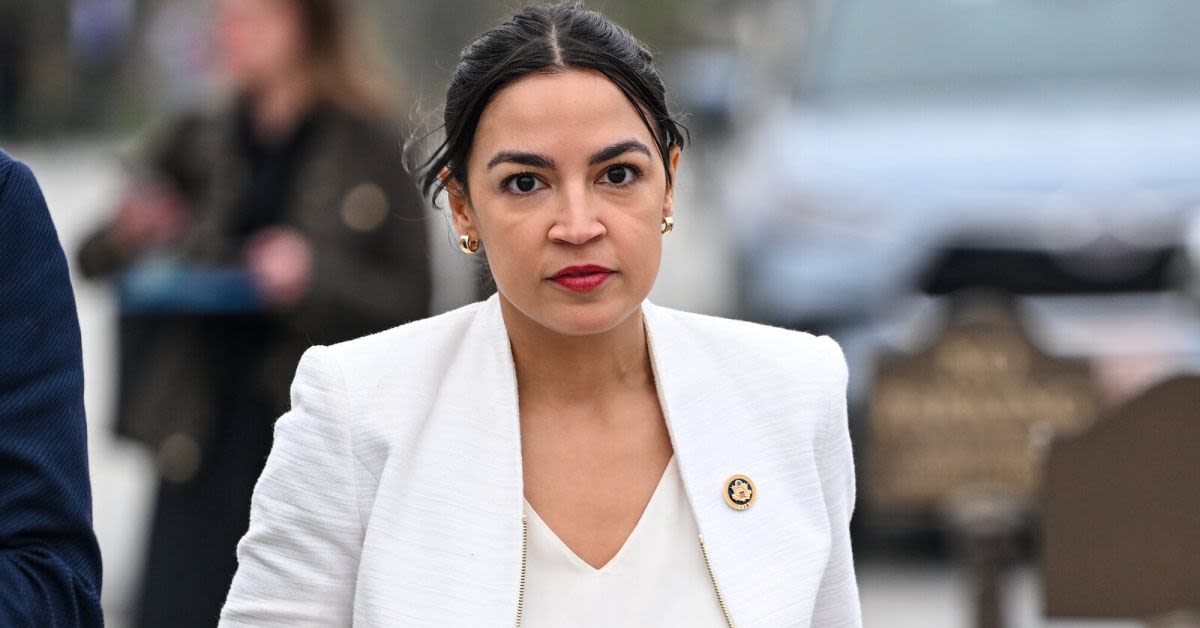
New York Representative Alexandria Ocasio-Cortez, the self-styled progressive firebrand better known as AOC, is now attempting to rebrand herself as something closer to a mainstream Democrat than the radical activist who first burst onto the national stage.
According to RedState, the congresswoman, a proud member of the Democratic Socialists of America, has recently tried to put daylight between herself and the hard-edged woke politics that helped propel her and other members of the Squad to prominence. In a recent interview, she appeared to acknowledge that some of the positions she once championed with zeal may not be as popular as they were a few years ago, or as reasonable as she and her allies insisted at the time. Yet the public record of her own words, preserved across years of social media posts and video clips, leaves her with very little room to maneuver.
From the outset of her political career, Ocasio-Cortez has been a reliable vote and voice for the farthest reaches of the left, aligning herself with an ideology that is socialist in everything but branding. Her membership in the Democratic Socialists of America underscores that commitment, even as critics note that democratic is little more than a marketing gloss on a system historically associated with coercion and economic failure. Now, as she eyes higher officewhether a statewide Senate run or something even more ambitiousshe appears to be testing a softer rhetorical approach, one that might play better beyond the deep-blue confines of New Yorks 14th Congressional District.
Her problem is that the internet does not forget. Every speech, every tweet, every performative protest is archived and searchable, ready to be replayed the moment she claims to have evolved. The same platforms that elevated her from bartender and activist to national figure now serve as a permanent record of her most extreme positions, making any attempt at moderation look less like growth and more like opportunism.
Consider her earlier pronouncements on race and ideology, where she embraced the lefts sweeping narrative of omnipresent white supremacy. In one widely circulated post, she declared: There is a difference between white supremacists & white supremacy. White supremacy is like a virus. Supremacists are those who have been completely overcome by the disease, but supremacy - the virus - exists on a larger scale beyond just the infected. It also lays dormant. This framing, casting American society as infected by a pervasive racial virus, reflects the same divisive worldview that has fueled years of identity politics and grievance-based activism.
She has been equally enthusiastic in promoting gender ideology, aligning herself with the most radical edge of the cultural left. Celebrating the expansion of non-binary recognition, she wrote: What great news! Shout out to all our non-binary fam in the world, and the activists whove worked hard to let us celebrate the full spectrum of humanity ????? https://t.co/BkpdVPleNe. For many voters outside progressive enclaves, this kind of rhetoric signals a politician more interested in social experimentation than in bread-and-butter issues like public safety, economic growth, and educational standards.
On criminal justice, Ocasio-Cortez has long echoed the activist lefts hostility toward traditional law-and-order policies. She once asserted: Our country has a justice system that criminalizes poverty + disproportionately targets race, yet routinely pardons large-scale crimes of wealth and privilege. Moments like these tell us its less a justice system, and more a class enforcement system. ?? https://t.co/etlIksWsiy. That sentiment dovetails with the broader defund the police and decarceration movements, which have coincided with rising crime and public disorder in many Democrat-run cities, and which remain deeply unpopular with the broader electorate.
Even Axios, hardly a conservative outlet, has noted the disconnect between AOCs past and present messaging. Flashback: In the early 2020s, Ocasio-Cortez was one of the most aggressive and well-known advocates for defunding the police an idea that polls have long shown is not popular. The outlet also recalled that In 2019, AOC posted on social media that we need to have a real conversation about decarceration & prison abolition in this country. These are not stray comments but part of a consistent pattern of advocacy for policies that would weaken law enforcement and empty prisons, positions that may play well on activist livestreams but not in a statewide or national campaign.
Such a record may be survivable in a district as overwhelmingly Democratic as NY-14, where party registration alone virtually guarantees re-election. In that corner of New York City, as conservatives often quip, a stuffed iguana could win so long as it appeared on the ballot with a D next to its name, which is why Republicans rarely bother mounting serious challenges there. But the political math changes dramatically when the electorate widens to include suburban and upstate voters, or swing-state Americans who do not share the ideological obsessions of the online left.
If Ocasio-Cortez truly intends to seek higher officeperhaps eyeing Chuck Schumers Senate seat or nurturing long-term presidential ambitionsshe will face a far more skeptical audience. A serious Republican opponent, armed with her own words and images, would have a field day replaying her calls for prison abolition, her flirtations with socialism, and her theatrical stunts, including the much-mocked episode in which she appeared to weep at a border fence that was later revealed to be adjacent to an empty lot. In an era of rapid-response opposition research, every commie-adjacent sound bite and every embrace of loony-left ideas will be clipped, packaged, and broadcast on repeat.
For voters who value public order, personal responsibility, and limited government, her record on policing and criminal justice alone raises serious doubts about her fitness for higher responsibility. Her attempts to edge away from the defund rhetoric without forthrightly repudiating it suggest political calculation rather than genuine reconsideration. The same applies to her silence on figures like Hasan Piker, whom critics describe as detestable and hate-filled, and whom she has conspicuously declined to denounce despite his prominence in the same radical online ecosystem that once celebrated her rise.
If Ocasio-Cortez wants the country to believe in her supposed moderation, she will need to do more than soften her tone in carefully managed interviews. She would have to confront and reject the most extreme elements of the movement that made her famous, from socialist economics to anti-police agitation and gender radicalismsomething she has shown no real inclination to do. For now, she remains the same politician who was once Sandy Cortez behind a bar in New York City, only with a larger platform, a longer record, and a digital trail that, as her critics like to remind her, will never disappear, because the internet is forever.
Login