
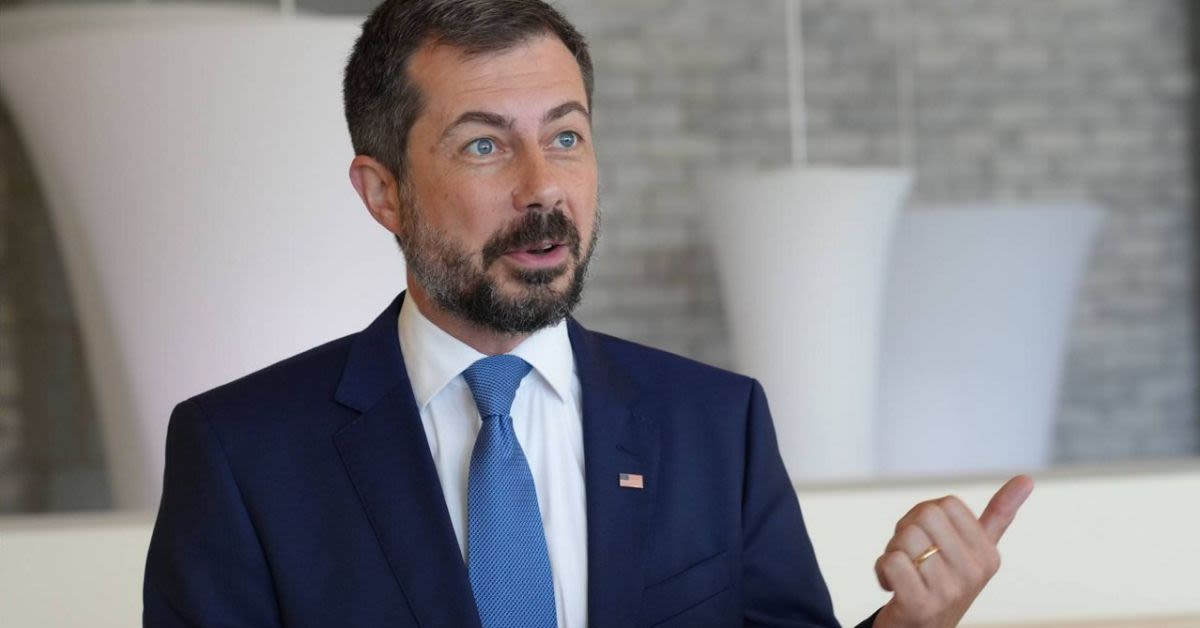
Pete Buttigieg returned to South Carolina this weekend seeking a political redemption that eluded him in 2020, using his post in the Biden administration and a carefully choreographed series of appearances to test whether Democratic voters particularly Black voters are prepared to give him another look as he weighs a possible 2028 presidential bid.
According to The Associated Press, Buttigiegs last major appearance in the Palmetto State came under far less favorable circumstances, when a poor showing in the 2020 Democratic primary effectively ended his first White House campaign and exposed his inability to connect with the Black electorate that dominates the states Democratic politics.
Now serving as President Joe Bidens transportation secretary, Buttigieg returned with a markedly different script, touting federal dollars he helped steer to local projects and presenting himself as a seasoned national figure rather than an untested Midwestern mayor.
For a Democratic Party that has moved South Carolina to the front of its 2028 primary calendar in an effort to elevate Black voices, his visit doubled as both a personal political audition and a test of whether the partys base is willing to embrace another technocratic liberal after years of economic strain and cultural upheaval.
The reception this time was notably warmer, though hardly a coronation.
In a predominantly Black church, Buttigieg drew a standing ovation when he was credited with helping secure millions in federal funding for a local revitalization effort, a reminder that in an era of big government spending, Democrats increasingly rely on Washington largesse to impress voters back home.
A second ovation followed as he delivered a speech warning that the country is in big trouble and outlining his own vision for what should come next, language that implicitly acknowledged widespread public anxiety but offered the familiar progressive prescription of more federal activism and institutional reform.
There is no such thing as again in real life. The only way out is through," Buttigieg told more than 200 attendees at an NAACP Freedom Fund Dinner, leaning on rhetoric about resilience and forward motion that has become standard fare in Democratic circles.
If we recognize and embrace a future that is different from the past, we will do better," he added, framing change as an inevitability that Americans must accept rather than a debate over which traditions are worth preserving and which policies have already failed.
The contrast with his 2020 experience was stark.
Six years ago, Buttigiegs fourth-place finish in South Carolina not only derailed his presidential hopes but also underscored his inability to resonate with Black voters, who viewed his candidacy with skepticism despite media enthusiasm and donor support.
Now, with South Carolina poised to wield even greater influence as the first contest in the 2028 Democratic presidential primary, Buttigieg faces a more consequential test: whether he can persuade a majority-Black electorate that his brand of progressive technocracy deserves another chance in a party increasingly pulled leftward on cultural and economic issues.
Democratic strategists in the state are blunt about the stakes.
You need to demonstrate that you can win Black voters, said Jaime Harrison, a former Democratic National Committee chair and former South Carolina Democratic Party chairman, underscoring that no Democrat can secure the nomination without strong support from this bloc.
If you cant win Black voters, you cant be the nominee of our party, Harrison added, a statement that doubles as both a warning to Buttigieg and a reminder that the partys internal coalition politics now revolve heavily around racial identity and turnout calculations.
Publicly, Buttigieg insists he has not made up his mind about another presidential run.
Right now, I'm totally focused on 2026, he told reporters on Saturday, a carefully hedged answer that allows him to maintain plausible deniability while building the infrastructure and relationships necessary for a 2028 campaign.
Yet his South Carolina swing coming just a week after a trip to Nevada, another early-voting state bore all the hallmarks of a candidate in waiting, from donor events to policy speeches to campus visits designed to cultivate younger voters.
On Friday, Buttigieg headlined a fundraiser in Charleston for Nancy Lacore, a Democratic U.S. House candidate seeking to flip a Republican-held seat, a reminder that national Democrats are already targeting conservative districts in hopes of expanding their reach through heavy spending and demographic change.
The next morning, he addressed a policy conference before traveling to Claflin University, a historically Black institution in Orangeburg, where he worked to repair his image among younger Black voters who were largely unmoved by his 2020 pitch.
Divina Perry, a third-year student at Claflin, said Buttigieg left a positive impression.
She described him as a good candidate if he decides to run and added, Secretary Pete has definitely put himself on my radar for 2028 now, for sure, suggesting that his Cabinet tenure has given him a credibility he lacked as a small-city mayor.
But Perry also voiced a sentiment that could complicate his path, saying, I do want to see more representation from people who look like me, a pointed reminder that identity politics long nurtured by the left can cut against white, male candidates in Democratic primaries, no matter how progressive their platforms.
That evening, Buttigieg attended a dinner at a church in Orangeburg, a city that is nearly three-quarters Black and steeped in Civil Rights Movement history.
The audience included local NAACP officials, clergy, and elected leaders, the very gatekeepers whose support can make or break a Democratic hopeful in a state where personal relationships and retail politics still matter.
Buttigieg moved through the room with the practiced ease of a national figure, offering hugs, posing for photos, and leaning heavily on his record as transportation secretary.
He is responsible for the Railroad Corner, Orangeburg Mayor Michael Butler told the crowd, referring to a downtown revitalization project that received a $22.7 million federal grant.
Do I need to say any more? We need to stand and welcome the former secretary, Butler added, making clear that federal spending remains the primary currency of political goodwill in many Democratic-run communities.
In his speech, Buttigieg broadened his message beyond local projects to a sweeping critique of the nations political and economic systems.
He argued that Democrats cannot address Americans economic frustrations without also overhauling what he described as a broken political structure, a familiar progressive argument that often translates into calls for more centralized power, more regulation, and more federal intervention.
"I have come to believe that the kitchen table cannot be improved unless we are also reforming the institutional and political floor on which that kitchen table sits, he said, invoking the kitchen table metaphor that Democrats frequently use to justify far-reaching structural changes that conservatives warn could erode constitutional checks and balances.
For Buttigieg, the weekend served as a showcase of how much his profile has evolved since 2020, when he arrived in South Carolina as a 38-year-old mayor from Indiana asking voters to take a leap of faith.
He now points to tangible projects delivered during his four years in Bidens Cabinet, including infrastructure investments in South Carolina, as proof that he can translate rhetoric into results, even as critics on the right argue that the administrations spending spree has fueled inflation and deepened federal dependency.
Buttigieg told attendees he had come to South Carolina not only to highlight past achievements but also to propose something about the nations future, signaling that his ambitions extend well beyond transportation policy.
Mayor Butler said the message resonated with local concerns.
His speech was what you talk about at the kitchen table. How America is going to survive all of this? Butler said, capturing the sense of unease that has grown under years of economic volatility, cultural division, and institutional distrust.
He brought hope to us," he added, though many conservatives would argue that genuine hope lies less in new federal programs and more in restoring constitutional limits, strengthening families, and reviving local responsibility.
State Democratic leaders say this kind of intimate, face-to-face politicking is precisely what they envisioned when they pushed to move South Carolina to the front of the primary calendar.
They wanted to replace the heavily white, more ideologically idiosyncratic electorates of Iowa and New Hampshire with a contest that better reflects the modern Democratic coalition, even as critics note that the shift further entrenches the partys reliance on racial bloc voting and urban political machines.
You got to go listen. You got to go all over the place, Harrison said, emphasizing that candidates must invest time and resources across the state rather than parachuting in for a single event.
You have to make meaningful investments. Thats how you win South Carolina, he added, language that, in practice, often translates into promises of more federal dollars, more programs, and more bureaucracy an approach conservatives argue has failed to deliver lasting prosperity in many Democrat-run communities.
Buttigieg is not the only Democrat testing the waters in the state.
Other potential 2028 contenders including California Gov. Gavin Newsom, Kentucky Gov. Andy Beshear, and U.S. Rep. Ro Khanna of California have already made appearances, signaling that the next Democratic primary could feature a crowded field of candidates competing to outflank one another on progressive priorities while still claiming to speak for working families.
Former Vice President Kamala Harris enters this emerging contest with deep ties to South Carolina, thanks to her previous campaigns and longstanding relationships with local leaders.
The electorate she and others will face, however, is not the same one that rescued Joe Bidens 2020 campaign and propelled him toward defeating then-President Donald Trump, a victory that many conservatives believe ushered in an era of higher prices, weaker borders, and aggressive cultural leftism.
Four years later, Trump defeated Harris and returned to the White House, a political reversal that many Black leaders claim has significantly harmed their communities, even as conservatives point to Trump-era economic gains and argue that his policies offered more opportunity and less dependency.
Earlier this year, a Supreme Court decision weakened a core provision of the Voting Rights Act, raising concerns among civil rights advocates about Black political representation across the South, though many on the right contend that the ruling simply restored a more constitutional balance between federal oversight and state authority.
We must start our process where democracy must still be fought for, in the full view of the nation, former interim DNC chair Donna Brazile said in a speech supporting South Carolinas new first-in-the-nation status, casting the state as a symbolic battleground over voting rights and representation.
Buttigieg addressed those anxieties directly on Saturday night, describing efforts to weaken the Voting Rights Act as the culmination of a multidecade effort and warning of a broader campaign to demolish African American political power, rhetoric that reflects the Democratic Partys continued emphasis on racial grievance narratives that conservatives argue deepen division and obscure shared American values.
Harrison described Buttigiegs weekend visit as a promising opening move, but far from sufficient.
He called it a "good start, while stressing that Buttigieg and every other would-be nominee face a long, grueling path to earning the trust of South Carolinas voters, who expect repeated visits and sustained engagement rather than fleeting appearances.
It has to be a good start and then you got to continue, Harrison said, cautioning against a fly-in, fly-out strategy that has doomed past campaigns.
It cant just be, Oh, pop in and then Im going to pop back out, he added, underscoring that in a state now central to Democratic ambitions, candidates will be judged not only on their speeches and spending promises but also on whether they can convince skeptical voters that more centralized power and more progressive policy is the answer to problems that, in the eyes of many conservatives, were created by big government in the first place.
Login