
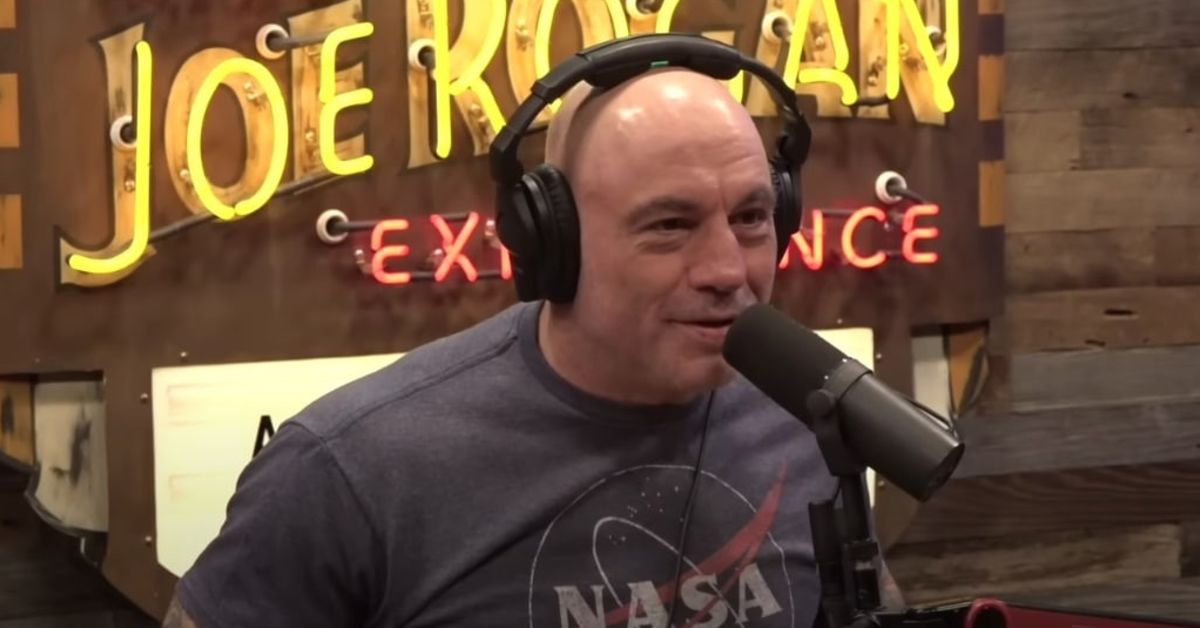
Podcaster Joe Rogan is warning Democrats that their only path out of their self-inflicted "woke" branding requires a public reckoning with the policies they championed and the damage those policies caused.
According to Fox News, Rogan used his popular podcast to press liberals on whether they ever seriously considered the real-world consequences of slogans like "Defund the Police," a rallying cry that coincided with surging crime and demoralized law enforcement. "If you really thought Defund the Police and then you just ascribed it to Woke One was crazy, well, how did it get you? Because it didn't get me. How did it get you? How did Defund the Police get you?" Rogan asked, challenging progressives to explain how deeply they had thought through the implications of gutting police budgets. His comments came as he dissected Rep. Alexandria Ocasio-Cortezs recent remarks dismissing "Woke 1.0" as a kind of youthful excess, a framing that many on the right see as an attempt to rewrite history rather than accept responsibility.
Rogan argued that Democrats cannot simply rebrand their ideology without first acknowledging the failures of the movement they aggressively promoted. "There's a way out of it for them, but they have to be honest," he said, insisting that any serious course correction must begin with candor rather than spin. "If you want us to take you seriously, you have to say how you f---ed up," Rogan continued, zeroing in on the need for Democrats to admit error rather than blame vague abstractions like "Woke 1.0." "You have to say how you f---ed up, and you have to say what you really think about how you f---ed up. You have to be honest, and you have to be authentic. We have to know that you are embarrassed by your choices and that you kind of went with the hive."
For Rogan, the danger is not just past mistakes but the refusal to own them, which he suggested only deepens public distrust. He warned that politicians who dodge accountability inevitably become more cynical and detached from reality. He continued, "If you dont say that, then youre full of s---. And if youre full of s---, youre going to get more and more full of s--- over time. And thats how politicians get soured."
Later in the episode, Rogans guest, YouTuber Chris Williamson, questioned whether Democrats would even be talking about "Woke 1.0" as a misstep if the 2020 election had turned out differently. Williamson suggested that electoral defeat, not moral reflection, is driving the current rhetorical shift on the left. "Think about what would have happened if Kamala had won," he said, raising the hypothetical of a Harris presidency. "Would AOC have been talking about Woke 1.0 was crazy or would that have been a continuation of, Well, look, we put the policies out, people like the policies. How much of this is a reversal of the position because it wasn't effective?"
Fox News Digital reported that Ocasio-Cortezs office was contacted for comment on Rogans critique and Williamsons speculation. As of publication, there was no response, leaving unanswered whether the congresswoman sees her own past rhetoric as a mistake or merely a phase to be rhetorically retired. That silence has only fueled conservative suspicions that Democrats are attempting to memory-hole their most radical positions without ever conceding they were wrong.
Skepticism about a genuine Democratic pivot away from hard-left cultural politics is not confined to Rogans studio. Commentators across the ideological spectrum, and especially on the right, are openly questioning whether the partys leadership has any real intention of abandoning the policies and narratives that defined the "woke" era. "I don't believe the Democrats want to be seen backing away from wokeness, especially now that they're sharing a big tent from people who want to empty the prisons," Media Research Center's NewsBusters executive editor Tim Graham told Fox News Digital. "They're just less confident than they were in 2020 when they could proclaim that race riots are rebellions and violence was an acceptable method to create the social change they wanted. It was like political Drano."
From within the Democratic ranks, some veterans are also sounding alarms about the partys ideological trajectory. Democratic consultant and former House Judiciary Committee minority chief counsel Julian Epstein warned that the supposed evolution from "Woke 1" to "Woke 2" is largely cosmetic. "There is not much difference between Woke 1 and Woke 2, they both involve the commodification of grievance and rage, and then the packaging of lunatic ideas that do little to help voters and seek to make them permanent wards of the state," he said, drawing a sharp contrast with the partys more centrist past. "This is completely different from Democrats of the 90s who would proclaim the US as the best opportunity-machine ever invented and then try to give people agency."
Republican strategists, meanwhile, see the new rhetoric about moving beyond "Woke 1.0" as a tactical maneuver rather than a moral awakening. Mary Marslender, a GOP consultant and President and Founder of Leverage PR, argued that Democrats are deliberately keeping their language vague to avoid alienating their activist base while trying to reassure swing voters. "The vague talk of ditching 'Woke 1.0' is a temporary political strategy; its not genuine course correction," she said, pointing to the absence of specific repudiations of controversial policies. "Democrats refuse to specifically call out the craziness; they have yet to stand up for women by preventing biological males in womens sports, stop the DEI agenda in our schools and institutions, or advocate for safe communities by stopping their support of soft-on-crime progressive prosecutors. Additionally, their lack of concrete policy reversals is revealing."
Marslender argued that the same pattern holds on immigration, where rhetoric about "fixing" the system masks continued support for policies that undermine enforcement. "Democrats wanting to distance themselves from Woke 1 have claimed they want to 'fix our broken immigration system,' but such rhetoric rings hollow when they oppose interior enforcement, call to abolish ICE, defend violent illegals who have crossed our borders, and unequivocally support sanctuary cities," Marslender continued, framing the issue as one of public safety and national sovereignty. For her, the partys refusal to reverse course on these core issues exposes the "post-woke" talk as little more than branding.
She also suggested that a Harris victory in 2020 would have locked in the most radical elements of the progressive agenda. "Had Harris prevailed, the same coalition that championed the 1619 Project, policing reforms adjacent to defunding, and gender ideology in schools would have viewed any moderation as betrayal," she added, arguing that only political necessity is forcing Democrats to recalibrate their message. "Its power, not principle, that drives the Democrat Party. Until Democrats can explicitly admit fault and demonstrate a serious reversal of Woke 1, American voters are right to treat the so-called 'post-woke' shift as a temporary political strategy rather than a genuine course correction."
Former Republican National Committee spokesperson Elizabeth Pipko echoed the view that Democrats are driven by polls, not principles. She described a familiar pattern in which candidates embrace the lefts most extreme demands during primaries, only to feign moderation in a general election. "Democrats of today tend to turn with the wind," she said, arguing that the partys ideological flexibility is more opportunistic than thoughtful. "Depending on what is most popular with their base, thats what youll hear from candidates during the primaries. And then, during the presidential election, youll notice the Democrat nominee pretending they never supported abolishing police, men in womens sports, or abolishing [ICE]."
Pipko noted that the internet has made it harder for politicians to erase their own records, even as they attempt to rebrand. "Watching Democrats in 2026 pretending they never called for defunding the police has been incredibly entertaining considering almost all of them still have old posts up clearly advocating for that very policy," Pipko continued, suggesting that voters can easily verify past statements. "Considering how much damage some of these views have caused, it is extremely pompous to simply dismiss this time in our politics as 'Woke 1.' This shows how little democrats actually believe in the what they say or do."
From inside the Trump administrations policy ranks, the skepticism runs even deeper, extending not only to Democrats but also to Rogans willingness to take their rhetorical shift at face value. Former White House deputy assistant for domestic policy and former Assistant Attorney General Theo Wold argued that Ocasio-Cortezs mockery of "Woke 1.0" signals not retreat but escalation. "AOCs sarcastic dismissal of Woke 1.0 isnt a sign that Democrats are abandoning a leftist agenda its a sign that theyre moving on to phase 2 of their project," he said, portraying the lefts cultural program as a long-term, multi-stage effort.
Wold suggested that Democrats remain fully committed to the radical ideas they once trumpeted openly, even if they now package them more carefully. "She now casually laughs at the radical ideas she actively promoted just a few years ago. And Joe Rogan, unfortunately, is too gullible to see the truth: this is who Democrats are," Wold added, arguing that conservatives should not be fooled by the new rhetoric. "They wont abandon these ideas or apologize for them because they believe them, and when in power, they will ruthlessly advance them."
Taken together, Rogans challenge and the responses from conservative and even some Democratic voices highlight a central question facing American politics: are Democrats engaged in a genuine reassessment of the "woke" era, or merely rebranding an agenda they still intend to pursue? For many on the right, the answer will depend not on clever labels like "Woke 1.0" and "Woke 2.0," but on whether the party is willing to admit error, reverse course on failed policies, and prioritize public safety, national sovereignty, and individual responsibility over ideological fashion and grievance politics.
Login