
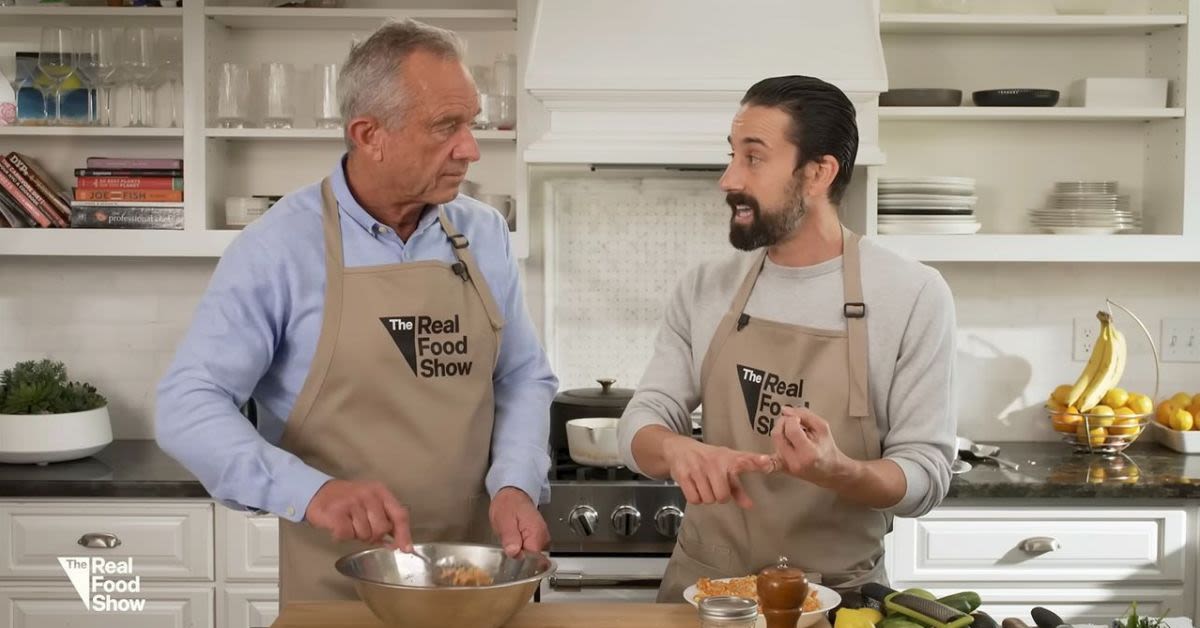
Health and Human Services Secretary Robert F.
Kennedy Jr. is pushing back forcefully against CNN after the network attempted to discredit his new budget-conscious cooking show with what he blasted as a fundamental misunderstanding of basic math.
The Real Food Show, Kennedys latest initiative, is designed to show Americans how to prepare nutritious meals for less than $5 per serving, a message that resonates strongly at a time of stubborn inflation and rising grocery bills. According to RedState, CNN apparently regarded that effort as a threat serious enough to warrant a hit piece, dispatching correspondent Tom Foreman to recreate one of the shows featured dishes Wild Alaskan Salmon Cakes in a segment for Erin Burnett OutFront.
Foremans mission was clear: remake the meal and prove that Kennedys cost estimate was unrealistic, casting doubt on the shows core premise that healthy eating can be affordable for ordinary families. What does it really cost? the on-screen chyron demanded, as Foreman spoke ominously of dubious claims made on the program, framing a simple recipe as if it were a political scandal.
In the segment, Foreman tallied up the price of each ingredient and then accused Kennedy of employing a supposed trick by calculating the cost of a single egg used in the recipe rather than the price of an entire carton. The implication was that Kennedy was somehow gaming the numbers, even though any home cook or restaurant owner understands that recipes are costed by portion, not by the full package sitting in the pantry.
The criticism quickly veered into the absurd, with Foreman effectively suggesting that it is misleading to count only the fraction of an onion, the one egg, or the small amount of seasoning actually used in the dish. By that logic, every American shopper should be outraged each time they cannot buy a single egg or a one-spoonful portion of mayonnaise at the supermarket, as if the concept of leftovers and pantry staples were some exotic accounting scheme.
Such framing insults the intelligence of viewers who live in the real world, where families routinely stretch ingredients across multiple meals to make ends meet. Yet CNN, which spent years promoting narratives like Russia collusion and the now-discredited claim that the COVID vaccine would reliably prevent the spread of the virus, appears confident its audience will accept this latest contrivance without question.
The networks treatment of a basic cooking show as a quasi-investigative expos underscores how deeply partisan reflexes have infected even lifestyle content. Rather than welcoming an effort to help Americans eat better for less, CNN chose to portray it as a kind of consumer fraud, as though Kennedy were running a scam instead of demonstrating how to cook on a budget.
Kennedy, who has never been shy about confronting hostile media, responded sharply on X, directly calling out the shows host. Trump Derangement Syndrome has so debilitated [Erin Burnett] that she has abandoned both common sense and basic arithmetic, he wrote, arguing that the networks approach to costing a recipe bore no resemblance to how any rational person prices a meal.
He continued by summarizing CNNs logic in stark terms: CNN wants us to incorporate the full package price of every ingredient, regardless of what is used in the recipe. To drive the point home, Kennedy offered a simple analogy that any diner can understand: If you put a squirt of ketchup on your burger, would you be surprised if the restaurant charged you for the whole bottle?
Kennedy then laid out the straightforward methodology behind The Real Food Show, which mirrors standard practice in both home kitchens and professional food service. The Real Food Show uses standard recipe costing: we count what the recipe actually uses. The rest stays in your kitchen for the next mealand the meals after that.
He also emphasized the broader purpose of the project, which goes beyond a single salmon cake recipe and speaks to a larger cultural and health mission. Our goal is simple: help Americans reclaim their kitchens, cook healthy food without breaking the bank, and stock their pantries with high-quality ingredients they can use again and again. Thats how we Make America Healthy Again.
The concept is hardly radical: buy a bottle of avocado mayonnaise, use a few spoonfuls for salmon cakes, then return it to the refrigerator for future meals, potentially enough to make dozens more portions. Yet CNNs framing treats this ordinary, thrifty approach as if it were some kind of accounting sleight of hand, rather than the very strategy millions of families rely on to survive Biden-era grocery prices.
Even those who might not be enthusiastic about Kennedys particular culinary preferences can recognize the value of encouraging healthier, home-cooked meals. His famously strict regimen of red meat and fermented vegetables has already drawn good-natured mockery from Secretary of State Marco Rubio, who jokingly described it as a crazy diet that forces Kennedy to haul around coolers full of sauerkraut and meat.
Rubios quip No! This is a CRAZY diet. This is a diet that consists of eating sauerkraut and meat. Now you understand like this is captured the lighthearted skepticism many Americans feel toward extreme health routines, even as they acknowledge the need to eat better. Still, there is a world of difference between poking fun at a politicians diet and trying to delegitimize a show that simply teaches people how to cook affordable, nutritious food.
Most Americans, whatever their politics, would likely prefer the freedom to choose between a fast-food burger and a home-cooked salmon cake without media scolds turning the latter into a controversy. While some may still opt for McDonalds and a Diet Coke, they can see through a cable networks attempt to rain on the parade of anyone trying to promote healthier, budget-friendly eating especially when the attack rests on a willful misrepresentation of how basic kitchen math actually works.
Login