
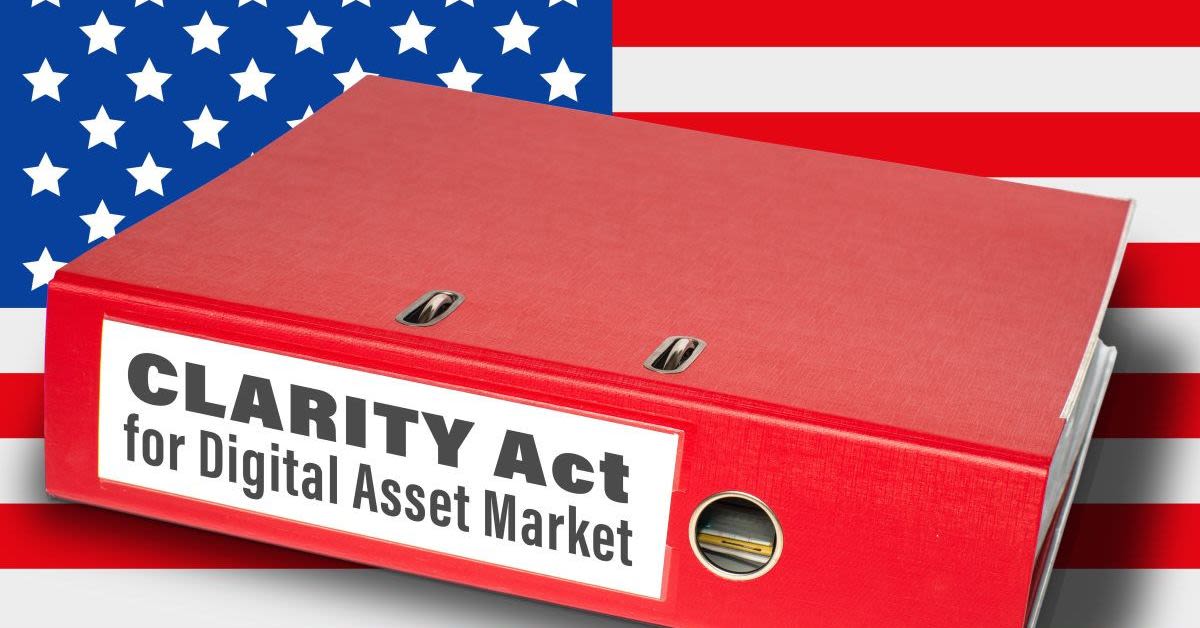
President Donald Trump convened leading cryptocurrency and financial executives at the White House, pressing Congress to swiftly enact the Digital Asset Market Clarity Act to create a stable, long-term regulatory foundation for the digital asset economy.
According to One America News, the president appeared alongside Coinbase CEO Brian Armstrong, Ripple CEO Brad Garlinghouse, Robinhood CEO Vlad Tenev, SEC Chairman Paul Atkins, and CFTC Chair Mike Selig, underscoring the high stakes for both Wall Street and Main Street. Trump framed the legislation as a crucial tool to safeguard American economic leadership, describing it as a vital measure to protect American competitiveness in an increasingly digital global marketplace.
He argued that a fair version of the Clarity Act is necessary to ensure the United States remains at the forefront of global technological innovation and maintains its edge over international rivals like China. For an administration that has consistently emphasized economic nationalism and technological supremacy, the message was clear: Washington must either provide clarity or risk ceding the future of finance to foreign powers and unelected bureaucrats.
The White House gathering exemplified the expanding political and economic influence of the crypto sector while highlighting the Trump administrations push to roll back previous regulatory limits. Industry leaders at the event argued that passing comprehensive market structure legislation would provide the legal permanence needed to spur capital investment and shield the market from shifting regulatory climates.
SEC Chairman Paul Atkins supported the push, noting that recent regulatory proposals advanced by federal agencies require the solid statutory backing that only congressional legislation can provide. His remarks reflected a longstanding conservative concern that agencies have too often attempted to govern by regulation rather than by clear laws passed by elected representatives.
Despite the united front at the White House, the Clarity Act faces hurdles in the Senate as lawmakers prepare for a crucial procedural vote scheduled for September 15th. Additionally, opposition has mounted primarily around concerns raised by Congressional Democrats, who claim that the current draft fails to place sufficient restrictions on officials profiting from digital assets.
Their objections point to Trumps personal crypto ventures, leading these left-wing critics to demand strict conflict-of-interest guardrails before granting approval. Republicans and industry advocates, however, see these attacks as a familiar partisan tactic aimed at slowing innovation and undermining a deregulatory agenda that favors free markets and private investment.
With Republicans holding a narrow 53-seat majority in the Senate, securing the 60 votes required to overcome procedural filibusters remains a formidable challenge before the upcoming midterm elections. While industry advocates remain hopeful that momentum from the GOP administration will break the legislative logjam, analysts say that alternative regulatory proposals introduced by federal agencies could possibly lead some lawmakers to delay a final vote.
In addition, as mentioned on Wednesday, when President Trump signed the GENIUS Act into law last year, he hailed the legislation as a historic turning point that fulfills his pledge to make the United States the crypto capital of the world. During his remarks at the signing ceremony, Trump further described the law as a giant step to cement American dominance of global finance and crypto technology.
He emphasized that by establishing the first-ever federal regulatory framework for payment stablecoins, the measure unleashes the vast potential of dollar-backed digital tokens while protecting consumers through 100% reserve backing requirements using U.S. dollars or short-term Treasury bills. That approach reflects a characteristically conservative balance: encouraging innovation and private-sector growth while insisting on sound money, transparency, and safeguards against systemic risk.
Overall, the White House summit signaled a determined effort by the Trump administration to codify market rules and cement the nations position as a global leader in digital finance. Whether Congress chooses clarity and competitiveness over partisan obstruction and regulatory drift will determine if the United States truly becomes, as Trump has promised, the crypto capital of the world.
Login