
Colorado, long known for sending ideological curiosities to Congress, is once again testing how far left its voters are willing to go.
According to WND, the state that once elevated Pat Schroeder and now counts Joe Neguse and Jason Crow among its congressional delegation is offering up a new slate of hard-left hopefuls, including Melat Kiros, an avowed socialist who ousted entrenched Denver Democrat Diana DeGette in a primary. Also on the ballot is Manny Rutinel, whose record suggests a radical animal-rights agenda that sits uneasily with the values and livelihoods of a district built on ranching and agriculture.
According to a report in the Free Beacon, As recently as 2024, however, Rutinel served as a fellow at the University of Denvers Animal Law Program, which is tied to projects that defend accused ecoterrorists and push fringe theories including the belief that all animalsincluding insectsare sentient. That program, formally known as the Animal Law Project, aims to educate the next generation of animal law advocates to protect the well-being of non-human animals.
The Free Beacon noted that this initiative promotes programming that routinely connects animal rights to other issues, such as racial justice, environmentalism, and mass incarceration. It further explained, Fellows like Rutinel, a lawyer and state representative, help advance the mission by providing research support, increasing the Animal Law Programs public visibility, and expanding our impact throughout Colorado and across the nation.'
The program is overseen by Harvard-trained attorney Justin Marceau, who has asserted there is no principled reason for denying elephants legal personhood. In his book Beyond Cages, Marceau argues against jailing animal abusers because the criminal justice system is inextricaby linkned to oppression and tied to racism and classism.
Marceau has gone so far as to argue in court filings that animals should be recognized as persons, telling a New York appellate court that the Bronx Zoo unjustly detained Happy the elephant. He insisted that Happy qualifies for habeas corpus, stating: There is no principled reason that elephants, such as Happy, should be deprived of legal personhood.
Marceau also leads, the report said, the University of Denvers Animal Activist Legal Defense Project. Among those it seeks to shield is Cara Mitrano, who was accused of breaking into a fur farm in 2024 and, with an accomplice, killing 23 minks while releasing nearly 700, causing $164,000 in damages.
That incident resulted in charges of ecoterrorism and animal cruelty. Yet the Denver program where Rutinel served as a fellow advances the sweeping claim that all nonhuman animals are sentient, a definition that would encompass coral, earthworms, maggots, and countless other life forms.
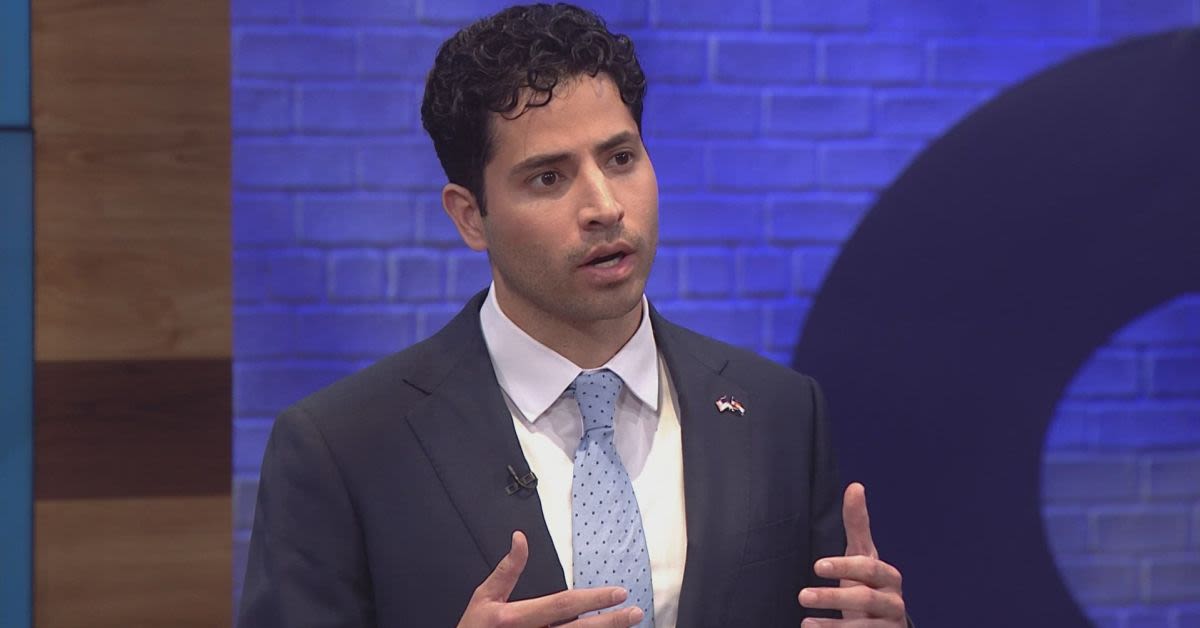
Rutinel is now running to represent Colorados 8th Congressional District, a region heavily reliant on ranching. His campaign biography highlights his Yale education, his work for the environmental litigation group Earthjustice, and earlier degrees from Johns Hopkins and the University of Florida.
The Free Beacon reported that Rutinels affiliation with the Animal Law Program comes amid attempts to downplay his years of animal rights activism and anti-meat crusading as he challenges Rep. Gabe Evans (R.) for Colorados Eighth Congressional District, whose economy is heavily dependent on ranching, an industry that generated some $1.2 billion in 2022. It also undercuts his claim that Reddit posts he wrote in 2017 embracing efforts to give animals the same legal rights as humans and prohibit their slaughter are not my views today.'
After the outlet inquired about his role, Rutinel was quietly removed from the Animal Law Programs list of fellows. The Free Beacon confirmed, Rutinels animal activism dates back to his youth. He became a vegan when he was 14 and said he recently started eating meat because its important for me to be able to enjoy the delicious products that Colorado ranchers make.'
For voters in a district where ranching is not an abstraction but a way of life, the contrast between Rutinels long-standing activism and his recent rhetorical embrace of beef is likely to raise questions about authenticity and political expediency. As Colorado flirts yet again with sending ideological outliers to Washington, the contest in the 8th District will test whether a candidate steeped in animal-rights legal theory and aligned with efforts to defend accused ecoterrorists can credibly claim to champion the very ranching industry his allies have long targeted.
Login