
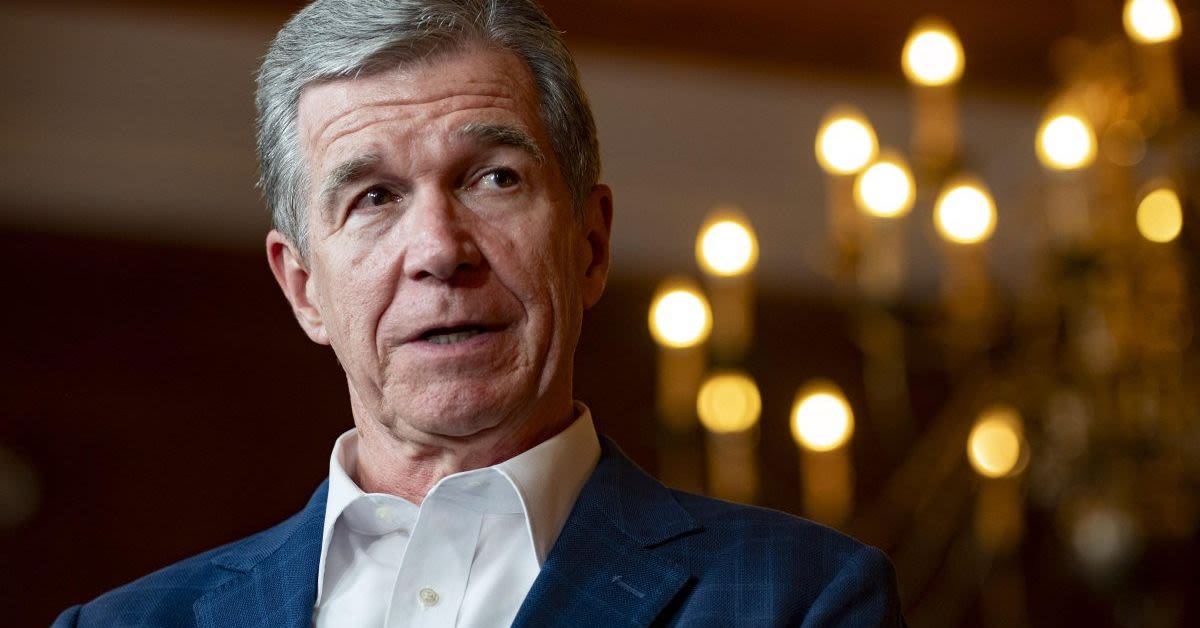
For many conservatives watching the North Carolina Senate race, a central question keeps resurfacing: how has former Gov. Roy Cooper, now the Democrat nominee for U.S. Senate, managed to cling to power in this state for so long despite a record that has grown steadily more liberal and increasingly out of step with public safety concerns?
Cooper, now 69, has occupied public office for more than half his life, moving from the state House to the state Senate, then to the attorney generals office, and finally to the governors mansion. According to RedState, he cultivated an image over the years as a down-home, middle-of-the-road Democrat, someone who would tell voters what they wanted to hear back home while reliably advancing a very different agenda once he returned to Raleigh.
That agenda shifted sharply leftward in the latter part of his tenure as attorney general and accelerated once he became governor. Under Cooper, policies steeped in social justice activism, aggressive transgender rights initiatives, and the broader woke project took precedence over traditional law-and-order priorities.
Recognizing the stakes in the open Senate seat, the Republican-aligned Senate Leadership Fund (SLF) began pouring serious money into the race in late July, aiming to bolster GOP nominee Michael Whatley, the former Republican National Committee chairman and past head of the North Carolina Republican Party. The super PACs early ad blitz has focused squarely on Coopers criminal justice record, highlighting the real-world consequences of leniency toward violent repeat offenders.
One of the first spots features Stephen Federico, father of 22-year-old murder victim Logan Federico, who delivers a stark warning about the dangers of turning violent criminals loose. The ad underscores that roughly 3,500 offenders were released during Coopers first term and drives home the point that 40 years of soft on crime policies from Cooper was enough.
The SLF amplified the message on social media with a blunt accusation: NEW AD: @RoyCooperNCs reckless policies and decision to release 3,500 violent criminals put every family in North Carolina at risk. Stephens daughter Logan was a casualty of an agenda. The framing is clear: Coopers long record of leniency is not an abstraction but a threat to families across the state.
Almost immediately, the media cavalry arrived in the form of WRALs Politifact NC reporter Andy Specht, who questioned the relevance of the Federico case to a North Carolina race. Specht noted that the crime occurred in South Carolina and that the accused killer, Alexander Dickey, is a South Carolinian with a history of arrests and releases in that state.
Specht summarized his objection this way: The victim in this case, Logan Federico, was killed in South Carolina. The suspect, Alexander Dickey, was arrested and released several times in South Carolina prior to the murder. The ad uses a South Carolina case to attack a North Carolina candidate. His implication was that tying this tragedy to Coopers record was somehow misleading or unfair.
What Specht conspicuously omitted is a key fact stated plainly in the ad itself: Logan Federico was a North Carolina native. The point of the spot is not geography but the patterncrimes like the one that took her life are committed every day by the same kind of violent repeat offenders that Coopers policies have allowed back onto the streets in North Carolina.
The author of the original piece responded by turning the tables on the so?called fact-check. The victim was a North Carolina native who was staying in South Carolina at the time and was victimized by the exact type of violent repeat offender that Roy Cooper's policies would have enabled to be released here in NC, the rebuttal noted, adding the tags #ncpol #ncsen. In other words, the ads core claimthat Coopers soft-on-crime approach endangers North Caroliniansremains squarely on point.
The Federico case had already drawn national attention last September, when the House Judiciary Subcommittee on Oversight convened a field hearing at a Charlotte courthouse. That session, held in the wake of the murder of Iryna Zarutska, focused on crime victims, their families stories, and the urgent need to rein in violent career criminals and the progressive officials who enable them.
At that hearing, Stephen Federico spoke with raw emotion about his daughter and the brutality she suffered, allegedly at the hands of a man who should never have been free. Adding insult to injury, Democrat Rep. Deborah Ross of North Carolinas 2nd District confused the names and images of Zarutska and Federico, a mistake that understandably infuriated Logans grieving father.
Her name's Logan Federico, not Iryna, Federico said, pointing to his daughters photograph as he stared at Ross. And you will not forget her. I promise you, he indicated to Ross and others in the subcommittee, making clear that his daughters memory would not be reduced to a political talking point.
Federicos resolve did not stop there. You will be sick and tired of my face and my voice until this gets fixed. I will fight to my last breath for my daughter, he vowed, signaling his determination to push for policies that keep dangerous offenders behind bars.
For Federico, this is not about partisan gamesmanship but about justice for Logan and protection for other innocent people, including those in his home state of North Carolina. His story underscores the stakes of electing a senator who either continues Coopers pattern of leniency or charts a tougher course on crime and public safety.
The reaction from WRALs Politifact NC is emblematic of a broader pattern in legacy media, where fact-checking often functions less as neutral verification and more as damage control for favored Democrats. It is shameful, though not surprising in the least, that a left-wing media-aligned fact-checker at a local legacy media outlet sought to rush to Roy Cooper's rescue by fact-checking an ad that needed no fact check at all.
For nearly four decades, Cooper has benefited from precisely this kind of institutional protection, with sympathetic outlets downplaying or reframing the consequences of his policies. As the Senate race intensifies, voters will have to decide whether they trust the lived experience of families like the Federicosor the spin of media organizations that have long served as willing defenders of Roy Coopers near-40-year reign of error in North Carolina.
Login