
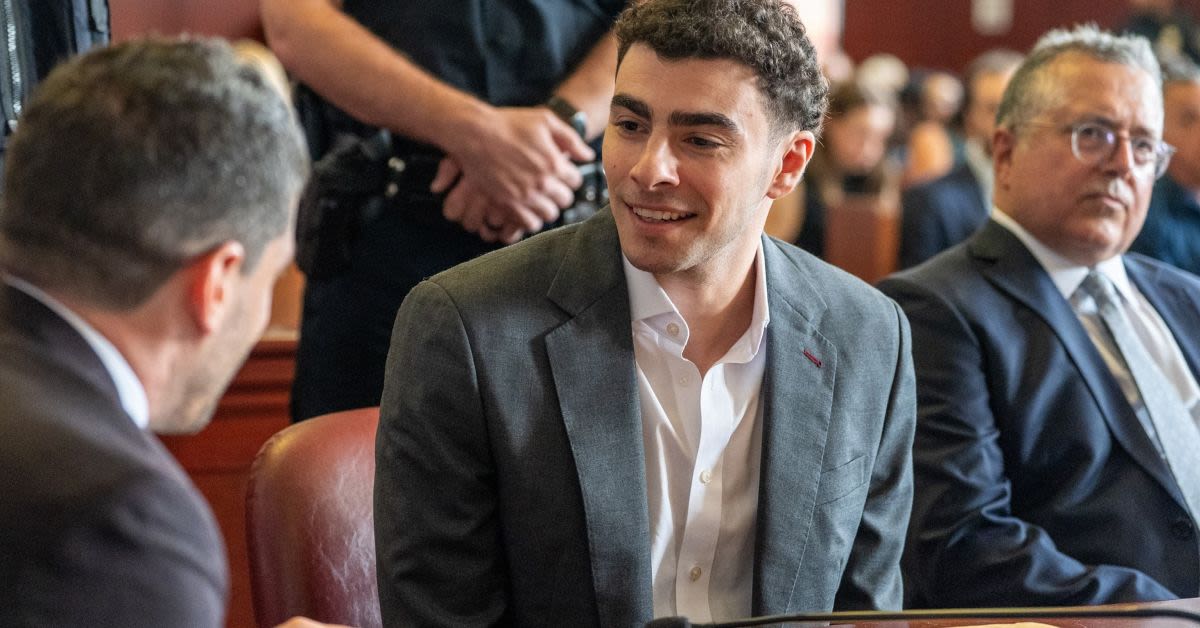
The already extraordinary case of 28-year-old Luigi Mangione, who admitted in federal court last week to murdering UnitedHealthCare CEO Brian Thompson in December 2024, has now taken another dramatic and potentially game-changing turn.
As reported by RedState, Mangione entered a guilty plea last Friday to federal stalking charges tied to the shooting death of Thompson, who was gunned down while en route to an investors conference in New York City. The plea was not the product of a negotiated deal with federal prosecutors, but rather appears to be a calculated maneuver by the defense aimed at undermining the separate state murder prosecution.
When formally entering his plea, Mangione openly acknowledged pulling the trigger in Manhattan. On the morning of Dec. 4, 2024, I shot Mr. Thompson in Manhattan, and he died, he told the court, adding with stark simplicity, I knew what I was doing was illegal.
He further admitted that the killing was carried out with a homemade weapon, underscoring the premeditated nature of the crime. Before traveling to New York, I used a 3D printer to make a gun, he said, repeating, On the morning of Dec. 4, 2024, I shot Mr. Thompson in Manhattan, and he died. When I did so, I understood my actions put him in I knew what I was doing was illegal.
Legal analysts have suggested that Mangiones attorneys deliberately exposed their client to federal conviction on stalking charges in order to invoke New Yorks expansive double jeopardy protections against the pending state murder case. His state murder trial, which was expected to begin on September 8, had been poised to test whether the justice system would deliver a strong response to the killing of a high-profile business leader.
For the moment, the defense strategy appears to be bearing fruit. On Monday, New York State Supreme Court Justice Gregory Carro abruptly halted preparations for the murder trial, effectively pausing the proceedings to allow prosecutors time to answer the defenses double jeopardy arguments.
Mangiones trial on a second-degree murder charge in the 2024 killing of UnitedHealthcare CEO Brian Thompson had been scheduled to begin next month, reflecting the states effort to hold him fully accountable for the homicide. Instead, Justice Carro has now given prosecutors until October 9 to respond to a double jeopardy motion filed by Mangiones attorneys last Friday, a motion that seeks outright dismissal of the state case.
That filing contends that, because Mangione has already pleaded guilty to federal stalking crimes arising from the same course of conduct, the state is constitutionally barred from proceeding with its own homicide prosecution. The judge overseeing Luigi Mangiones state murder trial in New York has therefore put the proceedings on hold to allow prosecutors time to respond to Mangiones efforts to have the case thrown out.
Carros order grants the prosecution until October 9 to craft its legal rebuttal, a deadline that will likely shape the future of the states ability to punish violent offenders in overlapping federal-state cases. Mangiones next appearance in New York state court is scheduled for December 10, setting up a critical hearing that could determine whether the murder charge ever reaches a jury.
Altogether, Mangione has been facing three distinct sets of charges connected to Thompsons killing: the federal stalking counts, the New York state murder indictment, and a separate slate of charges in Pennsylvania, including felony forgery, stemming from his capture after several days on the run. The Pennsylvania case has been effectively frozen while the higher-stakes federal and state prosecutions move forward, illustrating how procedural gamesmanship can delay justice across multiple jurisdictions.
Mangione is currently scheduled to be sentenced on the federal stalking convictions on December 18, 2026, before U.S. District Judge Margaret Garnett in Manhattan. Federal prosecutors have indicated they will seek a life sentence, even though advisory sentencing guidelines reportedly call for a term in the range of roughly 24 to 30 years, raising the question of whether the federal bench will impose the kind of punishment that reflects the gravity of the crime.
At this stage, there is no ambiguity about what happened: Mangione has admitted in open court that he killed Brian Thompson. The unresolved issues now center on which jurisdiction will ultimately exercise authority over his fate and whether the system will ensure that a confessed killer spends the bulk of his remaining years behind bars, rather than exploiting procedural loopholes to escape full accountability.
Login