
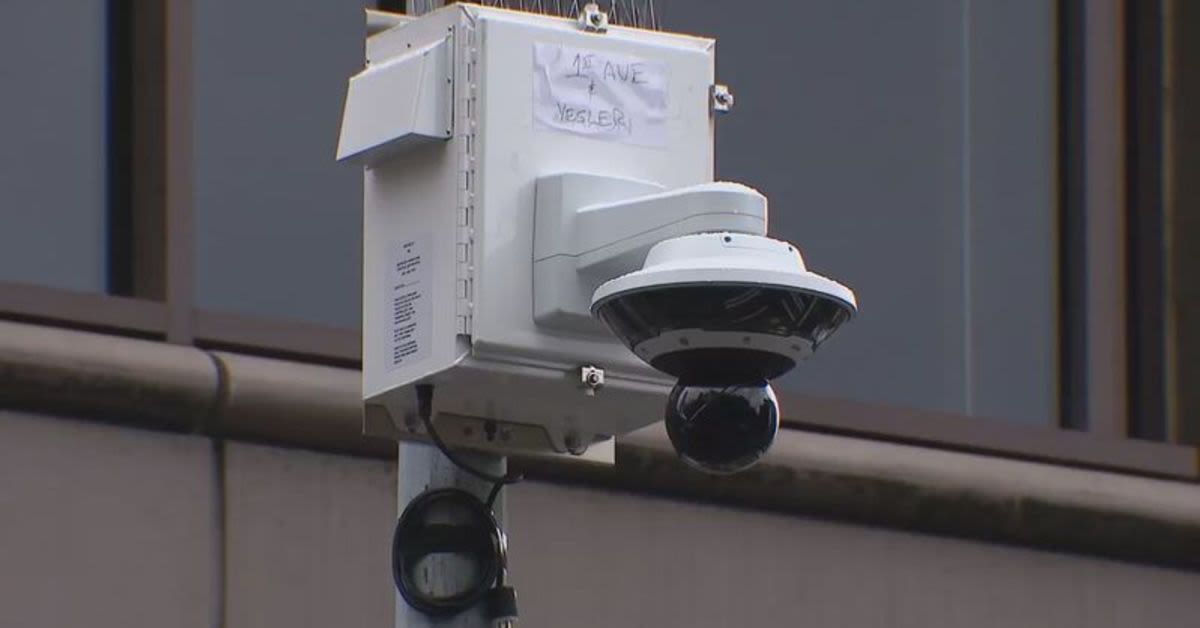
A 21-year-old man was shot in the back during a late-night gun battle in Seattles Pioneer Square, as more than 30 shell casings littered the street beneath three city surveillance cameras that had been deliberately switched off.
Seattle police said officers were dispatched at approximately 1:34 am after multiple 911 callers reported gunfire near 1st Avenue and South King Street. When officers arrived, they discovered over 30 spent shell casings from different calibers and a firearm apparently dropped by someone fleeing the scene.
According to The Post Millennial, nearby security personnel told investigators that a bar fight had spilled into the street and escalated into a shootout involving several individuals. By the time officers reached the area, no suspects or victims remained, but a 21-year-old man with a gunshot wound to the back soon arrived at Harborview Medical Center, and several vehicles and a business window had been struck by bullets.
Investigators now face the prospect of trying to reconstruct a chaotic gun battle without what could have been crucial video evidence. KOMO News reported that three city surveillance cameras were positioned with a clear view of the incident but were offline because Seattle Mayor Katie Wilson ordered Stadium District cameras deactivated after the citys World Cup matches ended.
The Seattle Police Officers Guild (SPOG) sharply criticized Wilsons decision to darken the cameras in an area long plagued by crime and disorder. Here we go again, Mayor Katie. Another violent shootout. Three city surveillance cameras within view. All turned off by the Mayors order. SPOG warned what would happen when proven public safety tools were taken offline. Now Seattle is right back where we started. Dj vu.
Those cameras had already become a political flashpoint earlier in the spring, when the socialist mayor halted expansion of Seattles surveillance-camera program pending a privacy and data-governance review. The debate was driven in part by progressive civil-liberties activists raising alarms about how footage might be accessed or used, including speculative fears tied to immigration enforcement, reproductive care and gender-affirming care.
Wilson ultimately relented enough to allow the Stadium District cameras to be activated temporarily during the World Cup, after the FBI and local law enforcement identified general but credible security threats linked to the high-profile tournament. Wilson insisted the cameras would remain on only for the duration of Seattles World Cup matches because of the events high global profile and the unique circumstances surrounding the event.
Once Seattles World Cup run ended, Wilson followed through on her pledge to deactivate the Stadium District cameras while the privacy review continued, even as crime in the area persisted. Public-safety advocates and business leaders immediately objected, arguing that criminals did not leave town with the tourists and that the city was voluntarily discarding a proven crime-fighting tool.
Sundays Pioneer Square shootout has now thrust that decision back into the spotlight, underscoring the gap between City Halls ideological experiments and residents day-to-day safety concerns. It comes as Seattle voters are expressing overwhelming support for the very surveillance technology Wilson sidelined, with a new poll from the Seattle Metropolitan Chamber of Commerce and Challenge Seattle finding that 75 percent of voters back the citys CCTV program, while only 34 percent say they are confident Wilson has an effective plan to improve public safety.
Support for cameras remained robust when voters were asked about specific deployments, suggesting a broad mandate for morenot lessmonitoring in high-crime areas. Seventy-four percent favored expanding cameras to Seattle Center and other major event venues, 71 percent supported cameras in zones plagued by open-air drug markets and street disorder, and 68 percent backed real-time monitoring by civilian public-safety officials in designated high-crime areas and during major events.
The public isnt asking for a debate on public safety. They want action now to solve it, said former Washington Gov. Chris Gregoire, now CEO of Challenge Seattle. Seattle residents are clear about their priorities: turn the cameras on now, increase visible police presence now, and provide a comprehensive, action driven public safety plan in the next 100 days.
The same survey showed near-unanimous backing for more traditional policing, a rebuke to years of anti-police rhetoric and defund experiments pushed by the citys left. Fully 90 percent of respondents supported regular foot and bicycle patrols in areas with persistent public-safety problems, while 86 percent favored requiring the city to produce a public-safety action plan within 100 days, complete with measurable goals and monthly progress reports; the poll of 500 Seattle voters, conducted Aug. 1013 by Fulcrum Strategy Group, carries a margin of error of plus or minus 4.4 percentage points.
Pressure on Wilson to restore the cameras was already mounting before the latest shooting, as business and civic leaders warned that unchecked crime threatens downtowns fragile recovery. Earlier this month, a coalition representing major venues, sports franchises, tourism interests and eventsincluding the Space Needle, Seattle Storm, Seattle Convention Center, Climate Pledge Arena, Visit Seattle and the Seattle Sports Commissionurged Wilson to reactivate 22 CCTV cameras in Pioneer Square and the Stadium District while the citys review drags on.
Now detectives with the Seattle Police Departments Gun Violence Reduction Unit are investigating a brazen shootout that unfolded in full view of cameras installed precisely to help solve such crimes, yet those cameras were intentionally silenced. As residents and businesses absorb another night of gunfire in a historic neighborhood, the central question is no longer whether Seattleites support surveillance and stronger policing, but whether their mayor will finally prioritize public safety over ideological purity and turn the cameras back on.
Login