
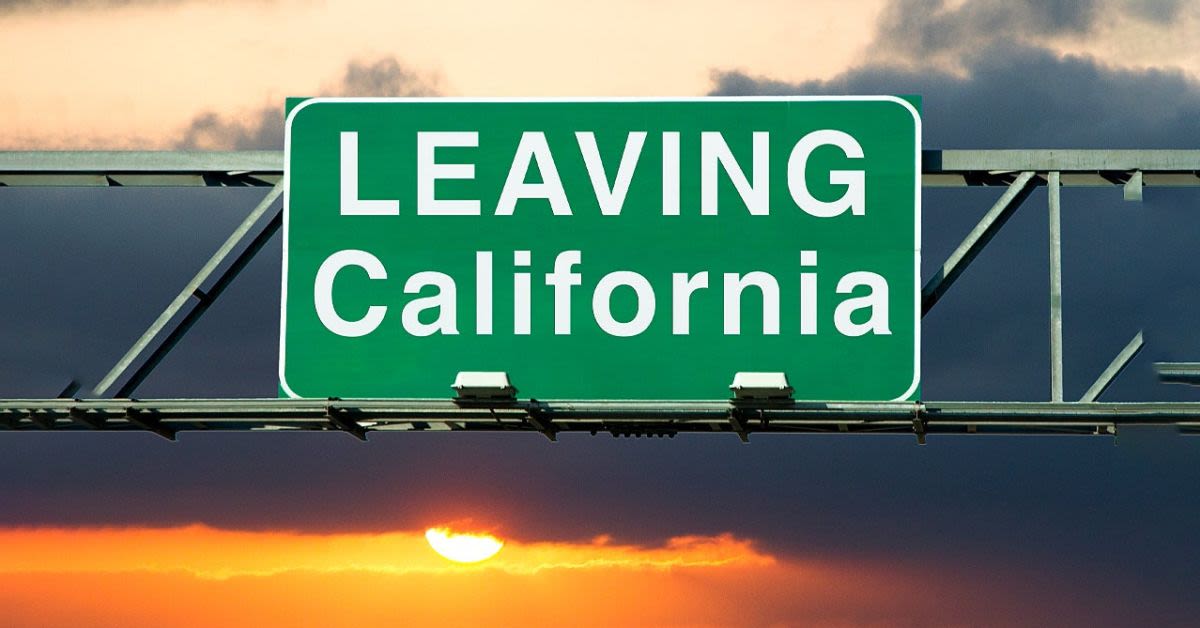
Californias steady loss of employers and taxpayers has become less a trend than a stampede, and the latest departure underscores just how hostile the state has become to productive enterprise.
The newest company to join the exodus is Digital Brands Group, an apparel and e-commerce firm that has abandoned Vernon, California, for Round Rock, Texas, a fast-growing community just north of Austin. As reported by RedState, Texas remains the chief beneficiary of this migration, with Florida, Colorado, Montana, New Jersey, and others also welcoming businesses fleeing the Golden States punitive policies and suffocating regulatory climate.
Digital Brands Group CEO Hil Davis made no effort to sugarcoat his reasoning as he announced the move of his companys headquarters out of California. Doing business in the state of California sucks, Davis told Fox News, capturing in blunt terms what many executives have been saying more diplomatically for years.
Davis is leasing 70,000 square feet of office space in Texas and expects his operating costs to fall sharply once the transition is complete. He cited Californias punishing cost of living, grueling employee commutes, and the ever-rising expense of simply staying compliant and defending against lawsuits in a state that seems to view business as a piggy bank rather than a partner.
"You start to add all those things up," he said. "It doesnt work. It doesnt make sense. Its too hard." That assessment reflects a broader reality: Californias progressive leadership has layered so many taxes, mandates, and legal risks onto employers that many now see relocation not as an option, but as a necessity for survival.
The damage is not theoretical. Los Angeles County alone has seen nearly $1.9 billion in income walk out the door as thousands of taxpayers have moved to other states, taking their earnings, investments, and future growth with them. California officials may pretend this is a temporary blip or a pandemic-era anomaly, but the numbers tell a different storyone of sustained flight by those who create jobs and pay the bills.
This latest move by Digital Brands Group comes as California faces a much larger reckoning over whether its high costs, heavy taxes, and sprawling regulatory regime are driving away the very businesses and affluent residents it depends on. The political class often frames this as an open debate, but the evidence has already rendered its verdict: companies are leaving, and they are not looking back.
You may have seen similar lists before, but its jaw-dropping when you are reminded of the tally of jobs, tax dollars, and technological advancement heading for the state line, one observer noted, and the roster of departed firms is indeed staggering. We can now add Valero to the growing list of major companies fleeing California, taking well over $1.6 trillion of revenue with them. Great job Newsom!
That list reads like a whos who of American enterprise: AECOM, Align Technology, Amazing Magnets, Amgen, Anduril, Anheuser-Busch, Bed Bath & Beyond, Blaze Pizza, CBRE Group, Charles Schwab, Chevron, Digital Realty Trust, Dropbox, FICO, First Foundation, Forever 21, Hewlett Packard Enterprise, HomeLight, In-N-Out Burger, Lucas Oil, McAfee, McKesson, Neutrogena (Johnson & Johnson), Oracle, Pabst Brewing Company, Palantir Technologies, Realtor dot com, Ruiz Foods, Sendoso, Skillz, Snowflake, SpaceX, Symantec, Tesla, Unical Aviation, Valero, Viavi Solutions, X (formerly Twitter), and ZP Better Together Unical Aviation. Each departure represents not just lost revenue, but lost opportunity for middle-class workers and communities that once depended on these employers.
Rather than reversing course, Californias political leadership appears determined to double down on the very policies driving people away. On the November ballot is a so-called billionaire tax, a one-time five percent wealth penalty on residents with a net worth over $1 billion, a measure that has already prompted numerous high-net-worth individuals to decamp for friendlier jurisdictions. If it passes, the state can expect an even greater outflow of capital, philanthropy, and investment.
Supporters of Governor Gavin Newsom like to portray California as a progressive model for the nation, but the real-world results are hard to ignore: shrinking tax bases, hollowed-out business districts, and a growing reliance on an ever-smaller pool of high earners to fund expansive government. Sure, weve seen many similar stories before, but its important to remind the world of the mess Newsom has made here each and every time it happens as he gears up for his all-but-inevitable presidential run, the piece warns, noting that his ambitions extend far beyond Sacramento.
He wants to inflict his pain on the rest of the country as a whole, and if hes given the chance, the damage he will do is incalculable, the author argues, pointing to California as a cautionary tale rather than a blueprint. Weve already seen it happen here, and as more companies like Digital Brands Group head for the exits, the question for the rest of America is whether it will learn from Californias experiment in progressive governanceor repeat it on a national scale.
Login